
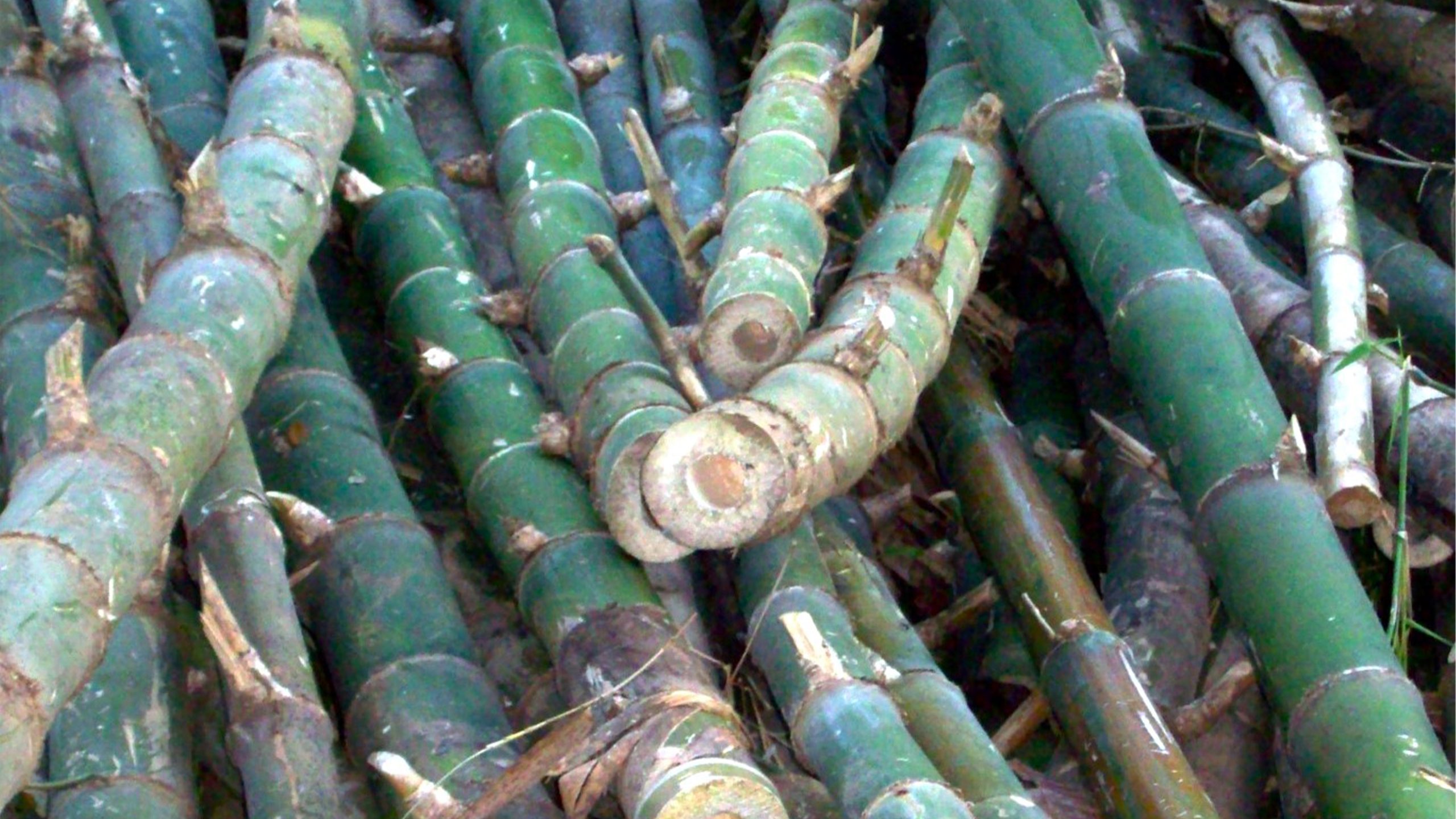
Bamboo benefits communities and the environment, making it one of the most valuable yet overlooked plants in the Philippines.
“God can be realized through all paths,” Ramakrishna once pointed out. “All religions are true. The important thing is to reach the roof. You can reach it by stone stairs or by wooden stairs or by bamboo steps or by a rope. You can also climb up by a bamboo pole.”
Bamboo – a relative of rice, corn, sorghum, and wheat – is the world’s tallest grass. Yet, it is often neglected by most Filipinos. Farmers don’t even take a second look at it.
Not too many Filipinos are aware of the benefits the humble bamboo has to offer. Bamboo is one of the reforestation species used in government-initiated reforestation programs because of its fast growing canopy which effectively ameliorates degraded lands usually found along rivers, creeks, and other riparian zones.
All over the globe, there are 91 genera and about 1,000 species of bamboo, generally known as kawayan in the Philippines. Until now, no one knows how vast the areas are planted to bamboo. Major producing provinces are Abra in the North, Pampanga in Central Luzon, Iloilo, Davao and Bukidnon in the South.
Bamboo is widely distributed all over the country. Aside from Dendrocalamus, the other major genera are Arundinaria, Bambusa, Gigantochloa, Guadua, Schizostachyum, Thysostachys, Lalebra, Phyllostachys, Cophalostachyum, and Dinochloa.
“The supply of bamboo poles and butts cannot be sustained because the present demand outstrips the rate at which bamboo are produced,” the Department of Environment and Natural Resources (DENR) deplores. “The sources have been drastically reduced such that areas where bamboo naturally grows are fast diminishing.”
One solution: commercial bamboo production. “It is a profitable venture, especially among small farmers in the marginal uplands,” said the DENR which published an information kit on Sustainable Livelihood Options for the Philippines. “It has potential for generating employment opportunities in the rural communities thereby improving income.”
Here are some tips from the information kit on how to grow bamboo commercially:
Nursery preparation
Raise bamboo seedlings in the nursery before outplanting to ensure higher rate of survival in the field. There are several propagation methods: offset, culm cuttings and branch cuttings.
Offset is done by using rhizomes (the new growing offshoot subterranean bud with roots), especially when the species is difficult to propagate like bulo. Offset planting is the use of the shoots or young rhizomes as planting materials and these can be directly planted in the field.

Culm cutting is the most commonly used method for propagating species which produces roots easily like kawayan tinik, kawayan kiling, bayog, laak, and anos. The lower half portion of the main stem of old culm (the main stem or pole of a bamboo) is cut at the desired length and number of nodes.
When culm size is quite large (as in the case of giant bamboo), branch cutting is recommended. Four year old culms are collected during the early part of the rainy season as a source of cuttings.
Site selection
Bamboo can be planted anywhere but saline soils along salty bodies of the water are not good for the growth and development of bamboo. A good site has the following characteristics: sea level up to 1,500 meters above sea level, low and medium altitude, high humidity, sandy loam to clay loam (soil derived from the river alluvium or from underlying rocks), well-drained and aerated soil, and with pH ranging from 5 to 6.5.
Consider the site preferences of the different bamboo species. Understand the adaptation of the species to adverse site conditions like strong winds, water logging site, poor conditions, and drought.
Site preparation
Clear the area from weeds and other unwanted vegetation: complete clearing of existing vegetation, clearing strips of 50 centimeters to one meter wide, clearing spots of 50 centimeters in diameter, and spot clearing for riverbank and hillside rehabilitation.
Do field layouting according to the type of species and purpose of the plantation. Do square/triangular and regular planting for riverbank and hillside rehabilitation and vertical for reforestation and plantation development.
Prepare planting holes in advance. Holes for planting should be wide and deep enough to accommodate the potted, balled, bareroot, or freshly cut planting materials. Holes may vary from 30 centimeters wide and 50 centimeters deep, depending on the size of the planting materials.
For kawayan kiling and bayog, the recommended spacing is 5 meters by 5 meters to 10 meters by 10 meters. The recommended spacing for buho and anos is 3 meters by 3 meters to 5 meters by 5 meters.
Planting
Planting must be done early in the morning during the rainy season. Planting materials from one- to two-year old culms should be immediately planted. Bareroot planting materials should be planted in the hole, positioned similarly when they are still in the beds. The roots should not be curled upward.
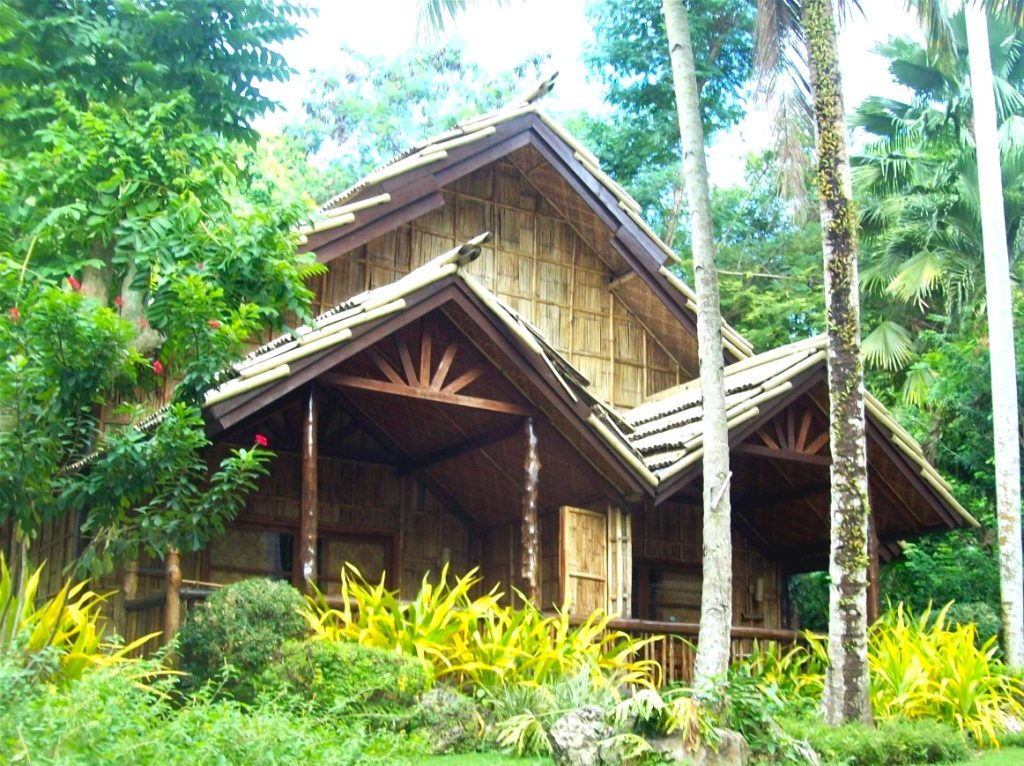
Loosen the soil in previously-prepared holes. Cut and remove the planting bag carefully without breaking the soil and damaging the root system (for potted seedlings). Put the propagule (type of planting stock) vertically on the planting holes with the soil intact. Cover the planting stock with well-pulverized topsoil. Gently compress the soil around the newly-planted plants. Water and mulch the plants when necessary.
The recommended position of planting to attain better growth and development of each species are as follows: kawayan kiling (slanting, horizontal), kawayan tinik (upright, slanting, horizontal), bayog (slanting, horizontal), bulo (horizontal), giant bamboo (horizontal), anos (horizontal), and laak (upright, slanting).
Maintenance and protection
Conduct regular ring weeding and strip brushing. Construct firelines and water the plants when necessary. Establish firebreaks 10-meter strip along boundaries/ compartments of plantation.
When necessary, apply fertilizer. Due to the high cost of inorganic fertilizer, use cow dung, carabao, or chicken manure and compost to allow good growth and development of plants. Decomposed bamboo litter can be applied to provide the silica requirements of the plants.
Construct fences using indigenous materials to prevent entry of animals which may cause trampling and damage to plants.
Harvesting
Harvest culms only in the third to fifth year. Mature culms are dull green in color and leaf sheaths are no longer present. Fully mature culms are stronger, denser, more durable, and less prone to insect attack.
Do selective culm harvesting by cutting three year old and older culms within the same clump every year.
Cut culms close to the base about 15 centimeters above the first node to maximize use of quality poles/posts. Cut the culms (tops) 2-3 meters above the ground if butts are to be preserved.
Harvesting must be done during the dry season when starch is at its minimum level and no shoot is emerging to protect the harvested culms from possible attack of powder post beetle.
Marketing
Bamboo poles and butts can be sold to various bamboo-based industries, furniture, fixtures and handicraft industries; fishing industry and construction. It is also used for making musical instruments and for agricultural uses.
Bamboo commands a higher price during the summer months when the demand for furniture and handicraft products also rises. Market potential is very promising for both small-income farmers and for commercial purposes.

 Facebook
 Twitter