
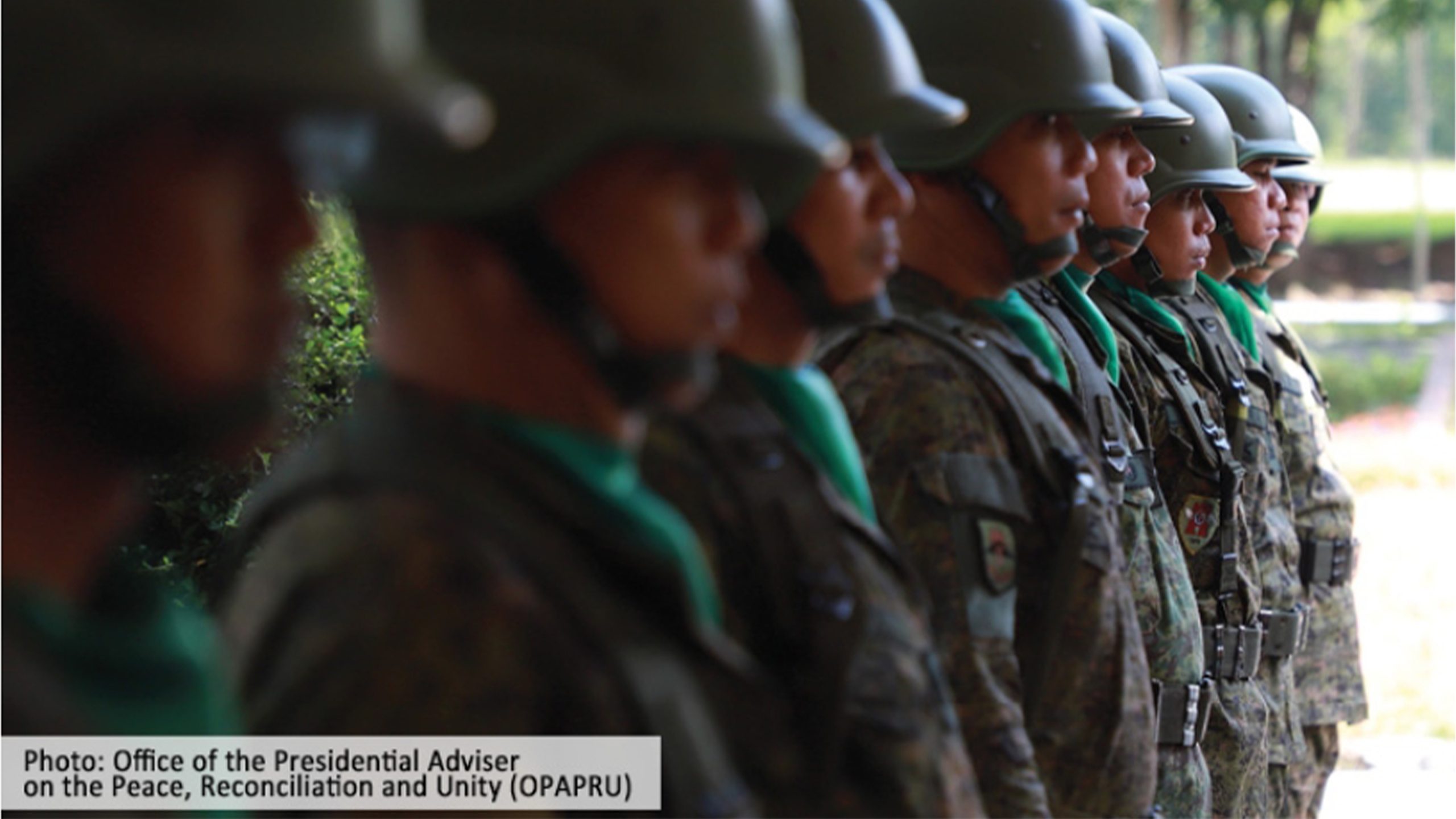
The PIDS peacebuilding study Philippines shows that peace holds when communities see real and lasting benefits in their daily lives.
Peace is not secured by agreements alone—it is sustained when communities see real and lasting improvements in their daily lives.
This was according to a study by the Philippine Institute for Development Studies (PIDS), which finds that peace efforts in the Philippines are more likely to succeed when security, economic, and political interventions work together to make cooperation more beneficial than returning to violence.
Titled “Toward Resolutions and Reconciliations: Understanding the Elements of Peacebuilding in the Philippines,” PIDS Senior Research Fellow Dr. Adoracion Navarro and Research Analyst Janina Sofia Jacinto examined decades of peace initiatives involving separatist movements in Mindanao and communist insurgencies across the country.
Using interviews and a review of peace agreements, government policies, and program implementation reports, the study identified six key elements of peacebuilding: confidence-building measures, peace agreements, socioeconomic programs, cessation of hostilities, political and legal settlements, and transitional justice and reconciliation.
According to the authors, these interventions are most effective when economic, political, and security incentives are aligned and when government commitments are delivered consistently over time.
“Peacebuilding initiatives are most effective when economic, political, and security incentives are aligned and when state commitments are perceived as credible and sustained over time,” the authors noted.
One key finding is that livelihood and reintegration support can influence whether former combatants return to civilian life.
From 2016 to September 2025, the government’s Enhanced Comprehensive Local Integration Program (ECLIP) assisted around 11,700 former rebels, providing nearly PHP 966 million in aid, including livelihood support, reintegration assistance, and cash incentives for surrendered firearms.
Such interventions, the study explains, can shift the cost-benefit calculations of former combatants and communities by creating tangible pathways toward sustainable livelihoods and social integration.
Beyond individual-level support, large-scale development programs also help reinforce confidence in the peace process.
The government’s PAyapa at MAsaganang PamayaNAn (PAMANA) program, for instance, invested PHP 56.62 billion from 2011 to 2022 in infrastructure, livelihood, and social services across conflict-affected areas.
More recent allocations include over PHP 1 billion in 2024 and PHP 1.26 billion in 2025 for priority projects such as roads, bridges, and water systems.
In Mindanao, the transition to the Bangsamoro Autonomous Region in Muslim Mindanao (BARMM), alongside initiatives such as the transformation of former Moro Islamic Liberation Front (MILF) camps, reflects efforts to integrate political settlements with long-term socioeconomic support for former combatants and their communities.
However, the study also notes that progress remains uneven.
Delays in delivering assistance, weak coordination among implementing agencies, and gaps in monitoring systems can undermine confidence in reintegration programs and slow down peacebuilding outcomes.
The research emphasizes that peacebuilding must be understood as an ongoing process that requires sustained support—including safety guarantees, stable housing, access to services, and community acceptance—rather than a one-time intervention.
Local governments play a critical role in ensuring that assistance reaches intended beneficiaries and responds to local needs.
Addressing deeper structural issues such as inequality, land disputes, and political exclusion is also necessary to complement economic and security interventions.
Overall, the findings suggest that peace becomes more sustainable when interventions are delivered consistently and backed by credible institutional support—making peace not only a formal agreement but a viable and lasting alternative to conflict.


 Facebook
 Twitter