
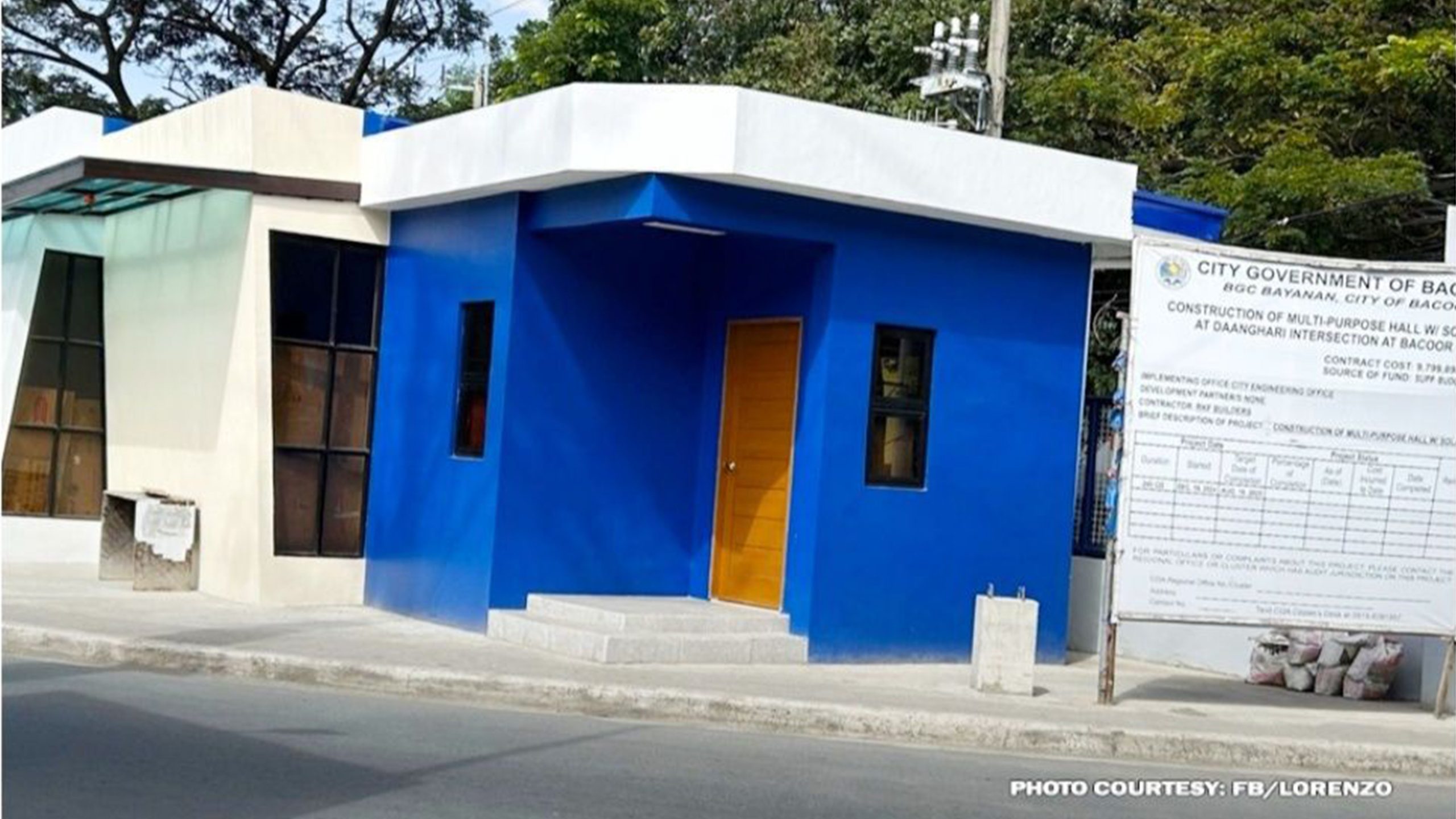
₱9.8-million solar-powered multi-purpose hall Bacoor has drawn mixed reactions online after images of the government-funded facility circulated on social media.
A newly constructed multi-purpose hall worth ₱9.8 million in Bacoor City, Cavite has sparked widespread discussion on social media after photos of the facility circulated online, prompting questions and mixed reactions from netizens over the project’s cost, size, and features. The structure, which includes a solar power system, has become the subject of public interest as residents seek clearer information about how public funds were spent.
According to details shared online, the project involves the construction of a modern multi-purpose hall equipped with solar panels, intended to support community activities and reduce electricity expenses through the use of renewable energy. Images show a compact yet newly built structure with a contemporary design, located along a roadside area in Bacoor. A project signboard visible in the photos indicates that the facility was funded through government resources and implemented under the local government.
The viral post triggered varied reactions, with some netizens questioning whether the ₱9.8-million price tag was proportionate to the apparent size of the building. Others raised concerns about transparency, asking for a breakdown of expenses, including construction costs, solar panel installation, and other components of the project. Several commenters also expressed interest in knowing how the facility would be used and which communities would directly benefit from it.
At the same time, some online users urged caution against drawing conclusions based solely on photos. They pointed out that infrastructure costs may include factors not immediately visible, such as electrical systems, structural reinforcements, permits, labor, site preparation, and the installation of solar technology, which can significantly raise overall expenses. Supporters of the project also noted that investments in renewable energy could result in long-term savings for the local government by reducing power costs over time.
As of this writing, no official statement has been released addressing the specific questions raised online. However, public infrastructure projects are generally subject to government procurement rules, cost estimates, and auditing processes designed to ensure compliance with regulations. Observers note that clearer communication from authorities regarding project details could help address public concerns and prevent misinformation.
The discussion reflects a broader trend of heightened public scrutiny over government-funded projects, fueled by social media platforms where images and claims can quickly gain traction. Analysts say this underscores the growing demand for transparency and timely information, particularly when it comes to the use of public funds at the local level.
Despite the debate, the Bacoor multi-purpose hall is expected to serve as a venue for various community functions once fully operational. Facilities like these are commonly used for meetings, events, and public services, and the inclusion of solar power aligns with broader efforts to promote sustainable and energy-efficient infrastructure.
As conversations continue online, residents and netizens alike await further clarification from concerned offices. The situation highlights the importance of public engagement and open communication in infrastructure development, especially in an era where citizens play an active role in monitoring and discussing government projects.


 Facebook
 Twitter