
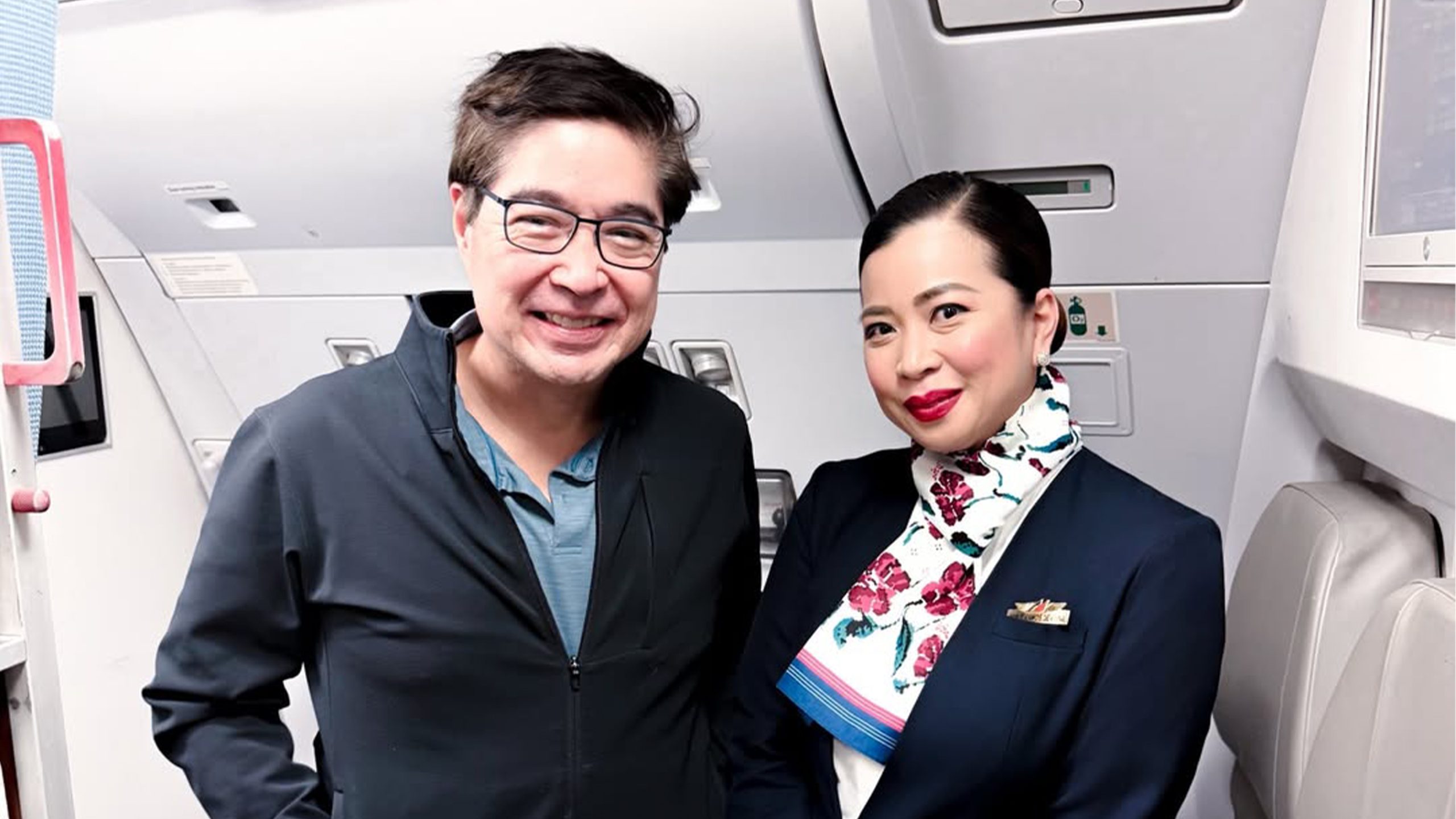
Cebu Pacific chairman Lance Gokongwei caught public attention after he was spotted flying aboard Philippine Airlines (PAL), an unexpected moment that quickly went viral and sparked discussions across social media.
A rare and unexpected moment in Philippine aviation has caught public attention after Cebu Pacific chairman Lance Gokongwei was spotted flying aboard Philippine Airlines (PAL), the country’s flag carrier and a direct rival of the airline he leads. The encounter, shared online by a PAL flight attendant, quickly went viral, prompting conversations about leadership, humility, and professionalism in one of the nation’s most competitive industries.
The incident unfolded quietly during a commercial PAL flight, where Gokongwei was recognized by a cabin crew member who later posted about the experience on social media. The flight attendant expressed gratitude and surprise, thanking the businessman for choosing to fly with PAL. Accompanied by a photo taken inside the aircraft, the post resonated with netizens who praised the gesture as a refreshing reminder that even top executives are everyday travelers too.
Lance Gokongwei is one of the most prominent figures in Philippine business. As chairman of Cebu Pacific, the country’s largest low-cost carrier, he is closely associated with budget travel, aggressive route expansion, and making air travel accessible to millions of Filipinos. Seeing him aboard Philippine Airlines, which positions itself as a full-service and premium carrier, instantly became a talking point online, not because of controversy, but because of its symbolic value.
In the highly competitive aviation sector, airline leaders are often expected to remain visibly loyal to their own brands. However, industry analysts note that executives flying rival carriers is not unusual, especially for reasons of scheduling convenience, route availability, or personal travel needs. Still, such moments are rarely seen or shared publicly, making this encounter stand out.
Social media users reacted positively, with many praising Gokongwei for his low-profile demeanor. Comments highlighted how the businessman appeared relaxed and approachable, posing politely for a photo with the flight attendant. Others pointed out that the interaction reflected mutual respect between professionals in competing companies, emphasizing that rivalry in business does not always translate to personal animosity.
The post also sparked broader discussion about the realities of air travel in the Philippines. With limited flight schedules on certain routes, travelers often choose airlines based on timing, availability, or urgency rather than brand loyalty. Several netizens shared their own experiences of switching between carriers depending on practical needs, echoing the sentiment that flying is, at its core, about reaching destinations efficiently.
From an industry perspective, the moment subtly highlights the maturity of Philippine aviation. Despite competition, airlines operate within the same ecosystem, facing shared challenges such as fuel costs, airport congestion, weather disruptions, and passenger expectations. Encounters like this humanize industry leaders and remind the public that behind corporate strategies are individuals navigating the same systems as ordinary passengers.
Philippine Airlines, for its part, has long positioned itself as the country’s flag carrier, emphasizing Filipino hospitality, full-service offerings, and international connectivity. Cebu Pacific, meanwhile, dominates the budget travel segment with its low fares and extensive domestic network. The coexistence of both models has shaped how Filipinos travel, offering choices that cater to different needs and budgets.
The viral post did not indicate the purpose of Gokongwei’s travel, and no official statements were issued by either airline. Nonetheless, the lack of controversy surrounding the incident speaks volumes. Instead of sparking criticism, the sight of a rival airline’s chairman on a PAL flight was largely met with admiration and curiosity, reflecting a more nuanced public understanding of business leadership.
In an era where corporate figures are often scrutinized for their every move, moments like this resonate because they feel genuine. There was no press release, no staged announcement, and no branding exercise. It was a simple interaction between a passenger and a flight attendant, shared organically, and embraced by the public for its authenticity.
Ultimately, the encounter serves as a reminder that leadership is not confined to boardrooms or branding campaigns. Sometimes, it is reflected in small, ordinary moments—choosing a flight, exchanging smiles with crew members, and showing respect regardless of competition. For many Filipinos who saw the post, that quiet display of humility may be just as memorable as any corporate achievement.
As the aviation industry continues to evolve amid economic shifts and changing travel demands, such moments of shared humanity offer a refreshing pause. They reinforce the idea that while airlines compete for passengers, the skies are shared, and professionalism transcends rivalry.


 Facebook
 Twitter