
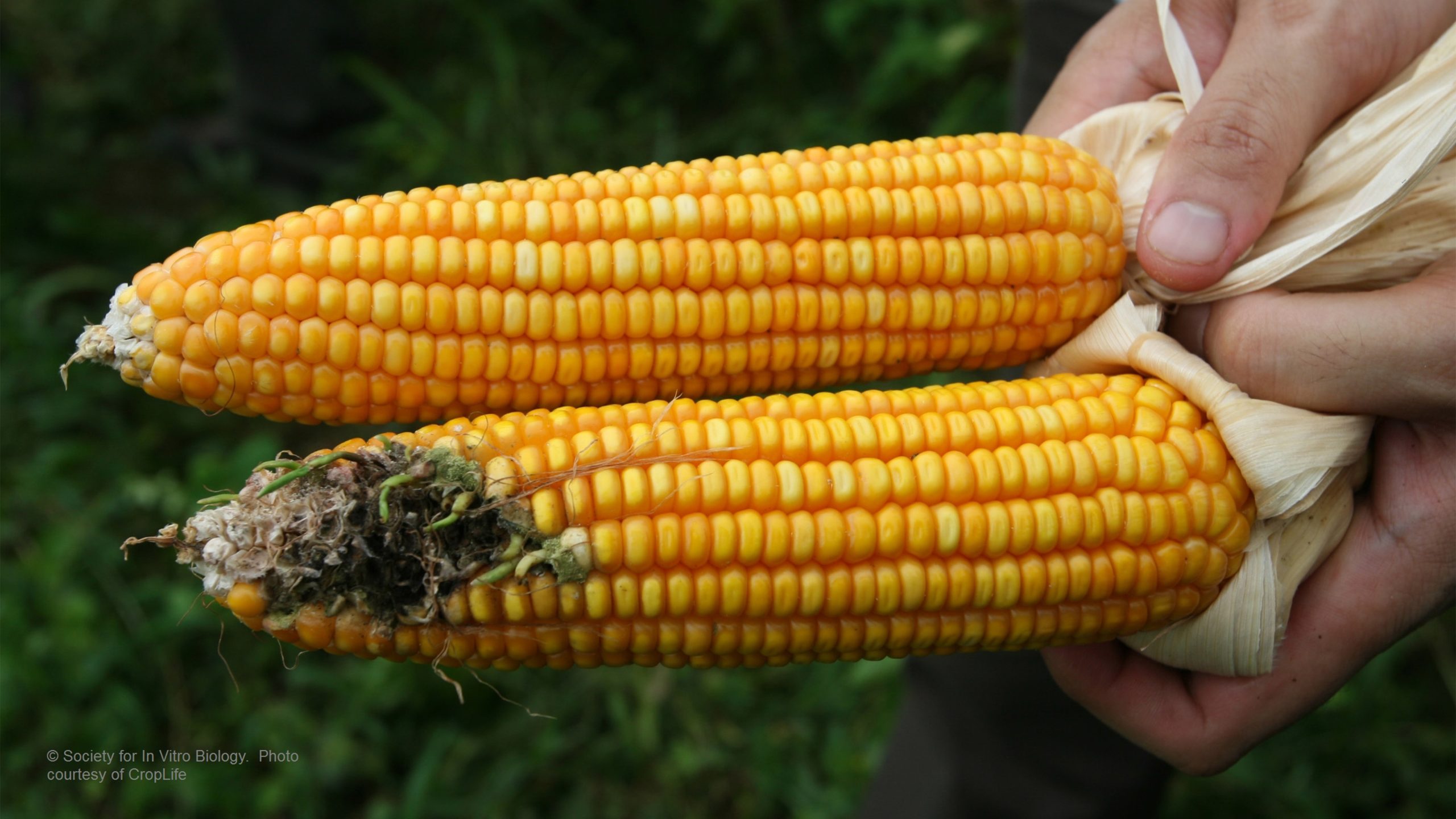
Bt crops use biotechnology derived from Bacillus thuringiensis, a naturally occurring soil bacterium that has been widely studied for its insecticidal properties.
Over 90 species of naturally occurring, insect-specific bacteria have been isolated from insects, plants, and the soil, but only a few have been studied intensively. One that has gained much attention is Bacillus thuringiensis (Bt), a species that has been developed as a microbial insecticide.
As it comes from the earth itself, Bt is very natural, according to Dr. Emiliana Bernardo, the late entomologist from the University of the Philippines. It has been present in the soil for so many years. In 1901, Bt was discovered to have an insecticidal property, which came from the protein it produces. By the 1950s, it became a well-known biological insecticide.
“Bt has been available in North America as a commercial microbial insecticide since the 1960s and is sold under various trade names,” reports Dr. Anthony Shelton, a professor of entomology at Cornell University. “These products have an excellent safety record and can be used on crops until close to the day of harvest. Bt can be applied using conventional spray equipment but, because the bacteria must be eaten to be effective, good spray coverage is essential.”
According to Dr. F.B. Peairs, some strains of Bt kill insects with toxins called insecticidal crystal proteins or delta endotoxins. This group of toxins is considered relatively harmless to humans and most non-pest species.
(Photo courtesy of SEARCA)
“Delta endotoxins rapidly paralyze the insect’s digestive system, so damage to the plant stops soon after the insect is exposed to the toxin,” explained Dr. Peairs, extension entomologist and professor at Colorado State University. “Mortality may take several days, so the effects of delta endotoxins are very different from what we expect from conventional insecticides.”
What makes Bt exceptional from other kinds of pest controls is specificity. Take the case of Dipel, a brand of Bt microbial pesticide. The name is actually an anagram of the Order of insects that it targets – the Lepidopterans. These are insects with scaly wings during their adult stage; examples include moths and butterflies.
As it comes naturally, Bt is one of the few pesticides permitted by organic standards. But because of its specific mode of action, farmers are not much agog on Bt. Most farmers, Dr. Bernardo said, want all insects to be eliminated. This was the main reason why the use of Bt bio-pesticides declined and chemical pesticides proliferated.
But today, science has come up with Bt crops. “Enhance through modern biotechnology using genetic engineering, these crops have been known to help farmers gain and produce more because of the effective mechanism of the Bt insect resistance technology,” wrote Jenny A. Panopio and Sophia M. Mercado in an article which appeared in Biolife magazine.
In an article circulated by Biotechnology Information Center, Dr. Bernardo shared this information: “The Bt gene has been incorporated in the plant system that enables the plant to produce Bt protein, thereby making it resistant to the target insect pest. The alkaline condition and the presence of the needed enzymes in the digestive system of the target insect pest activate the pesticidal segment and separate it from the Bt protein. The pesticidal segment gets absorbed through the endotoxin receptors in the digestive system resulting in death of the insect.”
In 1985, the Belgian company Plant Genetic Systems (now part of Bayer Crop Science) was the first company to develop the first genetically engineered plants on tobacco with insect tolerance by expressing Bt genes. The Bt tobacco was never commercialized; tobacco plants are used to test genetic modifications since they are easy to manipulate genetically and are not part of the supply.
Today, the available crops enhanced with Bt technology are corn, cotton, and potato.
“Despite being a safer alternative to chemical pesticides, Bt crops are still rigorously tested by scientists and experts using international and local standards, in all adopting countries,” noted Panopio and Mercado.
The Consensus Document of the Organization for Economic Cooperation and Development (an intergovernmental organization composed of 30 industrialized countries in North America, Europe, Asia, the Pacific region, and the European Commission) considered Bt crops as “generally safe.”
In the United States, Bt was actually tested on human beings. The Extension Toxicology Network, a project of several US universities, reported that those who ate a gram of Bt a day for five alternate days did not have any complaints; while those “who ate one gram per day for three consecutive days were not poisoned or infected.”
But despite this, notions of “frankenfoods” and “agroterrorism” continue. Here’s what Hardy Hall wrote in The Science Creative Quarterly: “Arguably, every food in our current diet carries with it associated risks, determined through “trial-and-error” extending back before to our hunter-gatherer origins. Often, we will accept a certain degree of exposure to known hazards to receive known benefits.”
Hall cites the case of Bt corn. “(It) has obvious benefits for agricultural production, increasing profit margins through more efficient and consistent corn production and improving the working environment for farmers through reduced exposure to pesticides. In a surplus market, these benefits may be passed on to the consumer as a grocery bill reduction.”
Bt corn is insect resistant corn with Bt technology. It is already adopted in many countries, including the United States, Argentina, Canada, Honduras, Portugal, the Philippines, Spain, South Africa, and Uruguay.
“Bt corn draws its humble origins from France,” Hall wrote. “Artificial selection of Bt strains has led to the successful targeting of many insect pests. Because no toxic effects of Bt on humans have been detected in its seventy years of use, it is now considered an acceptable pest control measure for the organic food industry. To this day, Bt is an important part of many integrated pest management strategies.”
Bt corn was approved in the Philippines in 2002 and was planted the following year. “Bt corn has greatly reduced the pest damage caused by the corn borer, which subjects the plant to fungi,” reported Panopio and Mercado. “Fungi could consequently cause plant diseases or carry cancer-inducing aflatoxins.”
Since its adoption in the Philippines, the number of farmers planting Bt corn increase each year – from 100,000 in 2006 to 375,000 in 2012. One reason for high adoption is the economic benefits of planting Bt corn. A study came up with a conclusion that a Bt corn farmer gets 75% more income compared with those planting conventional or hybrid corns.
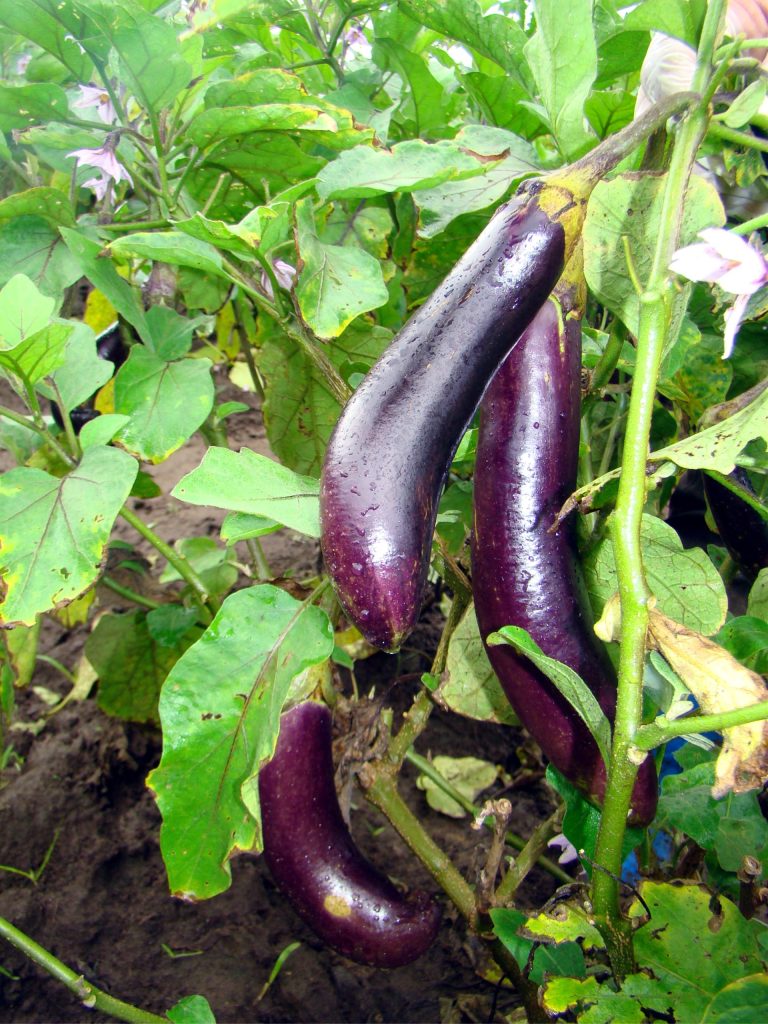
As alternative to the hazardous use of chemicals which are ineffective, expensive, and harmful to farmers and consumers’ health, some Filipino researchers are developing the FSB-resistant eggplant or Bt talong.
“Bt talong is FSB resistant primarily because of the natural proteins that it produces. FSB caterpillars that feed on the leaves, fruits, and shoots of the Bt talong eventually stop consuming these parts and die,” explained Dr. Desiree M. Hautea, who headed the research. “The protein in Bt talong is very specific such that it only harms the target insect and not the humans and other non-target organisms.”
Once available commercially, Bt talong can help farmers plant the crop without the need to spray insecticides. Because of this, the farmer saves on labor and pesticide costs. In addition, he would be assured that he is not causing harm to his own health and the environment.
Indeed, Bt crops have gone a long, long way. “Bt crops have a well-established place in agriculture,” wrote Panopio and Mercado. “They are not only natural; they have also been tested in time; by different experts, in many different places all over the world. Equally important, it has contributed to the welfare of farmers, consumers, environment, and food security, on the whole.”
Photos by Southeast Asia Regional Center for Agriculture

 Facebook
 Twitter