
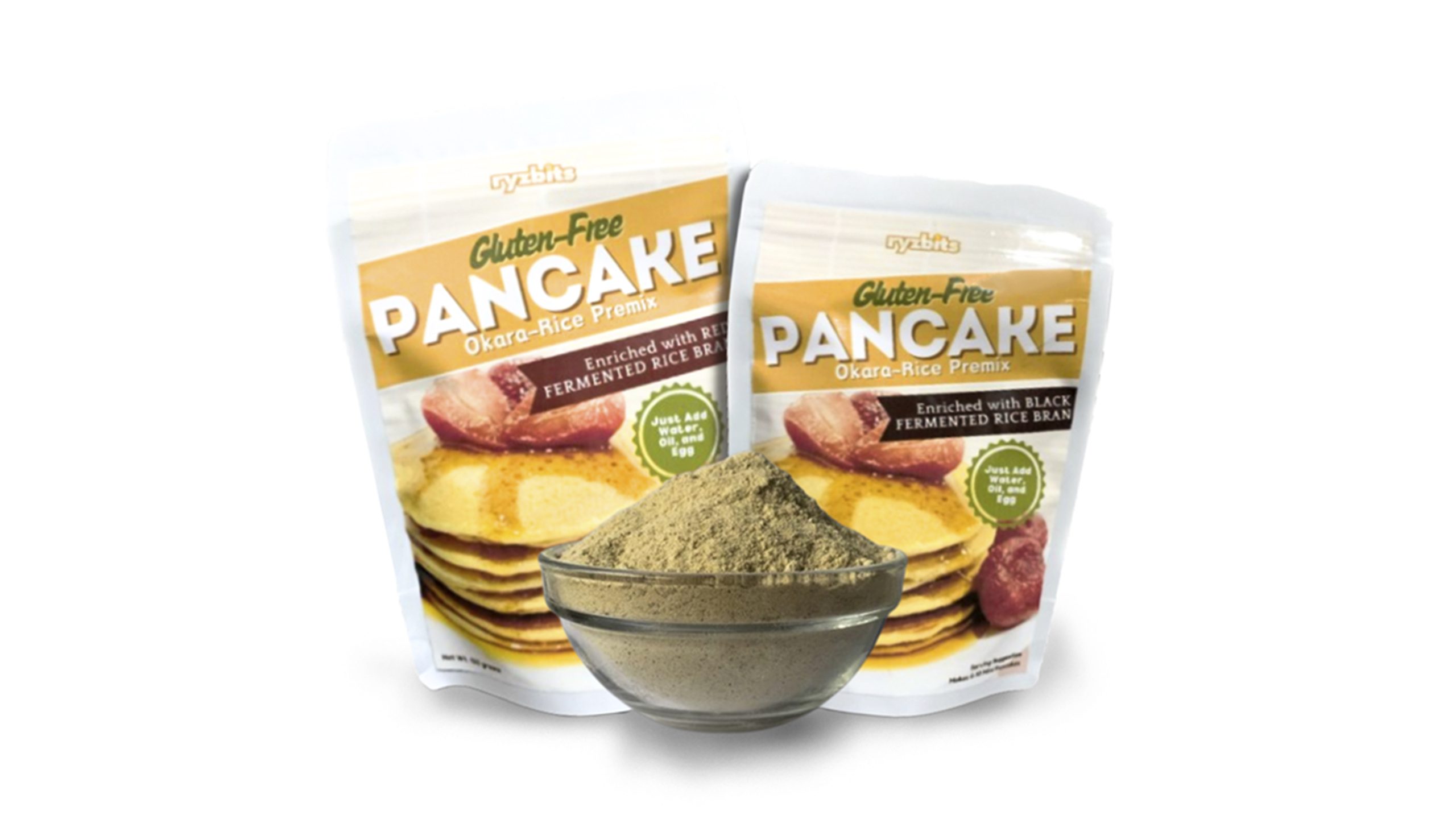
Healthier pancakes made from rice bran and soybean scraps are being developed by Filipino scientists as a nutritious, gluten-free alternative to conventional mixes.
Pancakes remain a popular breakfast and snack option, loved for their soft, fluffy texture and sweet taste. However, many conventional pancake mixes are often high in fats and calories while offering limited nutritional value.
To address this concern, food technologists from the Department of Agriculture–Philippine Rice Research Institute (DA-PhilRice) and the Department of Food Science and Technology of Central Luzon State University (DFST-CLSU) have developed a gluten-free pancake premix enriched with agricultural by-products commonly treated as waste—soybean pulp, known as okara, and fermented pigmented rice bran (FRB).
Okara is a yellowish soy pulp generated during the production of tofu and soy milk. Large volumes are produced daily, with about one kilogram of okara left behind for every kilogram of tofu made. Despite being underutilized, okara contains around 25 to 30 percent protein and is naturally gluten-free, making it suitable for individuals with celiac disease or gluten intolerance.
Rice bran, locally known as darak, is the outer layer removed during rice milling. Although it is rarely consumed by humans, pigmented rice bran from red and black rice varieties is rich in dietary fiber, antioxidants, and phytochemicals. Through fermentation, its nutritional profile is further enhanced, improving both antioxidant activity and functional properties.
“Rice bran is more than a by-product. It holds promise for health, sustainability, and innovation,” said food technologist Frances Angeli Reyes, who led the product’s development. “With higher phytochemical content and antioxidant activity, the premix suggests enhanced functional and health-promoting potential.”
Compared with commercially available pancake mixes, the okara- and FRB-enriched premix contains lower fat, higher protein, and 12.5 percent more dietary fiber. Sensory evaluation results also showed high acceptability across key attributes, including aroma, appearance, color, softness, fluffiness, taste, mouthfeel, sweetness, and aftertaste.
Designed for convenience, the premix allows pancakes to be prepared in just three to five minutes using common kitchen tools, making it accessible for everyday household use.
Researchers noted that the product could help address malnutrition in the Philippines, a public health concern linked not only to undernutrition but also to the growing prevalence of non-communicable diseases such as diabetes, heart disease, and cancer.
“Our study aims to help tackle malnutrition in the Philippines by developing and promoting a nutritionally enhanced pancake premix as a healthier alternative,” Reyes said. “It is designed to meet the dietary needs of health-conscious consumers and those with gluten intolerance.”
The innovation gained national recognition during the 37th Ugnay Palay National Rice Research for Development Conference, where it received the Best Poster Award.

 Facebook
 Twitter