
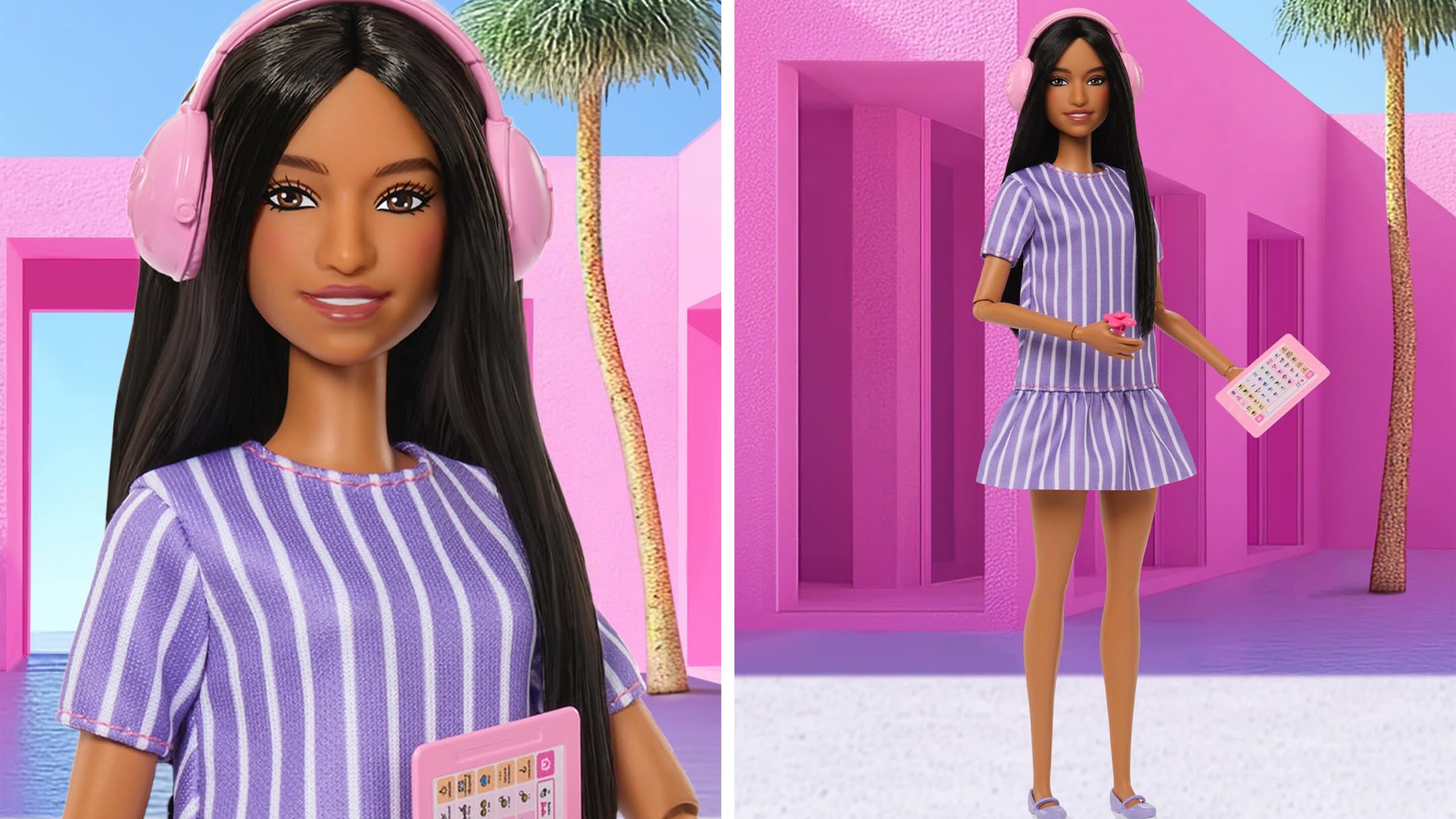
The autistic Barbie doll marks a new step in inclusive representation as Barbie unveils its first-ever doll designed with sensory-friendly features.
Barbie has taken another step toward inclusive representation with the release of its first-ever autistic Barbie, a doll created in partnership with the Autistic Self Advocacy Network (ASAN) and designed to reflect real-life experiences of people on the autism spectrum. The launch has drawn widespread attention online, with advocates and families welcoming the move as a meaningful addition to Mattel’s growing line of diverse dolls.
According to Barbie, the new doll was developed through close collaboration with ASAN to ensure authenticity and respect in its design. The goal, the company said, was not simply to label the doll, but to thoughtfully incorporate features that many autistic individuals may relate to, particularly in how they interact with their environment and process sensory information.
Among the doll’s most notable elements are accessories and physical details intended to represent common sensory and communication needs. These include noise-canceling headphones meant to reduce sensory overload, as well as an AAC (Augmentative and Alternative Communication) tablet, which reflects tools used by some autistic individuals to communicate. The doll also features articulated elbows and wrists, allowing for stimming motions and expressive hand gestures.
Barbie explained that visual details were also carefully considered. The doll’s gaze is slightly averted, a design choice that acknowledges how some people on the autism spectrum may experience or prefer limited direct eye contact. In addition, the clothing was designed with sensory sensitivity in mind, aiming to minimize uncomfortable fabric-to-skin contact while maintaining Barbie’s signature style.
The autistic Barbie is part of the Barbie Fashionistas collection, which in recent years has expanded to include dolls with different body types, skin tones, disabilities, and medical conditions. Mattel has repeatedly stated that representation in toys plays an important role in helping children feel seen and understood, while also teaching empathy and acceptance at an early age.
Advocates have praised the release for involving autistic voices in the design process rather than relying on assumptions. By working directly with ASAN, Barbie ensured that the doll reflects lived experiences instead of stereotypes. Many parents and educators have also highlighted the doll’s potential value as a learning tool, helping children better understand neurodiversity through play.
Social media reaction to the announcement has been largely positive, with users applauding the attention to detail and the message of inclusion. Some autistic adults shared that seeing aspects of their daily lives represented in a mainstream toy felt validating, while others emphasized the importance of continuing conversations about acceptance beyond symbolic gestures.
Barbie’s move comes amid a broader shift in the toy industry toward more inclusive products that mirror the diversity of the real world. Experts note that toys often shape how children perceive themselves and others, making representation especially powerful during formative years.
While the release has been celebrated, advocates also stress that inclusion should be ongoing. They encourage companies to continue listening to marginalized communities and to expand representation across cultures, abilities, and identities.
With the introduction of its first autistic Barbie, Mattel adds another chapter to Barbie’s evolving identity—from a fashion icon to a platform for representation. For many families and individuals, the doll is more than just a toy; it is a symbol that differences are not only acknowledged, but valued.


 Facebook
 Twitter