
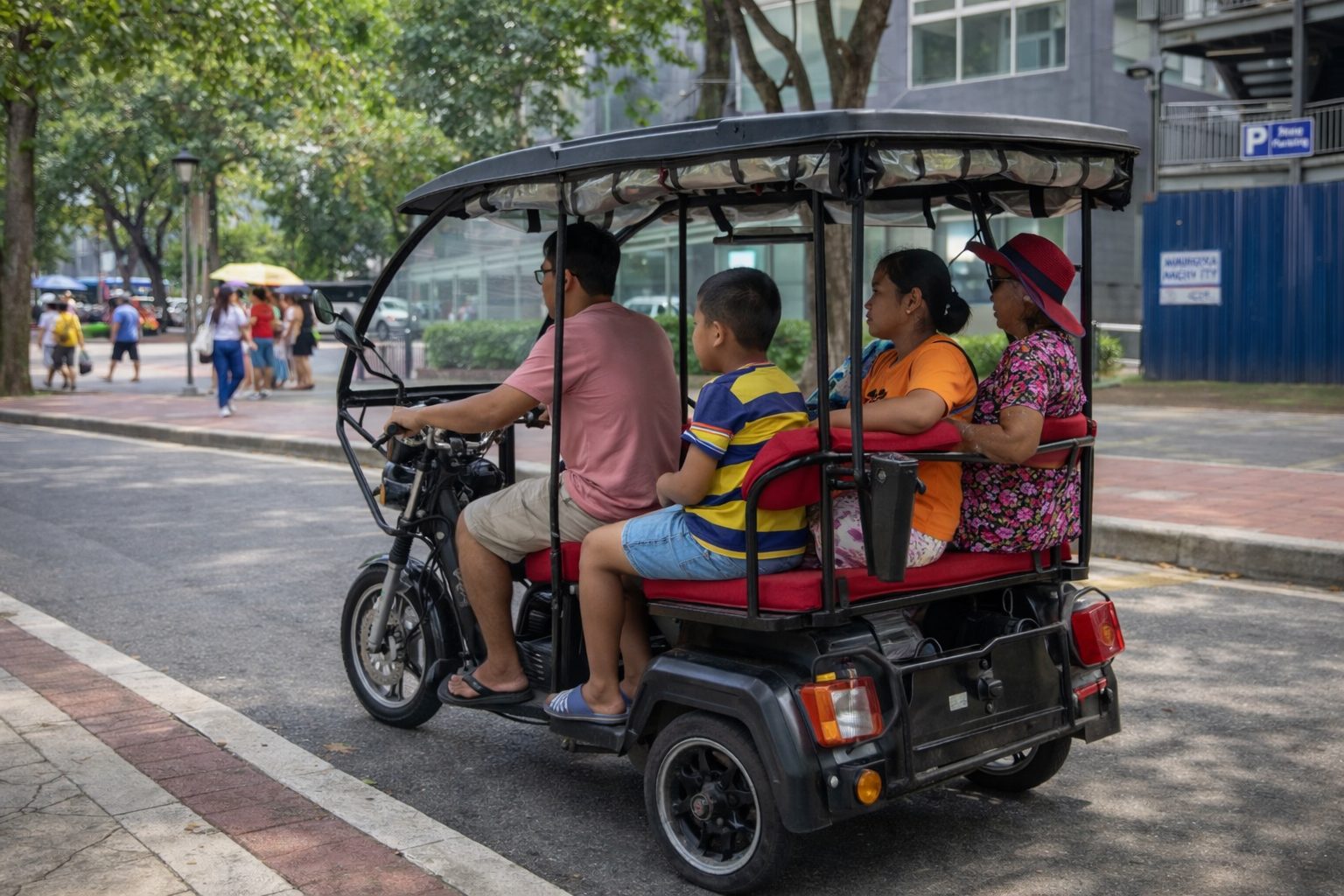
The LTO e-trike ban is now being strictly enforced along major roads in Metro Manila as authorities cite growing safety concerns and traffic risks.
The Land Transportation Office (LTO) has intensified enforcement against electric tricycles, or e-trikes, operating along major roads in Metro Manila, citing growing safety concerns and traffic risks. As authorities begin strict implementation of the ban on key highways such as EDSA, C-5 Road, Roxas Boulevard, and portions of Quirino Avenue, commuters, drivers, and transport groups are adjusting to what could become a significant shift in urban mobility across the capital.
Stronger Enforcement to Improve Road Safety
According to the LTO, the crackdown aims to prevent accidents and reduce congestion on high-speed thoroughfares not designed for slow-moving vehicles. E-trikes, which are widely used for short-distance travel in residential and inner-city areas, often lack the speed, safety features, and road stability required for major highways.
Traffic officials have long warned that mixing e-trikes with buses, trucks, and private vehicles on national roads creates dangerous conditions. Recent enforcement actions highlight the government’s renewed focus on aligning road use with vehicle classifications to protect both motorists and public utility drivers.
Under the stricter rules, e-trike drivers caught using major highways face fines, penalties, and possible vehicle impoundment.
Roads Covered by the Ban
The LTO confirmed that e-trikes are prohibited from traveling along several primary routes in Metro Manila, including:
- Epifanio de los Santos Avenue (EDSA)
- Circumferential Road 5 (C-5)
- Roxas Boulevard
- Quirino Avenue up to the South Luzon Expressway (SLEX)
- Other national highways and major arterial roads
Authorities emphasized that these restrictions are not new, but enforcement has been inconsistent in the past. The current initiative seeks to standardize compliance across all cities and municipalities in the metro.
Impact on Drivers and Daily Commuters
For many e-trike drivers, the ban presents immediate challenges. E-trikes are a primary source of livelihood for thousands of families, particularly in densely populated urban communities. With access to major roads restricted, drivers are now rerouting through inner streets, residential zones, and barangay roads.
Some drivers expressed concern that alternative routes increase travel time and reduce passenger volume. Others worry about unclear boundaries between allowed and prohibited roads, calling for better signage and clearer guidelines.
Commuters, meanwhile, have mixed reactions. While some passengers appreciate the safety rationale behind the crackdown, others fear reduced transport options, especially in areas where e-trikes serve as the most affordable and accessible mode of travel.
Government Clarifies Scope of the Policy
The LTO stressed that the policy does not ban e-trikes outright. Instead, it limits their operation to roads suitable for their design and speed capacity. Local government units (LGUs) still retain authority over e-trike routes within their jurisdictions, particularly on barangay and secondary roads.
Officials also noted that enforcement focuses on safety rather than punishment. Drivers are being informed of violations, educated on proper routes, and reminded of existing traffic regulations.
Balancing Safety and Livelihood
Transport analysts say the challenge lies in balancing road safety with inclusive mobility. E-trikes play a crucial role in last-mile transport, especially for senior citizens, workers, and residents in narrow or crowded neighborhoods.
Some experts suggest that the government should complement enforcement with supportive measures, such as:
- Clear route mapping for e-trike drivers
- Expanded secondary road infrastructure
- Designated lanes where feasible
- Skills training or transition programs for affected drivers
Without long-term planning, critics warn that sudden enforcement could disproportionately affect low-income transport workers.
Urban Transport Modernization Context
The crackdown on e-trikes is part of broader efforts to organize Metro Manila’s transport system. As authorities push for modernization, safety compliance, and traffic discipline, vehicle classification and route management have become key priorities.
E-trikes, while eco-friendly and cost-efficient, were primarily designed for local travel. Transport planners argue that keeping them off major highways ensures smoother traffic flow and lowers the risk of high-impact collisions.
Public Reaction and Ongoing Adjustments
Public response has been divided. Road safety advocates largely support the enforcement, saying it is long overdue. They argue that consistent implementation will benefit all road users in the long run.
However, transport groups are calling for consultations and gradual adjustments rather than sudden crackdowns. They urge authorities to coordinate closely with LGUs to avoid confusion and ensure humane enforcement.
The LTO has indicated that it will continue monitoring the situation and adjust policies as needed, particularly if traffic patterns or safety data change.
What E-Trike Drivers Should Know
The LTO advises e-trike drivers to:
- Avoid national highways and major thoroughfares
- Follow LGU-designated routes
- Carry valid registration and permits
- Stay updated on local traffic advisories
Drivers are also encouraged to seek guidance from local transport offices to avoid penalties.
Looking Ahead
As Metro Manila continues to grapple with congestion and road safety challenges, transport policies like the e-trike ban highlight the complexity of urban mobility. Effective enforcement, clear communication, and inclusive planning will determine whether such measures lead to safer roads without sidelining vulnerable sectors.
For now, the LTO’s message is clear: road safety takes precedence, and compliance with vehicle-specific regulations is essential to keeping Metro Manila’s streets safer for everyone.


 Facebook
 Twitter