
DOST research data projects are being strengthened as the Department of Science and Technology boosts its capacity to transform studies and technical data into bankable project proposals and evidence-based national policies.
The Department of Science and Technology (DOST) is taking significant strides toward strengthening its capacity to transform technical data and research insights into bankable project proposals and evidence-informed policies that drive national development.
The initiative was led by the Office of the Assistant Secretary for Development Cooperation and the Geospatial Analytics and Technology Solutions (GATES) Program, in collaboration with the United Nations Development Programme (UNDP) Philippines, experts from the University of the Philippines – National College of Public Administration and Governance (UP NCPAG), and the National Research Council of the Philippines (NRCP).
A Vision for Data-Driven Governance
In his speech, DOST Secretary Renato U. Solidum, Jr. emphasized that the department’s goal is to evolve into an agile, data-driven, and future-ready organization that transforms information into national value. He underscored that decisions must be firmly grounded in evidence to ensure they align with global cooperation priorities and national development goals.
“Data must be connected. It must speak a common language. It must move from information to insight to action,” Secretary Solidum stated. “As the Department that leads innovation, we must also lead in harmonization, integration, and translation”.
Strengthening Proposal Development for Global Competitiveness
In collaboration with the UNDP Philippines, the first two days of the series focused on developing high-impact project proposals.
Experts guided participants through problem framing and stakeholder mapping to create a pipeline of project concept notes addressing three strategic areas: human capital development, innovation and economic development, and climate change and disaster risk reduction.
UNDP Resident Representative Knut Ostby noted that improving the ability to leverage Official Development Assistance (ODA) and external financing positions science and technology initiatives as catalysts for private-sector engagement and domestic investment.
“This is about scaling innovations where they are needed most,” Otsby said.
DOST Assistant Secretary for Development Mr. Rodolfo J. Calzado, Jr. also encouraged participants to further develop their group outputs into full draft concept notes, as these will serve as a preparatory step for the proposed one-on-one coaching sessions with the UNDP team scheduled to begin in the early months of 2026, refining the outputs into investment-ready project concept notes.
Bridging Research to Policy and Open Data
The final day of the series, conducted with experts from the UP-NCPAG, focused on the research-to-policy landscape.
Participants explored pathways to translate technical findings into actionable insights for national and sectoral policies while discussing the institutionalization of open data to advance good governance and transparency
Asec. Calzado, Jr. concluded that while the DOST system generates a wealth of geospatial data and technical knowledge annually, impact only occurs when that data is translated into strategic, people-centered action.
By maximizing the use of its organizational data through the GATES Program, DOST continues to reinforce its commitment to a data-driven government that provides solutions and opportunities for all Filipinos.
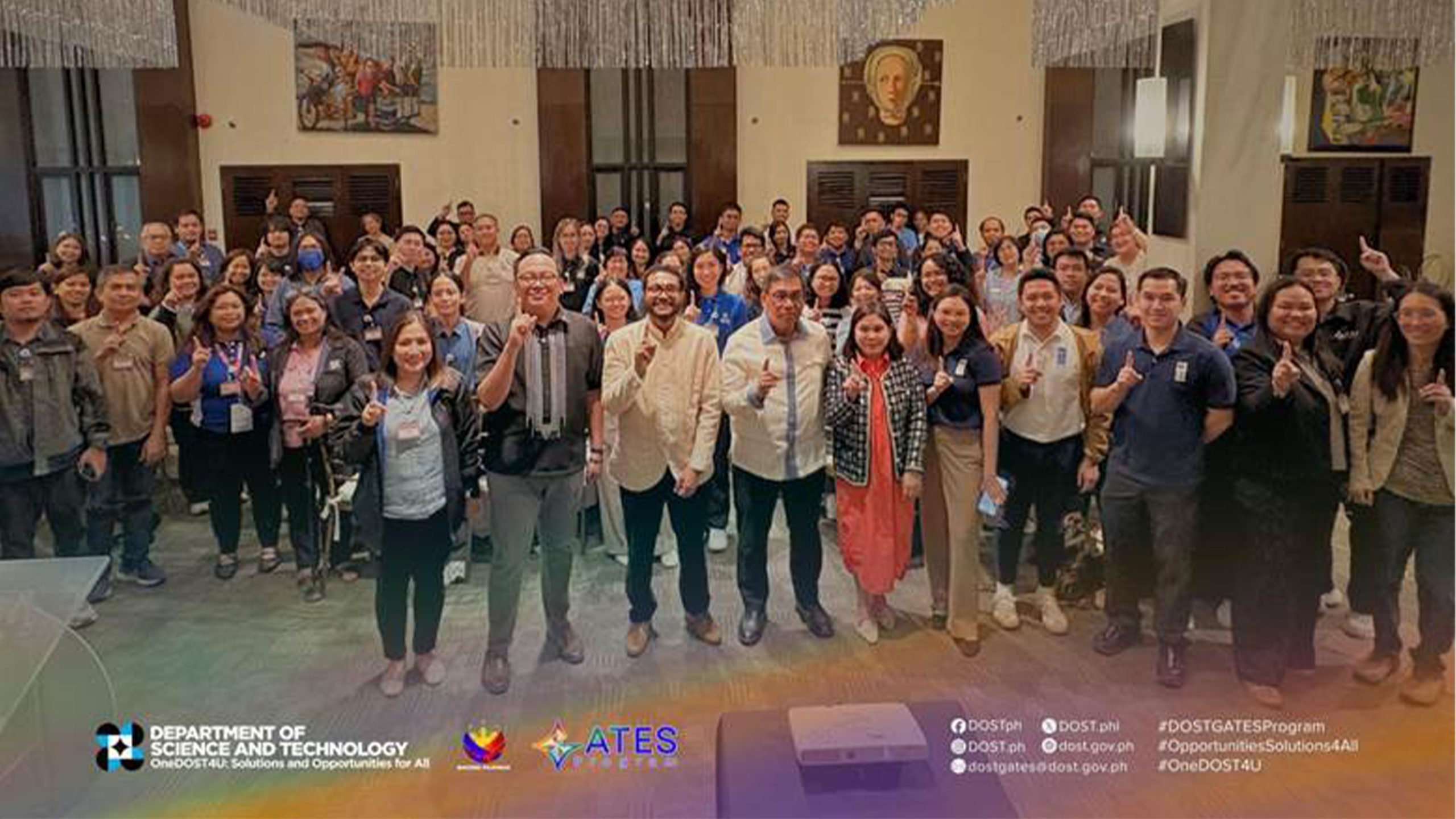
Through the “Collaborate, Translate, Transform: Seminar and Writeshop Series on Partnership and Proposal Development, Research Translation, and Policy Development,” held from December 2 to 4, 2025, the Department gathered representatives from its Central Office and attached agencies to bridge the gap between information generation and actionable results.
GATES Program is one of the eight banner research and development programs of the Department of Science and Technology (DOST) aimed at providing science-based, innovative, and inclusive solutions across four strategic pillars: human well-being, wealth creation, wealth protection, and sustainability. These pillars embody the mantra OneDOST4U: Solutions and Opportunities for All. (PR)
Written by Joy Calvar

 Facebook
 Twitter