

PAGASA warm dry season conditions are now being felt across the Philippines after the state weather bureau officially declared the end of the northeast monsoon, locally known as ‘Amihan,’ signaling a shift to hotter and drier weather nationwide.
The Philippine Atmospheric, Geophysical, and Astronomical Services Administration (DOST-PAGASA) has officially announced on Monday the end of the northeast monsoon or ‘Amihan’, signaling the onset of warmer and drier seasons in most parts of the country.
With this recent development, the weather agency said the public may expect hot and humid weather conditions, lesser rains, and high temperatures during this period, although some areas of Northern Luzon may still experience occasional northeasterly winds.
“The shift of wind direction from northeasterly to easterly due to the formation of the high-pressure area over the Northwestern Pacific signifies the termination of the northeast monsoon and the start of the warm and dry season,” DOST-PAGASA said in a statement.
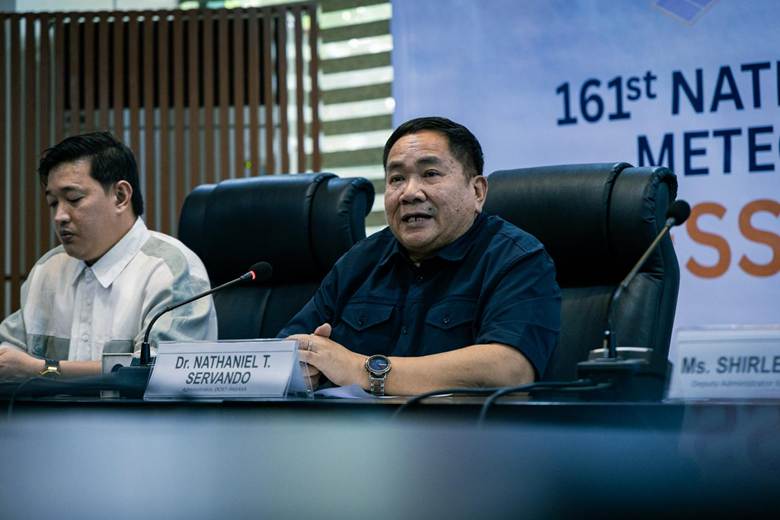
During a press conference held on Monday at the kick-off celebration of the 161st National Meteorological Day, DOST-PAGASA said the maximum temperature in Northern Luzon is forecasted to reach 40 degrees Celsius in the next two months.
“Makikita natin dito pagpatak ng Abril 1, 2026, malaking bahagi ng bansa, lalong-lalong na sa hilagang Luzon, ang posibleng magkaroon ng mas maiinit na temperatura. Pagdating natin ng Mayo, mas malaking bahagi ng ating bansa, karamihan ng mga istasyon ng PAGASA ay inaasahan na magtatala ng mas maiinit na temperatura sa buwan ng Mayo,” senior weather specialist Dr. Joseph Q. Basconcillo said.
Moreover, based on the two-month weather forecast of PAGASA, most provinces, especially in Northern and Central Luzon, may experience 11-20 dry days in April.
As for May, the drier season is more pronounced, especially in the extreme Northern Luzon, particularly Ilocos Norte, Apayao, and Cagayan, which may experience 21-35 dry days, according to the weather bureau.
A dry day is defined as a day with less than 1 millimeter of rainfall observed.
Although most provinces in the country may still experience a near-normal rainfall in April to May, Dr. Basconcillo said the possibility that the water reservoirs could experience a drop in water levels cannot be ruled out.
Thus, the public is also advised to take precautionary measures to minimize heat stress and optimize the daily use of water for personal and domestic consumption.
“Nakikita po natin sa buwan ng Abril hanggang sa buwan ng Mayo, karamihan ng mga probinsya sa buong bansa ay posibleng makaranas ng near-normal rainfall. Ibig sabihin, pangkaraniwan po ang dami ng ulan na ating mararanasan. Pero hindi po natin isinasantabi yung posibilidad na karamihan sa ating mga imbakan ng tubig o yung mga dams ay posibleng makaranas ng pagbaba sa pangkaraniwang lebel ng tubig,” Dr. Basconcillo said.
With the theme “Observing Today, Protecting Tomorrow”, this year’s celebration of the 76th World Meteorological Day highlights the crucial role of accurate weather and climate observations in building a safe and secure future.
This week-long celebration of DOST-PAGASA includes the launching of Inter-DRRM Taskforce Convergence Zone (ITCZ) corner 2.0, which showcases local early warning and Disaster Risk Reduction Management (DRRM) services of various local government units (LGUs) in Metro Manila, along with other key partners and stakeholders in the DRRM sector. (PR)
Photos by Patrick James Lee C. Alfonso

 Facebook
 Twitter