
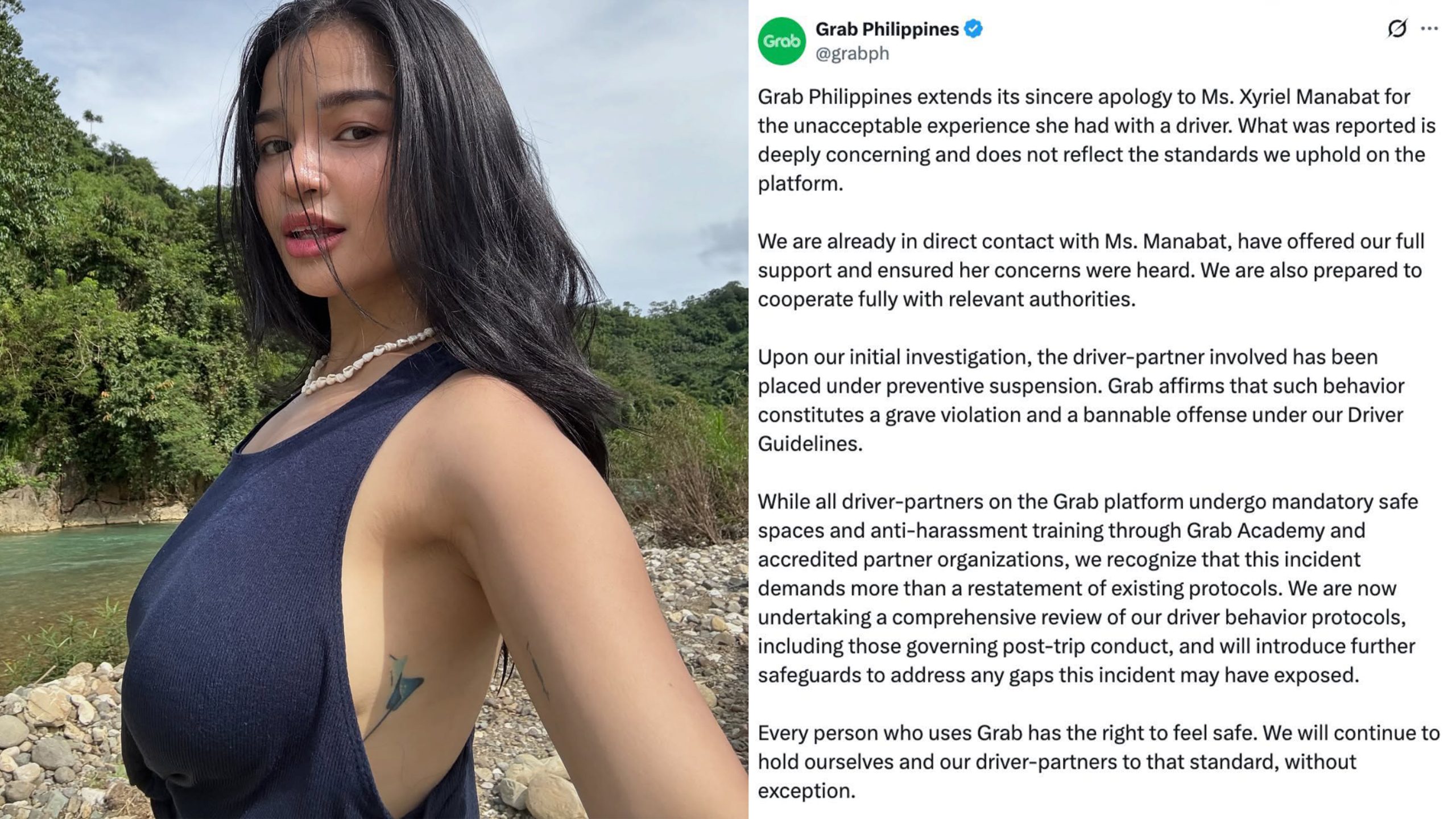
Grab driver suspension Philippines case involving Xyriel Manabat has triggered a wider safety review after the ride-hailing firm took swift action against a driver accused of misconduct, highlighting concerns over passenger protection beyond active bookings.
A transport safety concern involving a passenger complaint has prompted Grab Philippines to suspend one of its drivers and initiate a broader review of its internal policies, following a viral incident linked to Xyriel Manabat that gained traction across social media platforms.
Grab Philippines confirmed it has taken action against the driver-partner involved after allegations of inappropriate behavior surfaced online. In a public statement, the company said the driver has been placed under preventive suspension while an investigation is ongoing. The case quickly drew attention after posts referencing the incident circulated widely, prompting discussions about commuter safety and accountability in ride-hailing services.
“Grab Philippines extends its sincere apology to Ms. Xyriel Manabat for the unacceptable experience she had with a driver,” the company said, adding that the reported behavior does not reflect its standards. It also emphasized that it is in direct contact with the passenger and is prepared to cooperate with authorities if necessary.
While the company reiterated that its drivers undergo mandatory training on safety and anti-harassment protocols through its Grab Academy and partner organizations, it acknowledged that the incident highlights potential gaps in enforcement. As a result, Grab said it is now conducting a comprehensive review of its driver behavior policies, including guidelines that cover post-trip conduct.
Observers noted that the issue extends beyond a single complaint, raising broader questions about how ride-hailing companies monitor driver behavior outside active bookings. Some netizens pointed out that while in-app safety features have improved over the years, incidents occurring after a trip ends remain a gray area that may require clearer safeguards.
Online discussions also reflected growing public demand for stricter accountability measures, including faster response times and more transparent investigation processes. Others emphasized the importance of empowering passengers to report incidents without fear, especially in cases involving harassment or misconduct.
Grab underscored that violations of its community guidelines can lead to permanent bans, describing the reported behavior as a “bannable offense.” The company also reminded users to report any safety concerns immediately through its 24/7 Safety Center within the app to enable swift action.
The incident comes amid increasing scrutiny of ride-hailing platforms in the Philippines, where regulators and consumer groups have been calling for stronger protections for commuters. Previous cases involving driver misconduct have led to policy adjustments, including enhanced identity verification and real-time ride tracking.
Grab Philippines extends its sincere apology to Ms. Xyriel Manabat for the unacceptable experience she had with a driver. What was reported is deeply concerning and does not reflect the standards we uphold on the platform.
— Grab Philippines (@grabph) April 8, 2026
We are already in direct contact with Ms. Manabat, have…
Industry observers say the latest development could influence future regulatory discussions, particularly on whether stricter compliance measures should be imposed across all transport network companies. It also highlights the role of social media in accelerating corporate responses, as viral posts often prompt quicker action compared to traditional complaint channels.
As the investigation continues, Grab Philippines reiterated its commitment to maintaining a safe platform for both passengers and drivers, stressing that “every person who uses Grab has the right to feel safe.”
Beyond company-led reforms, transportation experts suggest that stronger collaboration between ride-hailing platforms and government regulators may be necessary to standardize safety protocols across the industry. They note that clearer policies on driver accountability—even after trips officially end—could help close existing gaps and restore public confidence in digital transport services.

 Facebook
 Twitter