
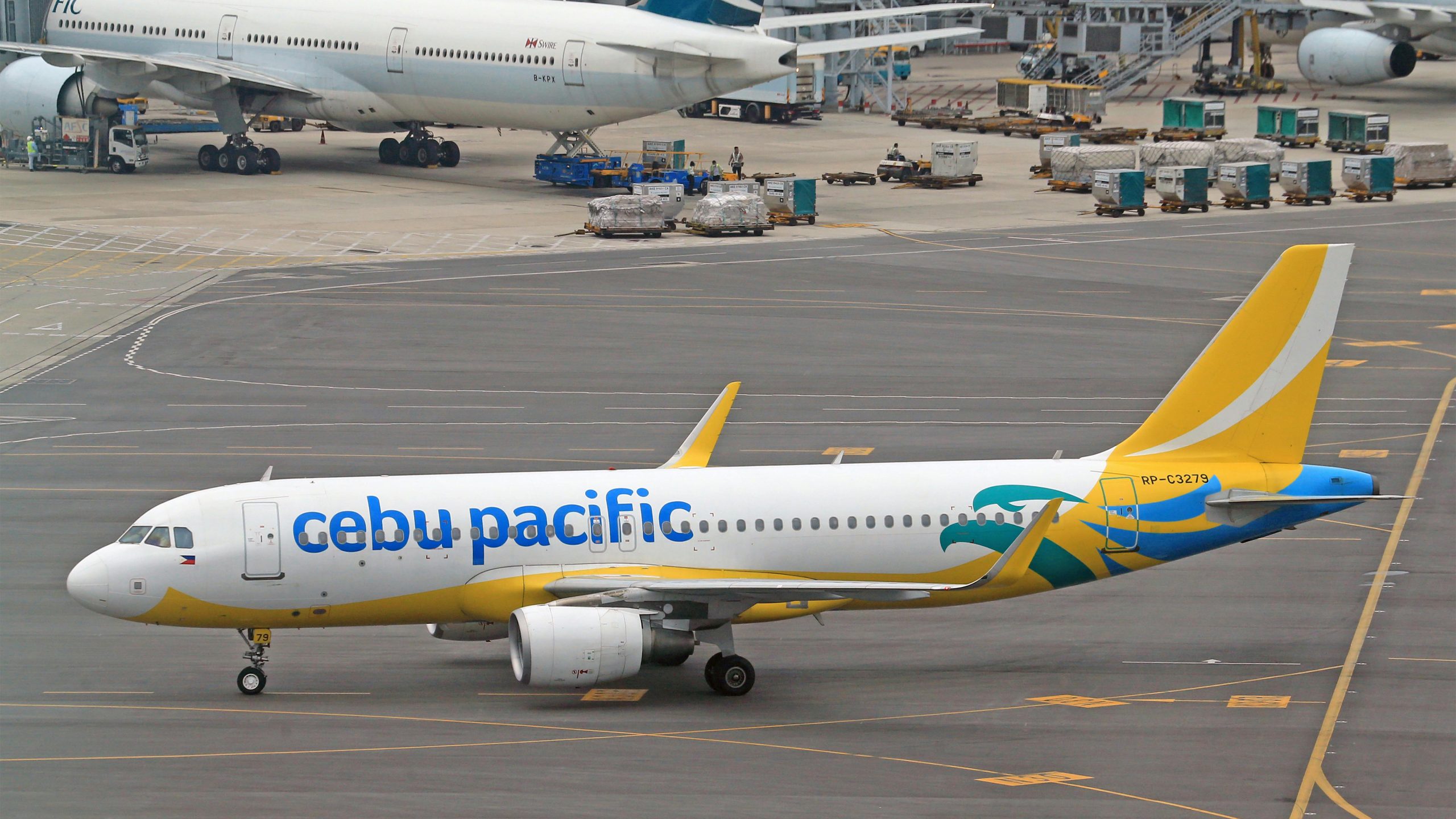
Cebu Pacific flight suspensions are set to impact several key domestic and international routes as the airline adjusts operations in response to soaring global fuel prices, signaling potential disruptions for Filipino travelers planning trips between April and October 2026.
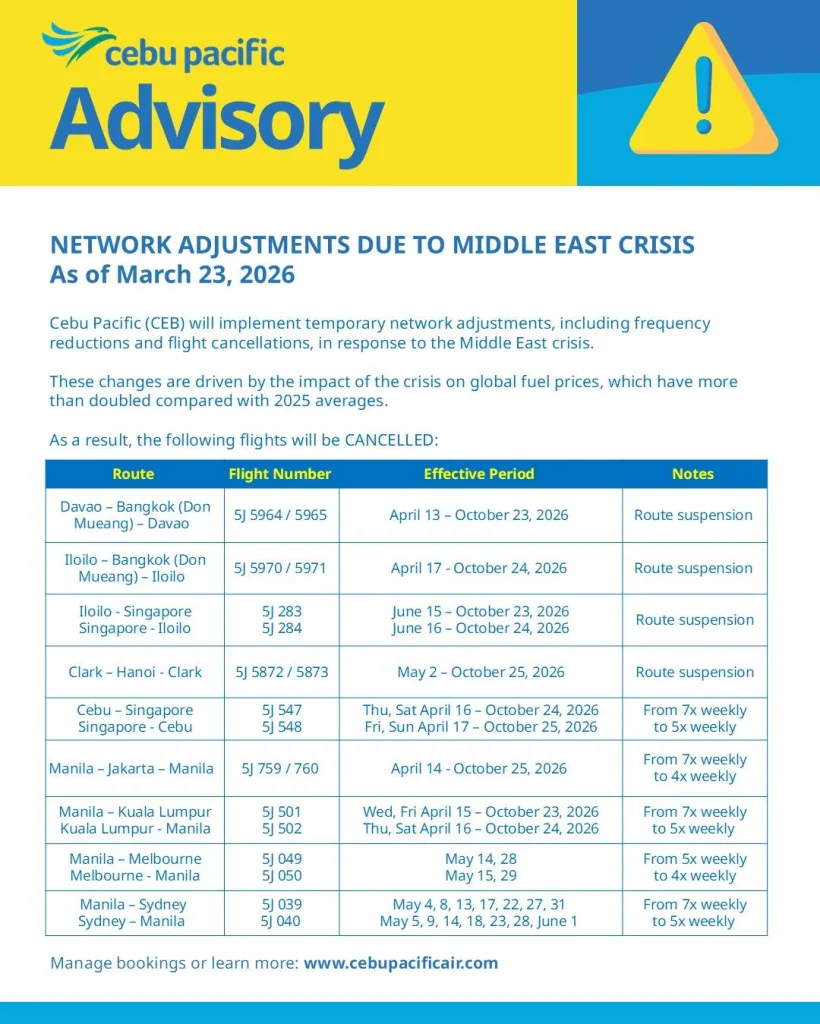
In an advisory issued on March 23, 2026, the airline confirmed that it will implement network adjustments from April to October, citing the sharp rise in fuel costs linked to ongoing tensions in the Middle East. These adjustments include both full route suspensions and reduced flight frequencies across key Asian and regional destinations.
Among the routes affected are flights between Davao and Don Mueang in Bangkok, as well as Iloilo to Don Mueang, which will be suspended for the entire April to October period. Cebu Pacific also announced the suspension of Iloilo-Singapore services from June to October and the Clark-Hanoi-Clark route from May to October.
Beyond cancellations, the airline will also cut back on flight frequencies for several high-demand routes, including Cebu to Singapore, Manila to Jakarta, Manila to Kuala Lumpur, and long-haul services such as Manila to Melbourne and Sydney.
In its advisory, Cebu Pacific said the adjustments are a direct response to rising operational costs, noting that fuel prices have significantly increased compared to 2025 levels. “These changes are driven by the impact of the crisis on global fuel prices,” the airline stated, emphasizing that the measures are temporary and aimed at maintaining operational sustainability.
The development comes at a time when the aviation industry is still navigating post-pandemic recovery challenges. Budget airlines like Cebu Pacific, which rely on competitive pricing and high passenger volume, are particularly vulnerable to fuel volatility, as fuel accounts for a substantial portion of operating expenses.
Observers noted that while route suspensions are not uncommon during periods of economic pressure, the scale and duration of Cebu Pacific’s adjustments reflect deeper uncertainties in global energy markets. The Middle East, a key region for oil production, has been experiencing geopolitical tensions that continue to influence fuel supply and pricing worldwide.
Online discussions following the announcement revealed mixed reactions from passengers. Some netizens expressed concern over fewer travel options and potential fare increases, while others acknowledged the airline’s need to manage costs amid external pressures. Questions were also raised about whether other carriers may follow suit if fuel prices remain elevated.
Industry analysts say the situation could have broader implications for tourism and business travel, particularly in regional hubs that depend on frequent and affordable flights. Reduced connectivity may affect not only passenger movement but also cargo and economic activity tied to air transport.
Despite the adjustments, Cebu Pacific has advised passengers to check updated flight schedules and options through its official channels. The airline has not indicated any permanent route closures, suggesting that normal operations may resume once fuel prices stabilize.
As global conditions continue to evolve, the airline’s move underscores the delicate balance carriers must maintain between affordability and operational viability—an issue likely to remain at the forefront of the aviation sector in the months ahead.

 Facebook
 Twitter