
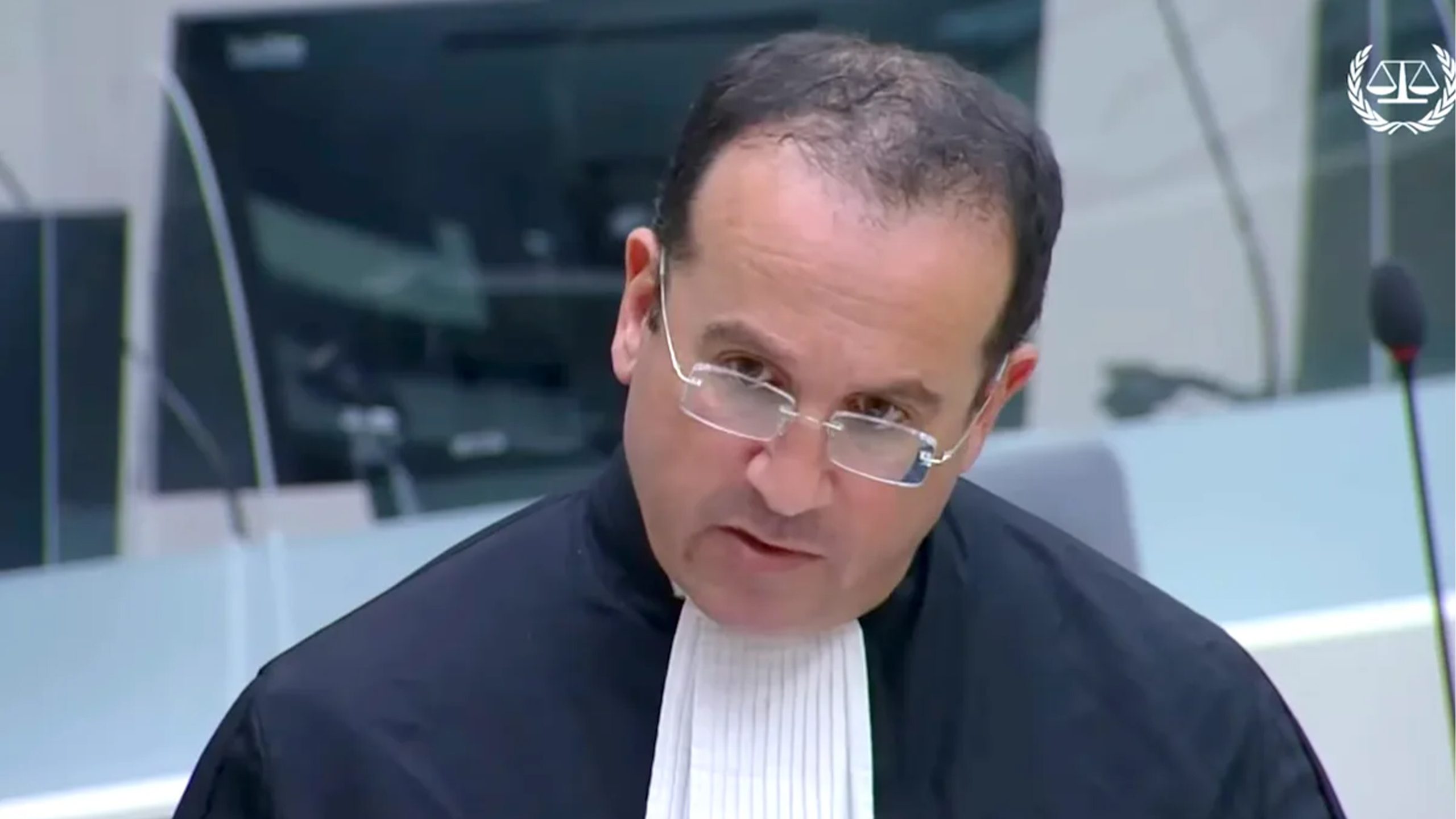
Confirmation of Charges Hearing Duterte highlights the opening statements delivered by Atty. Nicholas Kaufman, defence counsel of former President Rodrigo R. Duterte, during the ICC proceedings.
Thank you, Madame President. Thank you, Your Honors. And I thank Mr. Butuyan for his intervention. But I feel that I ought to remind him that this is a court of law which decides matters on the basis of evidence, not on the basis of political demagoguery, and not on the basis of a desire to affect regime change, and certainly not on the basis of statements made by Ombudsman Jesus Crispin Remulla who professed that domestic justice would be denied, according to Mr. Butuyan, because of the lack of forensic reports and police reports.
Now I don’t know which case Mr. Butuyan’s metaphorical ship sailed into, but he clearly hasn’t read the evidence. Whilst he was speaking, we examined the evidence, and out of that evidence we found at least 35 reports substantiating 49 of the incidents which are mentioned in the Document Containing the Charges.
Your Honors, Rodrigo Duterte was and will always remain a unique phenomenon. His style of statesmanship was novel and unpalatable to many. His expletives and hyperbole grated, while his honesty and wild popularity irritated. He spoke openly from the heart, sincerely and truthfully.
And what a contrast between him and his successor in Malacañang. For President Rody, his word was his word and the people knew it. For President Bongbong, his word is for the wind and the people will not forget it.
Let me remind everyone of the letter which President Ferdinand Marcos Jr. signed, it’s on the screen, and in which he gave a cast-iron undertaking that his government, and I quote, “will not assist the ICC in any way, shape, or form.” Well, as we know, he failed to keep that promise.
Rodrigo Duterte was unconstitutionally and unceremoniously hauled off to The Hague. And when called upon to defend his master’s actions and the said letter at a Senate committee hearing, the then Secretary for Justice, once again Mr. Jesus Crispin Remulla, persisted with the same dishonest theme, and I quote his words: “We did not assist the ICC. We continue with the tenor of the letter that we did not assist the ICC and we did not have any contact with them.”
So he said. But with a document emanating from the Prosecution team opposite and disclosed to us a mere week ago, not as information material to the preparation of our defense, but as exonerating evidence, we can now substantiate what we have suspected for a long time.
The document comprises a transcript of a telephone call covertly recorded between four parties who cannot be mentioned in public. One of these parties was boasting about how he was acting as the silent partner of President BBM, managing a scheme to funnel witnesses to this Court, while all the time ensuring that he could guarantee President BBM’s plausible deniability.
So it is indeed the defense case that President Ferdinand Marcos Jr. set out to neutralize Rodrigo Duterte and his legacy. Yes, Mr. Deputy Prosecutor, I used that legendary word, neutralize, so central and so essential to your case theory, because you know just as well as me that I’m using the term metaphorically.
And now I turn to the substance of the charges. But before I do, a word or two about the geopolitical context.
The scourge of illegal narcotics is not unique to the Philippines. As we all know, it afflicts Latin America, where I can name three countries where the death rate at the hands of vigilantes and law enforcement agents per capita population is higher than it ever was under Duterte.
And as you should know, and you will hear from the Prosecution at any rate, the Philippines as a country is uniquely positioned to act as a transit hub for the trafficking of narcotics emanating from cartels in China. And with or without Duterte, so we argue, the death rate would have kept on rising.
Indeed, as we will prove with statistics and reports, the death rate flowing from narcotics-related crime actually increased after Rodrigo Duterte left power. And where, I ask you, has the International Criminal Court been seeing anything?
The totally lawful Duterte campaign against illegal drugs and their suppliers took place when his administration was after the declaration of martial law. It was on that significant day that Rodrigo Duterte was exposed to tyranny, oppression, and the abuse of power by the elite, and he took a decision. On that day, he chose to devote himself to a life of selfless public service.
As a professor at the local police academy and as a public prosecutor in Davao, Rodrigo Duterte developed a lifelong passion, some would say an enduring obsession, for law and order, something which he unapologetically enforced throughout his time as Mayor of Davao City. Not as the Prosecution says through sowing murder and mayhem, but through winning the love, respect, and admiration of his fellow citizens, the very same citizens who continued to reelect him time after time, term after term, on no less than seven occasions over more than two decades.
Throughout his 20 or so years’ tenure as the Mayor of Davao, Rodrigo Duterte and his family transformed that city from an outpost of communist insurgency and criminal violence into what is now one of the safest cities in the entire world. This was indeed the so-called Davao model which the Prosecution wants to persuade you was code for unbridled criminal violence.
This was the type of leader that the Filipino nation wanted in 2016. So Rodrigo Duterte was elected into power not in spite of, but specifically because of his firm and uncompromising commitment to upholding law and order.
After his election as President, Rodrigo Duterte remained a man of the people without seeking to patronize the people. Gung-ho in his ways and with a belligerent tone, he spoke the tough tongue of the street, not the dissembling discourse of international diplomacy.
He said what the people wanted to hear, but he said it in a way that offended the sensibilities of world leaders unaccustomed to hearing it, one in particular. That was what set him on the slippery slope to a prison cell in The Hague.
Let me tell you how it works. It starts with the media controlled by the powerful and politically influential. With a sensational headline and a twisted editorial slant, moguls sell their papers while promoting the partisan agenda of their backers in power. They highlight salacious content while ignoring context because that is what captivates the reader.
So it was with Rodrigo Duterte, whose speeches were fertile fodder for his enemies and detractors. A man whose hyperbole, bluster, and rhetoric, once published, became a natural target for privately funded NGOs and human rights activists, a loose collective more commonly known as civil society. These people descended upon the Philippines to advance an agenda even more lacking in objectivity than that of the media, heavily funded by tycoons with even grander designs.
They print glossy reports replete with iconic photographic images of grieving families and dead bodies in rain-swept nighttime crime scenes, illuminated with fluorescent glow, images crafted to shock the conscience and sway emotions, and used by the Prosecution even when they do not relate to the charges.
They gave their slick reports bold titles lifted straight out of a James Bond movie, such as License to Kill, One Shot to the Head, You Can Die Anytime, or simply They Just Kill. The photographers are feted and their shots exhibited as art all over the world. The brave journalists who act as their sources win awards and Nobel prizes. Slowly but surely, their narrative becomes the sacred, unchallengeable, unshakable truth.
The pressure builds up. Academics in progressive left law faculties far away in the United States tweet their research and publish articles pontificating about crimes against humanity, systematic attacks against the civilian population. They point their finger at one man alone and bandy about slogans such as accountability and the prevention of impunity. They give gratuitous advice on what should be done, sometimes academics who formerly worked alongside the Prosecutor of the International Criminal Court.
Communications and complaints are filed, and the rest, as they say, is history.
In any event, we are not gathered here today to judge a man on the basis of his coarse attitude or vulgar language. This Court has convened a confirmation hearing to verify whether substantial grounds exist to believe that Rodrigo Duterte, the people’s president, together with various so-called co-perpetrators over the years of his governance, devised a criminal policy of wholesale and wanton murder.
And since we are in a court of law, it is worth stressing, although I should not have to, cases are decided on the basis of evidence, not supposition, not rumor, not spicy gossip, and certainly not on the basis of political rhetoric and bluster.
Because at the end of the day, were it not for those belligerent and controversial speeches, there would have been no impetus to bring the people’s president to The Hague.
When the Prosecution’s evidence is examined, I would ask you to keep an open mind and to question not just whether that evidence has been selectively presented, but whether there exists evidence which the Prosecution has failed to produce.
I say this with justifiable cause, particularly with respect to the Duterte rhetoric. As we will prove during a substantive part of our submissions, the notorious speeches on which the Prosecution relies have been cherry-picked to suit its narrative while ignoring the many other speeches where the former President tempered his bombastic language by clear reference to the principle of lawful self-defense.
We, the defense, have read as many of these speeches as we can find. In fact, in our office, we have a counter which ticks and ticks. Whenever we come across a speech which contradicts the Prosecution’s murder theory by reference to self-defense, we give a cheer and the counter goes up once more.
As the statistics stand as of today, in contrast to the 20 speeches on which the Prosecution relies to prove incitement to kill, we have found 35 more which say the complete opposite.
Let me give you two examples from the very speeches that the Deputy Prosecutor himself cited today.
Let’s refer first of all to the famous “Pietà” speech which the Deputy Prosecutor referred to. He quoted: “Those of you who are still sober, those who haven’t tried illegal drugs, if you don’t want to die or get hurt, don’t rely on the priest, including human rights advocates, they won’t be able to prevent deaths.”
But if we look further on in the very same speech, something which maybe the Deputy Prosecutor didn’t do, this is what he had to say to our police officers and other officials: “Do your job and you will have the unwavering support of the Office of the President. I will be with you all the way. Abuse your authority and there will be hell to pay, for you will have become worse than criminality itself.”
There you are. You have it straight in your face. Exonerating evidence within what is claimed to be the Prosecution’s incriminating evidence.
I won’t take up my time by showing you the second speech, but there is one. If I have time at the end, I will show it to you.
If you add to that another 10 speeches out of the 20 speeches on which the Prosecution relies in its Document Containing the Charges, and since we are in a court of law and we rely on evidence, what is the evidence produced of these speeches? Twenty of them. Ten of them, I submit, and we will show this in the substantive part of our submissions, contain exonerating evidence which support the defense case theory.
In other words, if you add the ten which we have identified in the Prosecution’s twenty to our total of thirty-five, we come to forty-five speeches versus ten which we say support the use of force only in self-defense.
That is 350% more speeches in favor of our defense and 354% more reasons not to confirm the charges.
And you can bet your bottom dollar that at the end of today’s proceedings, either the victims’ self-styled legal assistant to ICC counsel or a Prosecution intern will be tasked with scouring the web looking for the means to prove Kaufman wrong.
I will declare it loudly and clearly, as if the Prosecution didn’t know it already. It is not enough to state that since the former President made those inflammatory statements and deaths occurred, he must as a matter of course be criminally responsible for those fatalities.
At this stage of the proceedings, the Prosecution needs to show substantial grounds to believe that the former President actually desired and foresaw that people would be killed as a result of his incendiary language.
For the Prosecution to assert that Rodrigo Duterte hoped for deaths to occur or was recklessly indifferent as to whether deaths would occur, which he was not, that is insufficient.
So once more for the record, Rodrigo Duterte’s language was aimed not at suspected drug pushers, as the Prosecution would have it, but directly at those poisoning society with their substances, and not, I stress, with lethal intent.
His rhetoric was calculated to arouse fear and obedience, to instill fear in their hearts, and to inculcate a respect for the law in their minds, nothing more, nothing less.
That was his intent, and it was not criminal. As many of these drug pushers demanded to enter prison, I remember seeing the images on the television, lining up to surrender and to enter prison.
Now, I challenge my colleagues opposite to prove otherwise, because as we all know in a criminal process, the burden of proof is on the Prosecution. They brought this case and they need to prove it.
Rodrigo Duterte need not convince the world of anything, and that is to his fortunate advantage given his current medical condition. He stands behind his legacy resolutely and he maintains his innocence absolutely.
Now I turn to the general fairness and objectivity of the investigation, which, as we all know, is meant to be an impartial evidence-gathering exercise.
As an ex-prosecutor myself, I am used to investigating agencies pursuing all reasonable lines of inquiry, assimilating all testimonies, and digesting all documentation and forensic evidence, recommending who to target for prosecution.
But not so with this Prosecution. When we, the defense, study the course of the investigation in this case, one thing is plain as a pike staff. The Chief Prosecutor of this Court, Mr. Karim Khan, not only failed miserably to carry out his duties under the Rome Statute requiring him to examine exonerating circumstances as well as incriminating, but he single-handedly contaminated it, we allege, by pursuing a one-track crusade with a view to a predetermined objective.
Let me explain. Although the ICC officially authorized an investigation into the so-called Philippine situation in late 2021, it was deferred a few months later back to the Philippines, for the official investigation to resume only in late 2023.
But the real meat of the investigation into Count 1 relating to the activities of that fictitious construct, the Davao Death Squad, had effectively started way before then with the sole objective of nailing Rodrigo Duterte.
All the way back in 2018, during its so-called preliminary examination, the Prosecution had an individual who will be referred to as P1 handed to them on a silver platter. This P1 had been interviewed at an earlier date by none other than Chief Prosecutor Karim Khan in his former capacity as a private lawyer.
[Transcript continues with missing or garbled portion in the provided text.]
Your Honors, the picture on the front cover of that book says it all. It really does scream objectivity, doesn’t it? I say that sarcastically, of course.
Fortunately for us, the defense, the Appeals Chamber has now disqualified Chief Prosecutor Karim Khan from this case, a welcome development as a matter of ethical propriety, but in our opinion too late in the day to salvage the integrity of the investigation that he had supervised.
An investigation in the course of which he concealed his former role as the victims’ counsel, who had deemed our client a suspected murderer as far back as 2018 and right up to the very day before this Pre-Trial Chamber issued its arrest warrant.
Your Honors, over the next few days, we hope to convince you of the wholly insufficient nature of the evidence against Rodrigo Duterte.
We will show you that the paltry number of speeches on which the Prosecution relies do not manifest criminal intent. We will also convince you that, as hard as they tried, the Prosecution’s investigators couldn’t get even one of its cooperating witnesses, whose reliability is next to zero, to admit that they heard the former President, Rodrigo Duterte, give an order to kill at any time relevant to the charges or with respect to any of the incidents.
We hope that when you conclude your deliberations, Your Honors, you will dismiss these grievously misplaced and politically motivated charges. We will ask you to send Rodrigo Duterte back to his family, and we will ask you to give back to the Filipino people their Tatay Digong. Thank you, Your Honors.


 Facebook
 Twitter