
Davao City watersheds were given renewed attention during a summit convened by the Philippine Eagle Foundation (PEF), in collaboration with Ateneo de Davao University and other partners, to promote indigenous co-management and shared responsibility in protecting vital water resources.
Last February 24, the Philippine Eagle Foundation (PEF), in collaboration with Ateneo de Davao University and the Mindanawon Initiatives for Cultural Dialogue, along with the Ateneo Public Interest and Legal Advocacy, convened the “Summit for Davao City Watershed Indigenous Co-Management: Shared Waters, Shared Responsibility.”
The said gathering served as a forum for indigenous leaders to express their desires for authentic co-management, policy backing, and enduring partnerships.
Various government agencies, utility companies, non-governmental organizations, and academic institutions responded to these appeals by aligning their mandates and resources to bolster indigenous-led governance of watersheds.
Attendees highlighted that the watersheds of Davao City are vital ancestral domains—whose safeguarding guarantees clean water, mitigates disaster risks, and ensures a sustainable future for both upland and urban populations.
The summit was part of the ongoing dedication to biodiversity conservation by the Philippine Eagle Foundation. It enhanced collaboration with the Indigenous Political Structures of the Obu-Manuvu, Bagobo-Klata, Bagobo-Tagabawa (Toril and Sibulan), Matigsalug, and Ata—promoting Indigenous-led watershed protection and habitat restoration throughout the upland forests of the country’s biggest city in terms of land area.
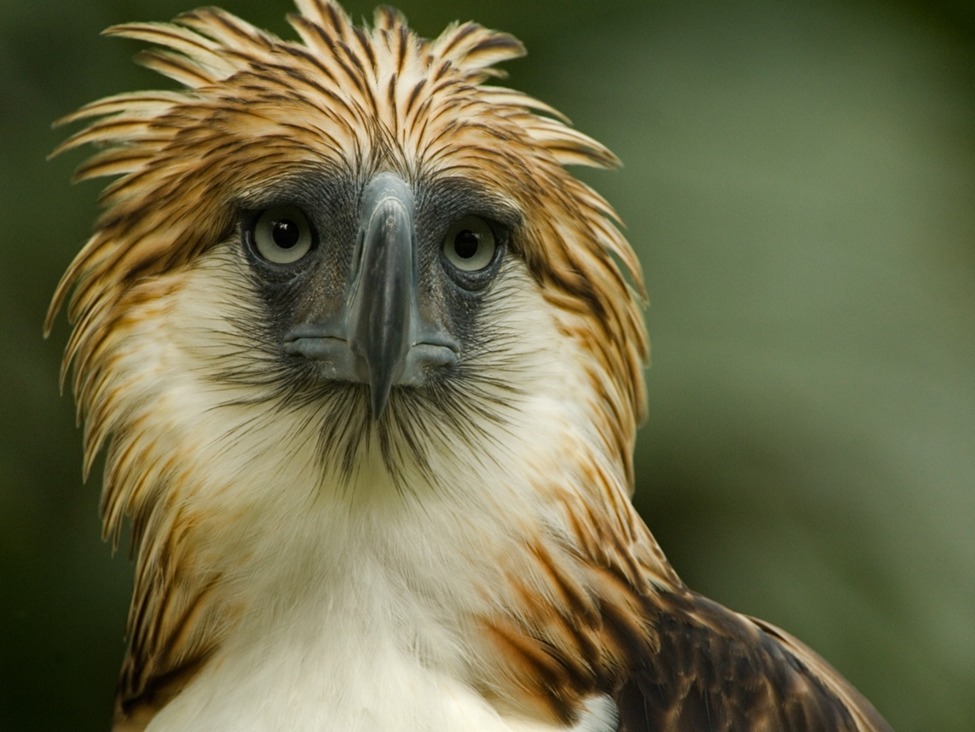
The PEF commenced its mission nearly forty years ago in Davao City. It was initiated by a collective of dedicated individuals who were resolute in their efforts to conserve the critically endangered Philippine eagle and safeguard the abundant biodiversity that flourishes in its vicinity.
“(We believe) that the fate of the Philippine eagle, the health of our environment and the quality of Philippine life are inextricably linked. We are, therefore, firmly committed to ensure the survival of the Philippine eagle, the biodiversity it represents and the sustainable use of our forest resources for future generations to enjoy,” said PEF on its website.
Studies conducted by the UN Food and Agriculture Organization (FAO) indicate that a pair of Philippine eagles needs at least 7,000 to 13,000 hectares of forest as nesting territory.
Most of these remaining forests are also part of watersheds, which most people perceive as a forested region, abundant with trees. In reality, watersheds are defined as land areas that channel rainwater to a single point, such as a stream, lake, or wetland, along with all the groundwater beneath.
Larger watersheds encompass numerous smaller ones. The classification depends on the outflow point; all land that directs water to this outflow point constitutes the watershed for that specific location.
Davao City has eight watershed areas, including the Talomo-Lipadas watershed located in Toril District. “These watersheds are natural reservoirs for the pristine potable water that has been certified as one of the world’s cleanest drinking waters,” said the environmental group Interfacing Development Interventions for Sustainability (IDIS).
It must be recalled that in August 2021, the Davao City Council passed the Ordinance Regulating Recreational Activities within the Watershed Areas of Davao City for the Protection, Conservation, and Preservation of the Natural Environment.
Section 3 (c) of Ordinance No. 0310-07 acknowledged watershed areas as recharge areas for the city’s aquifers which are essential sources of potable drinking water for the city’s population. As such, “it is imperative to safeguard, preserve, and effectively manage them to ensure the continued and full enjoyment of the present and future generations.”
Watersheds constitute about 75% of the total land area of the country. It has a total of 119 proclaimed and 154 priority watersheds with a total land area of 1,376,455.10 hectares and 11,690,695.00 hectares, respectively.
“The areas of proclaimed watersheds range from 20 to 180,460 hectares while the area of priority watersheds ranges from 365 to 837,149 hectares,” said Leila C. America, a research specialist of the Department of Science and Technology (DOST).
Studies conducted by the Laguna-based Philippine Council for Agriculture, Aquatic and Natural Resources Research and Development (PCAARRD) showed that most watershed areas in the country are now devoid of their forest cover. As a result, accelerated soil erosion, flash flooding, and drought have become more prevalent causing much destruction.
“Watersheds provide vital resources, which include soil, water, forest range, wildlife, and minerals. Water is a key watershed resource that can be used for power generation, agriculture, industry, domestic, drinking and others,” America said.
There lies the reason why we need to protect and save our watersheds.
Many of our watersheds, however, have been devoid of their forest cover. “As a result, accelerated soil erosion, flash flooding, and drought have become more prevalent causing much destruction,” America said.
Consequently, one of the reasons the city center frequently experiences flooding during heavy rainfall is due to the degradation of the watershed regions located in the upper part of the city.


 Facebook
 Twitter