
Family adventure in Mati City offers a unique blend of scenic beaches, rich culture, and relaxing coastal views in the heart of Davao Oriental. Known for its natural beauty and laid-back charm, Mati City is an ideal destination for families looking to explore Eastern Mindanao.
It has Boracay’s white sand beaches, Siargao’s big waves, Baguio’s zigzag road, Davao’s endangered species, Aklan’s mangrove forests, Palawan’s ecotourism spots and Camiguin’s vanishing island. The place: Mati, the lone city of Davao Oriental.
Davao Oriental is the easternmost province of the Philippines. It is one of the five provinces of Davao region; the other four being Davao del Sur, Davao del Norte, Davao de Oro, and Davao Occidental.
Mati was our recent destination during a family trip. My sister Elena, who arrived from the United States a couple of weeks ago, wanted to visit a place where she had yet not visited. When my three other sisters heard our plan, they begged to join tagging along with their children as classes would start in two weeks.
Most of them have never been to Mati, except for my two sisters (Evangeline and Jeannyline) who accompanied Marilou – another sister who now lives in the US. But they really didn’t explore the city during their visit as they didn’t have enough time.
People who visit Mati for the first time are almost always mesmerized by its beauty. At one time, then Congressman Lorenzo Reyes Tañada III was invited as the guest speaker of a tourism business and investment forum. During his speech, the first time visitor said he was impressed by how the city preserved its scenic spots. “This is a tourism haven,” he said.
Mati, which became a component city on June 19, 2007, by virtue of Republic Act No. 9408, is the capital of the province and the center of commerce, education, and government. It has a total land area of 791.09nearly 800 square kilometers, with more than half of it covered with forest.
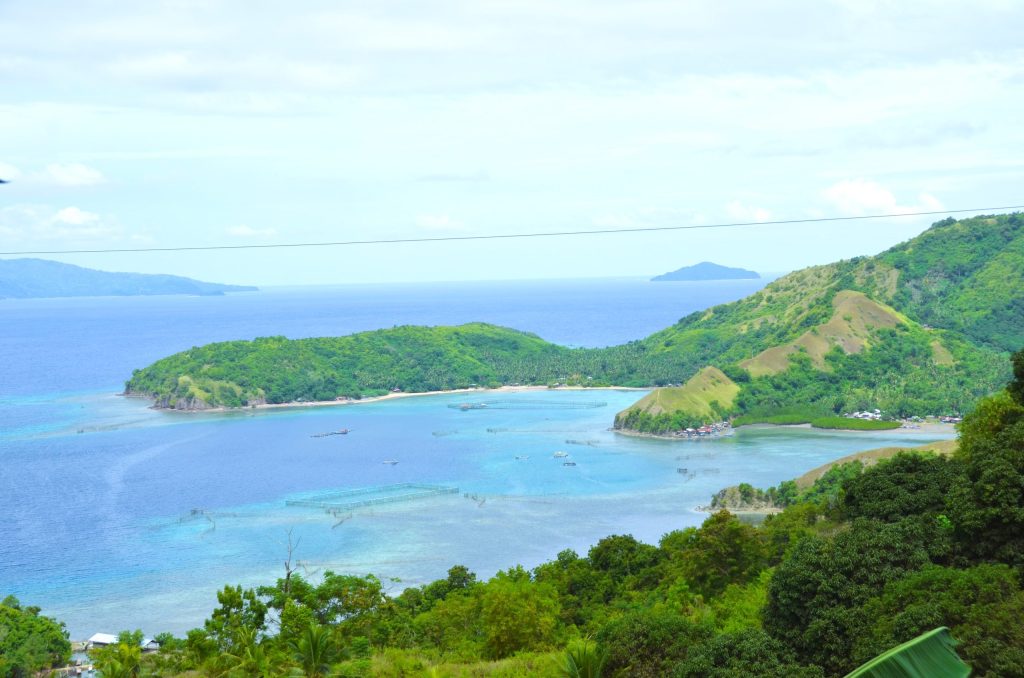
Mati faces the Pacific Ocean and it has a coastline of 150-kilometer coastlines. It has three gorgeous bays (Pujada, Balite, and Mayo) with a combined area of 418 square kilometers.
Guy Rousset, the club treasurer of the Most Beautiful Bays in the World Organization, observed of the three bays: “This place beguiles and inspires, sedates and stirs, where the distance between heaven and earth collapses and you will be able to catch glimpses of the divine or the infinite as you are united with nature.”
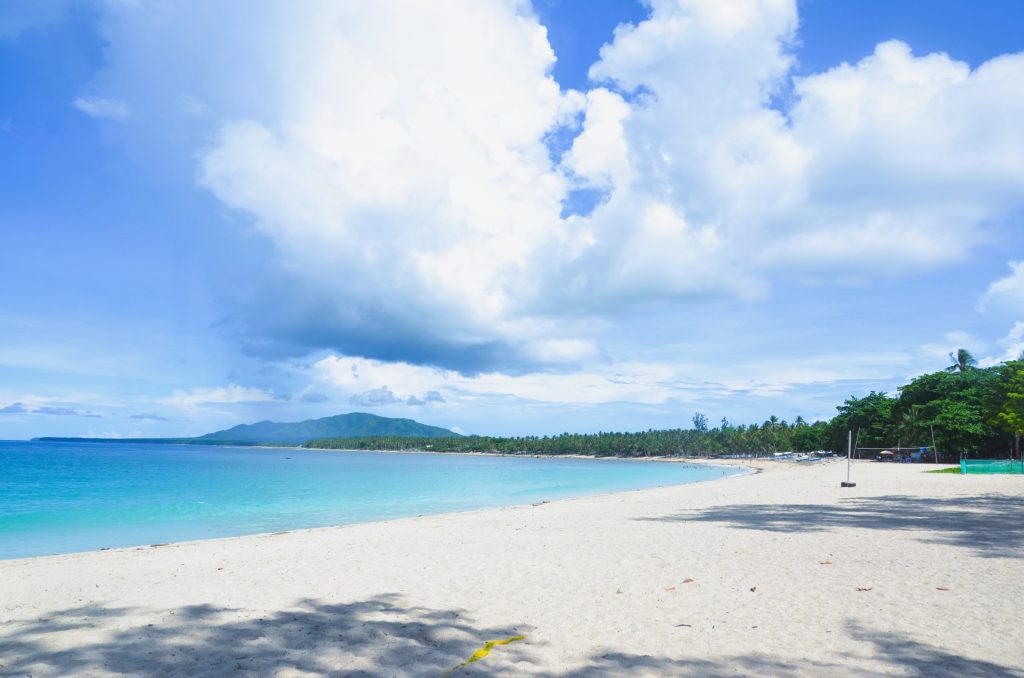
The city has several famous beaches. Leading the list is Dahican Beach, noted for its crystal clear waters and a 17-kilometer pure and fine white sand shore. “You don’t have to go to Boracay to experience white sand,” said Michael Rabat, a local businessman and brother of the city mayor. “We have it here.”
Dahican Beach , about a 15-minute ride from the heart of the city, is known as Mindanao’s mini-Hawaii. It is a prime location for surfers and skimboarders as it faces the Pacific Ocean. The strong wind is ideal for wind and board surfing.
The Mayo Beach, ideal for picnic and small gathering, can be reached by 30-minutes travel from the heart of the city. The place reminds you of the Brooke Shields movie The Blue Lagoon because it has deep blue lagoon and cold spring water. The winds coming from the ocean could be wonderfully soothing to a tired mind and body and spirit.
Mati is dotted with enthralling islands ideal for swimming, snorkeling, and diving. It has three islands and the biggest of them all is Pujada Island, a 156-hectare located at the entrance of Pujada Bay. White sand beaches and clear blue waters surround the island, which can be reached by motorboat in 45 minutes.
“Pujada Bay is almost a virgin paradise,” said Bruno Bodard, founder and manager of the Most Beautiful Bays in the World Organization. “It is much more beautiful than we expected. The Philippines is a very nice country. You have the jewel in Pujada.”
Pujada Bay is considered among the richest bays in Southeast Asia. Scuba diving is also experienced here. There are 15,700 species of sea creatures that can be found in the Pujada Bay, among them: lobsters, sea cow, hammerhead shark, blue whale, manta ray, and different kinds of turtles, mostly endangered.
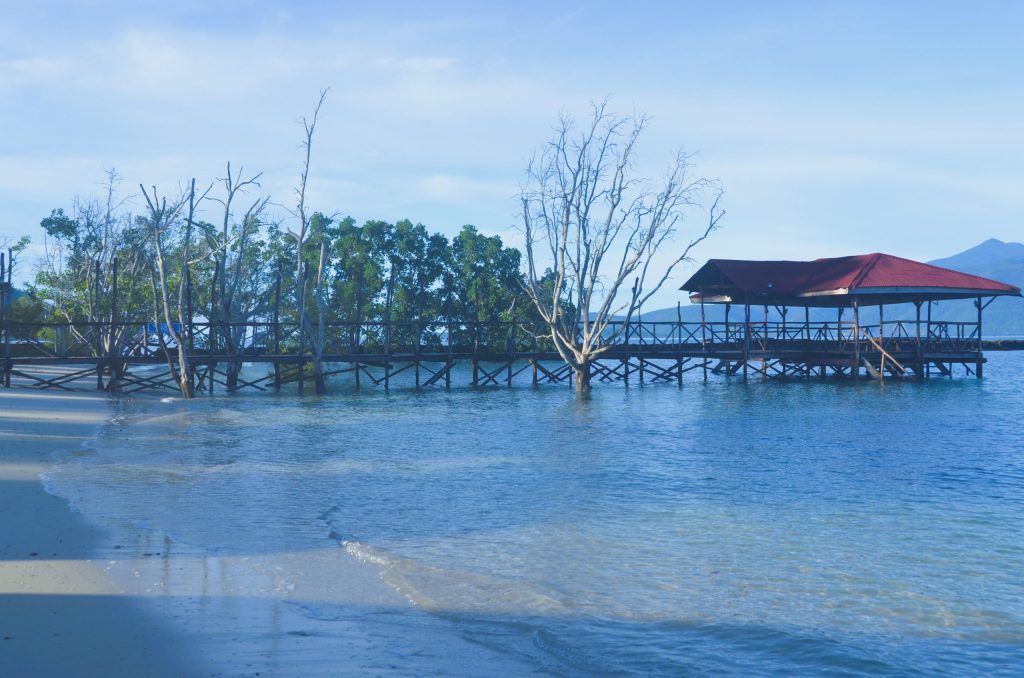
Not far from Pujada Island is Oak Island, which is visible only during low tide and disappears during high time. It can be reached by motorboat ride from Pujada Island in a matter of 10 minutes.
Another sea gem is Waniban Island, about 35 minutes by boat ride from Pujada Island. Only three hectares, it is ideal for picnic, swimming and sunbathing because of its white sand. But right now, it is off-limits to visitors.
Mati is home to a wide variety of marine mammals. So, you may opt to do the Dahican cruises in order for you to closely watch up close to dolphins, dugongs, and pawikan. Most of them are classified as endangered species but you can watch them live at Mati waters.
Now, that’s the place which our family has visited recently. For the night, we stayed at Bahia Beach Resort, owned by barangay captain Eric Rabat. The place is simple yet a wonderful tourist haven.
It’s budget-friendly – where five people can stay in an air-conditioned room – and has a stunning sunset view. There is no corkage at all, which means you can bring your own food. More importantly, it is far from the crowd as it is far from the Dahican area, where most people are.
We have the beach to ourselves. The children had fun swimming as there were no waves. It was as if you were swimming in a pool. And yes, the water is crystal clear and the sand is white.
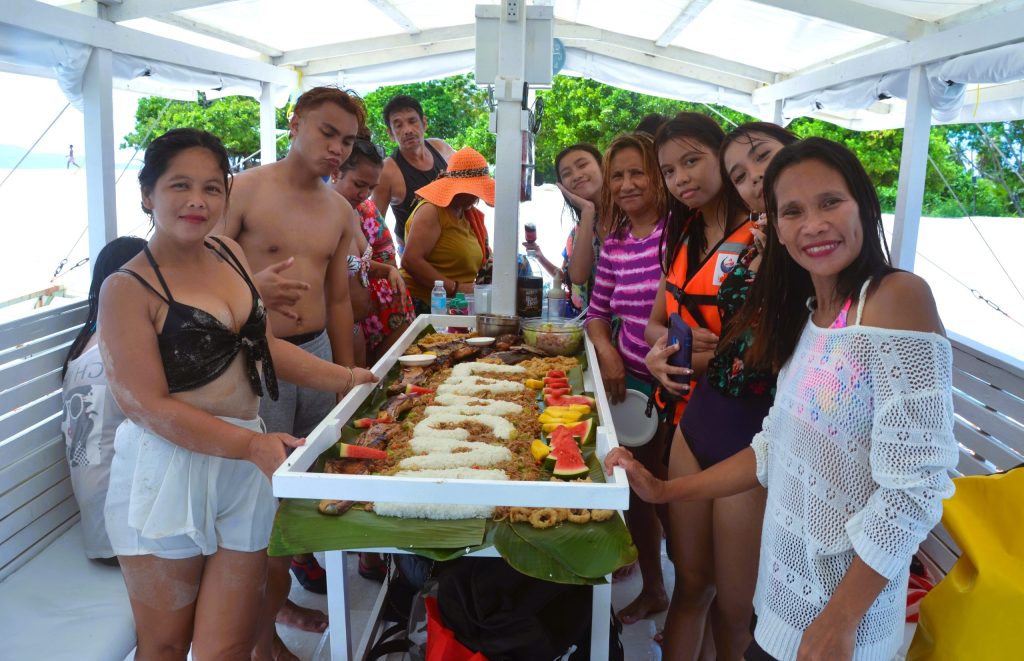
After all the fun and swimming, we went back to our cottages, had a sumptuous dinner (from the food we brought from home and those we bought from the city), and were ready to sleep.
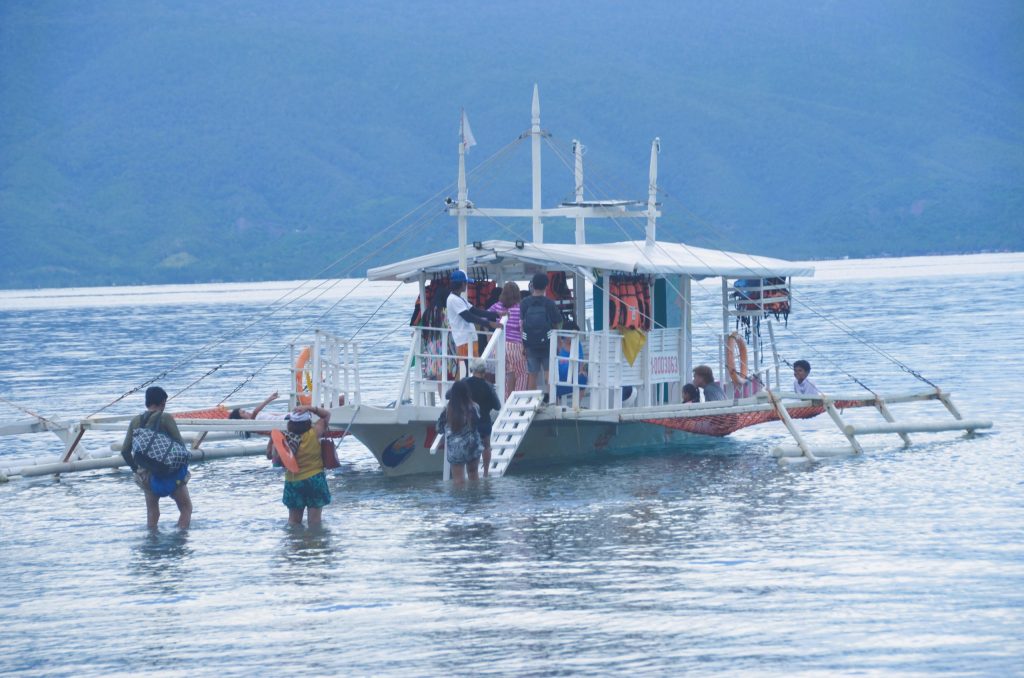
The following day, we woke up early as we had to travel to barangay Macambol, where the boat for our tri-island hopping is located. The staff and crew of Laagan Tourist Boat Rental welcomed and provided us with some orientation before our sojourn.
Our first destination was Oak Island, where the group stayed for about 30 minutes. Then, we went to Pujada Island, where we had all the fun – despite the scorching heat of the sun. After taking our lunch, we proceeded to Waniban Island, where we were captivated by its beautiful corals.
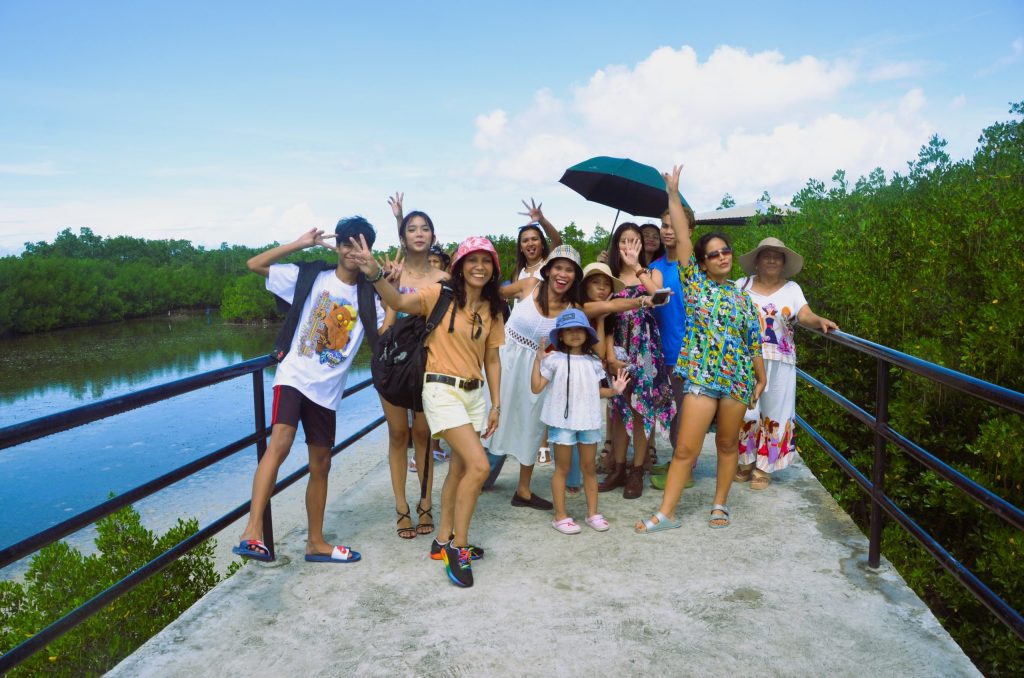
By the way, before we checked-in at Bahia Beach Resort, our family visited the Guang-Guang Mangrove Forest. The protected area encompasses 21,000 hectares, where you can see 18 of the rarest, mostly endangered, mangrove species in the country. People living in Guang-Guang are managing it with support from the Department of Environment and Natural Resources.
Of course, there’s Badas, a zigzag road along the top of a cliff that offers a captivating vista of Pujada Bay. Badas is lined with trees and its every bend lets you take a peek at the serene blue ocean below. From this viewpoint, you get to see the so-called “sleeping dinosaur,” a natural attraction approximately 579 hectares. It’s a land formation that looks like a prehistoric creature taking a nap.
Yes, Mati City is indeed a tourist haven!


 Facebook
 Twitter