
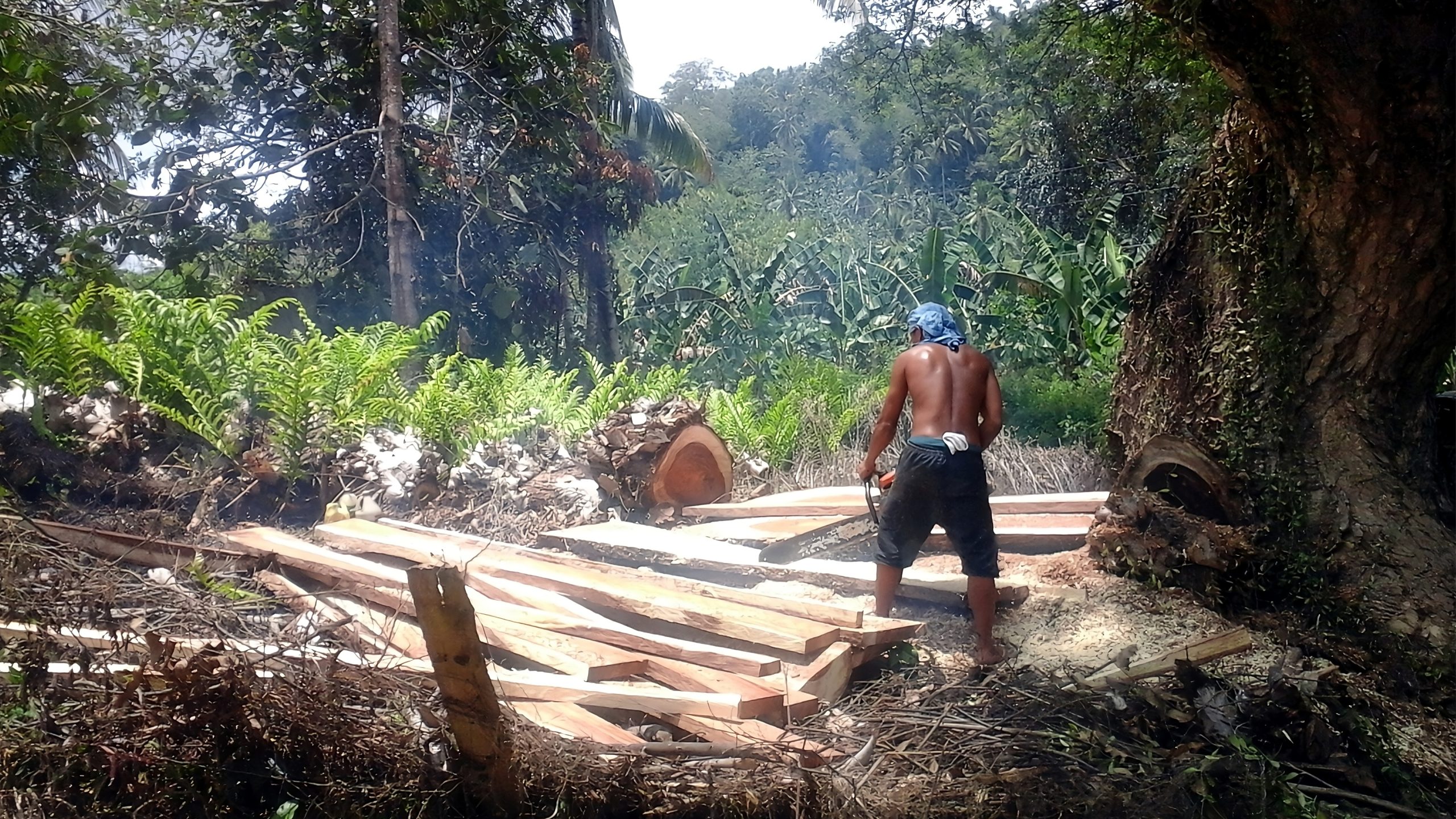
Forest cover loss in the Philippines has significantly affected several Mindanao provinces between 2001 and 2023, according to a recent study by a global research organization.
Three provinces in Mindanao were among the list of the top 5 provinces in the Philippines which have lost most of their forest cover between 2001 and 2023, according to a recent study by a nonprofit global research organization.
Based on spatial data and satellite imagery, the Global Forest Watch (GFW) platform of the Washington-based World Resources Institute (WRI) said Agusan del Sur, Zamboanga del Norte, and Davao Oriental have lost 128 kilohectares (kha), 65.9 kha, and 56.0 kha, respectively, of their tree cover.
Four more provinces in Mindanao were in the top 15 list. These are Surigao del Sur, 44.7 kha; Davao de Oro, 43.0 kha; Bukidnon, 26.1 kha; and Zamboanga del Sur, 25.6 kha.
However, the GFW clarified that the term “loss” does not necessarily indicate deforestation.
“Loss indicates the removal or mortality of tree cover and can be due to a variety of factors, including mechanical harvesting, fire, disease or storm damage,” the forest monitoring platform stated.
“Tree cover is defined as all vegetation taller than 5 meters in height as of 2000.Tree cover is the biophysical presence of trees and may take the form of a natural forest or plantations over an arrangement of canopy densities,” it clarified. “Tree cover loss includes change in both natural and planted forest and does not need to be human caused.”
The GFW reported that in 2010, Agusan del Sur had 770 kha of forest cover, just next to Palawan which had the most tree cover (1.16 megahectares).
The other provinces in Mindanao which made it to the list of having the most forest cover in 2010 were Bukidnon (484 kha), Davao Oriental (451 kha), Zamboanga del Norte (447 kha), Surigao del Sur (387 kha), Davao del Sur (372 kha), Davao de Oro (358 kha), and Zamboanga del Sur (314 kha).
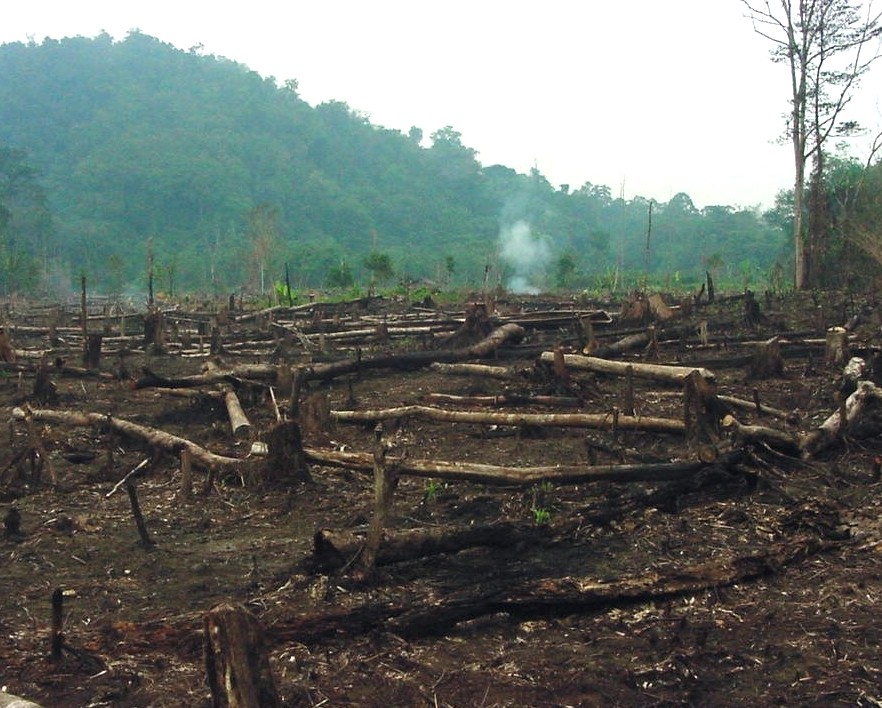
The GFW – which provides the latest data, technology and tools that empower people everywhere to better protect forests – said that the Philippines, in 2010, had 13.1 megahectares (mha) of natural forest, extending over 62% of its land area.
Thirteen years later, in 2023, the GFW said the Philippines lost 32.4 kha of natural forest, equivalent to 25.6 metric tons of carbon dioxide emissions.
Some years back, the Philippine Congress released a study that said about 123,000 hectares of the country’s forest cover are lost every year. Unless reforestation is started, the study further stated, there would be no forest left in the country by 2036 – that’s exactly 12 years from now.
Then President Benigno S. Aquino III, in his state of the nation address (SONA) in 2011, stated that most politicians use one possible solution – that of tree planting – as a photo opportunity. “They plant trees, but they do not ensure that the trees will remain standing after they leave,” he deplored.
In Davao City, councilor Temujin “Tek” Ocampo, who chairs the environment committee, is advocating for the establishment of an ordinance aimed at protecting and preserving forests.
In a recent privilege speech, Tek was quoted as saying, “Forests are the lifeblood of our environment. Our forests are not merely trees; they are the very foundation of life. They purify the air we breathe, safeguard our water sources, stabilize our soil, and sustain the rich biodiversity that defines our locality.”
Experts noted that forest cover loss in the Philippines does not always equate to deforestation, as natural disturbances can also contribute to tree cover decline.
He added, “However, in Davao City, a significant increase in urbanization, land conversion, and deforestation has left us vulnerable to the risks of flooding, soil erosion, and biodiversity decline,” he added.
“Where have all our forests gone?” asked Jethro P. Adang, the director of Davao-based Mindanao Baptist Rural Life Center. American President Theodore Roosevelt once said, “A people without children would face a hopeless future; a country without trees is almost as helpless.”
What is causing the nation to drift towards oblivion? In 1978, former President Ferdinand Marcos expressed his concerns, stating, “I have witnessed fortunes amassed overnight from the forest, and it disturbs me to think that many Filipinos seem indifferent to the legacy of forest resources for future generations.”
Veteran journalist Marites Dañguilan-Vitug raised a pertinent question in her article for World Paper, a magazine based in Boston: “Who had the privilege of cutting trees?” She pointed out that it was primarily the affluent and influential individuals residing in major cities. Some even opted to sell their rights to forest concessions, profiting from the land’s resources.
In the past, forest resources helped fuel the country’s economy. In the 1970s, the Philippines was touted the prima donna among world timber exporters. Today, it is considered “a wood-pauper,” to quote the words of multi-awarded journalist Juan Mercado.
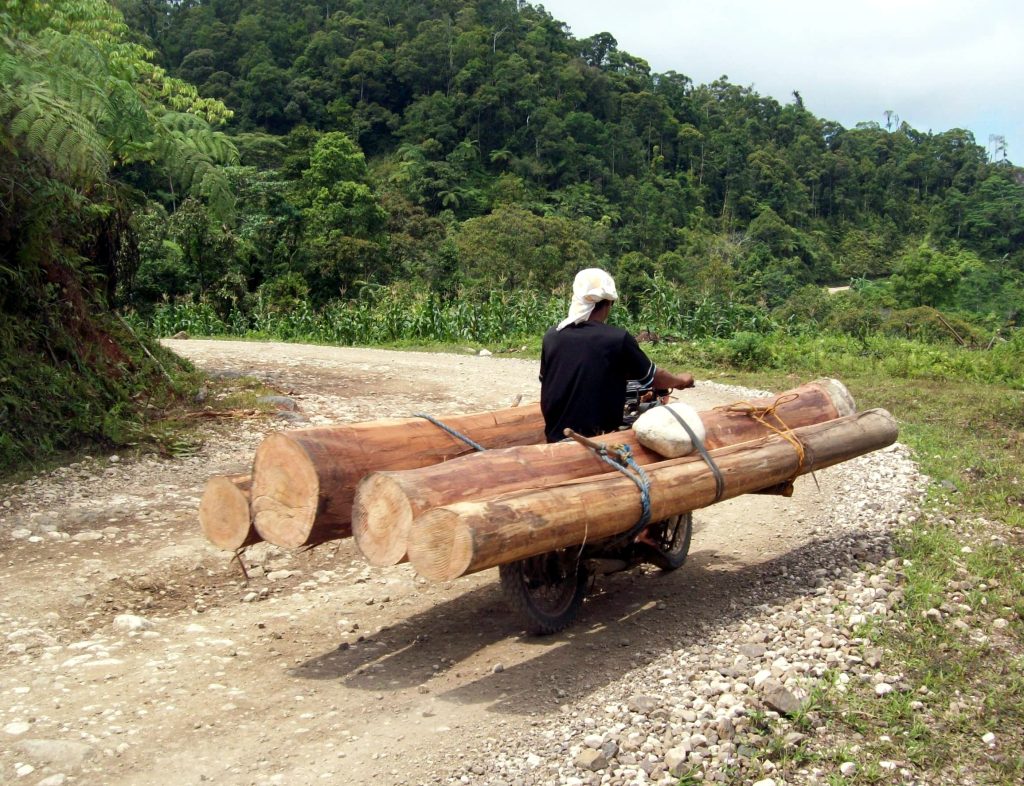
Aside from logging (whether legal or illegal), the Philippine Clearing House Mechanism (PCHM) said urban construction has also decimated the country’s forest cover. “Forests are cleared to make way for the expansion of urban areas including urban settlements, commercial establishments, roads, bridges, power plants and others that have major impact on forest life,” it explained. “This results in loss of forest area and massive deforestation.”
Another is agriculture, which converts forest areas into agricultural land for growing crops, building farms, ranches and other lands for agricultural purposes. This includes the slash-and-burn farming technique (kaingin).
Some natural causes of deforestation are forest fires, volcanic eruptions, and typhoons. The surging population has compounded the problem. “With about 2 million people added to the population every year, the population is expected to double in about 40 years,” said the World Population Review.


 Facebook
 Twitter