
Mangroves disappearing around the world pose a growing threat to marine ecosystems and coastal communities. Often called the “lungs of the sea,” mangrove forests play a vital role in protecting coastlines, supporting marine life, and fighting climate change.
If coral reefs are the “rainforests of the sea,” then mangroves are the “lungs of the sea.” That was what Dr. Craig Dahlgren, executive director of Perry Institute for Marine Science, described mangroves.
He knows what he is talking about as he has dedicated the last 30-plus years of his life to marine conservation in the Bahamas and the Caribbean.
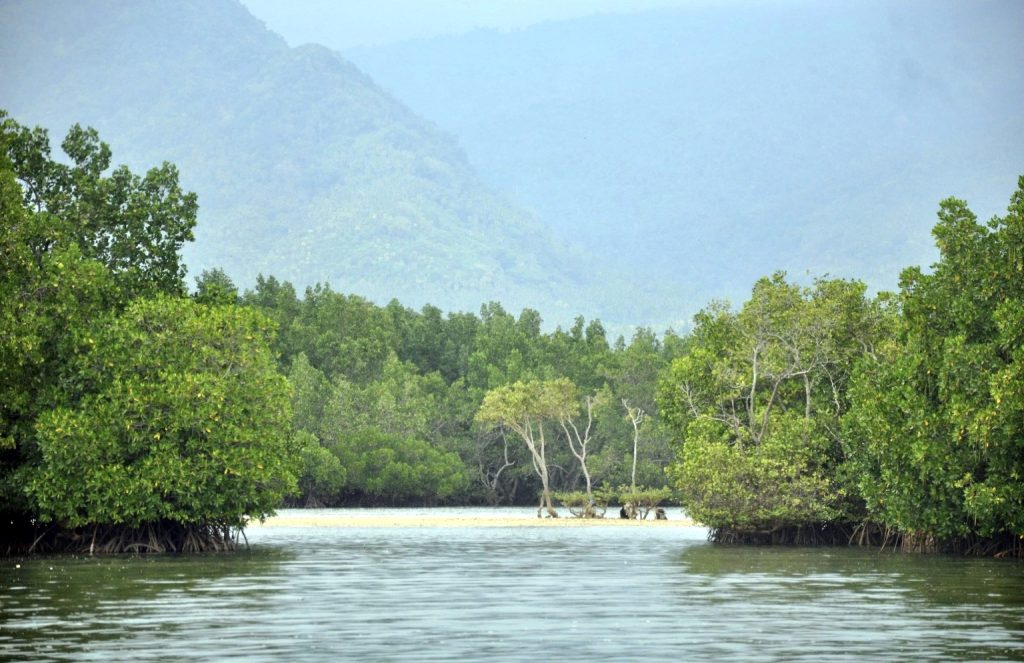
The institute described the mangroves as “the unsung heroes of our ocean.” “These amazing trees not only protect our coastlines from storms and erosion but also filter water, absorb nutrients, and support a diverse array of marine and terrestrial species. And that’s not all – mangroves are also carbon sequestering powerhouses, absorbing up to 1000 tons of carbon per hectare per year,” it points out.
Mangroves are also very important to those living near the coastal areas, as they are their main source of livelihood.
”Mangroves are also so important for subsistence fishing, serving local communities – they’re easy for local communities to get to, they’re not as hard as getting to the reef or weather dependent,” emphasized Dr. Dahlgren.
Despite their many benefits, the institute is very alarmed since mangroves face a range of threats.
But it’s not only in the Bahamas and the Caribbean but the mangroves in other parts of the world as well. As the recent report from the International Union for Conservation of Nature (IUCN) puts it, half of the world’s mangrove ecosystems are at risk of collapse. And it is due to climate change.
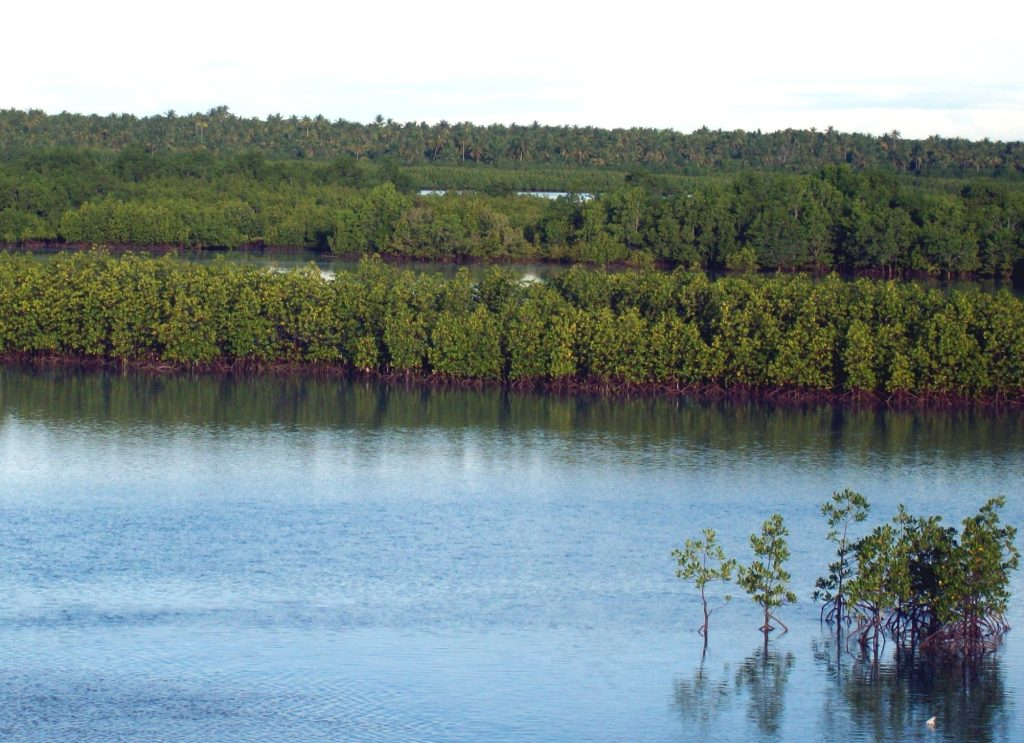
“This situation is truly alarming,” wrote Brian James L. Lu, an entrepreneur, business adviser, government consultant, and is deeply involved in civil society organizations. He added that the IUCN highlighted the threat to mangroves following studies in 36 different regions.
The United Nations Environment Program (UNEP) describes mangrove forests as “unique ecosystems” in the sense that they thrive in the interface between land and sea.
“Specially adapted to living in salt and brackish water, mangrove trees are found along coasts and estuaries throughout 123 countries in the tropics and subtropics,” UNEP states.
The Philippines has around 47 “true mangroves” and associated species belonging to 26 families. Most of the remaining mangroves can be found in Mindanao (29% of the total) and the remaining can be found in Luzon and Mindoro. Old-growth mangrove forests are mainly located in Mindanao and Palawan
Southeast Asia comprises one-third of the global mangrove population and is home to the highest variety of mangrove species. A study indicates that the Philippines faced the second-most significant decline in mangroves within the region, losing 10.5 percent of its mangrove forests from 1990 to 2010. This loss is mainly attributed to the swift growth of aquaculture ponds for fish farming.
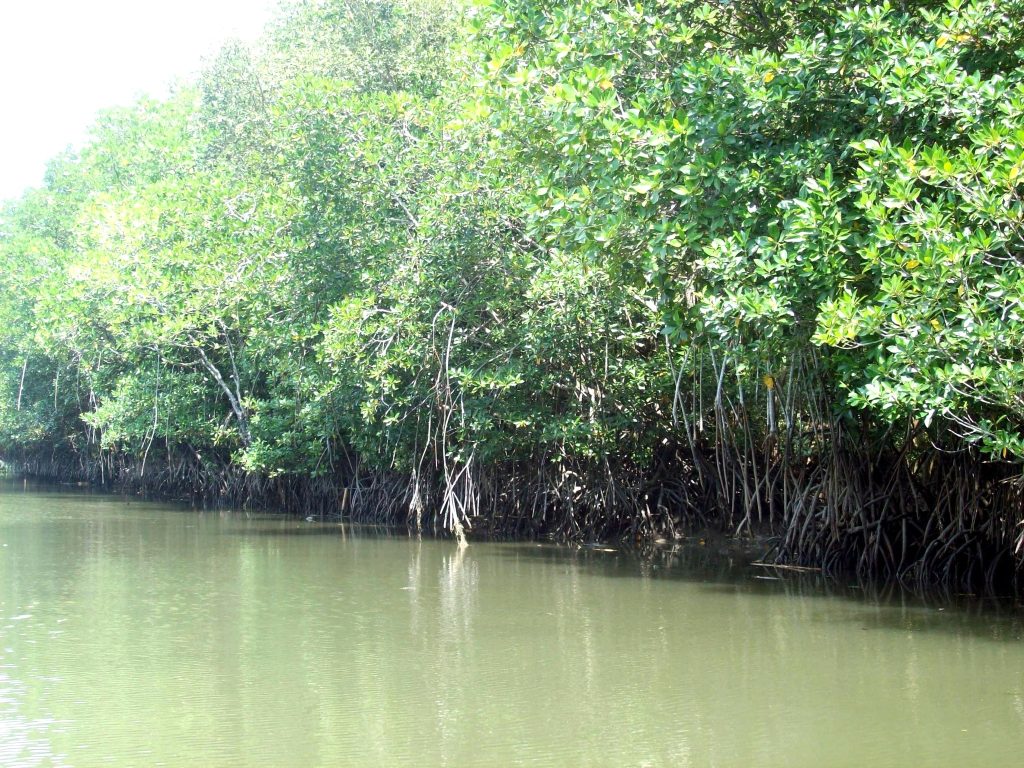
According to Lu, the Philippines is heavily dependent on mangroves. The major islands, rich in mangrove ecosystems, offer crucial protection and habitat for marine organisms. A 1996 study acknowledged the Philippines as possessing one of the most diverse coastal regions globally. Unfortunately, the country’s mangrove forests have sharply dwindled from 500,000 hectares in 1918 to merely 100,000 hectares by 1994–1995.
Mangroves are also called the “nurseries of the sea” because so many baby fish and crustaceans live among their roots. “(They) are very important to marine life,” explains Dr. Rafael D. Guerrero III, the former executive director of the Philippine Council for Aquatic and Marine Research and Development.
“Mangroves serve as sanctuaries and feeding grounds for fish that nibble on detritus (fallen and decaying leaves) trapped in the vegetation, and on the bark and leaves of living trees,” the academician with the National Academy of Science and Technology adds.
“Mangroves are like the kindergarten, seagrasses are the secondary schools, and coral reefs are the high schools and colleges for fishes! And, once (the fishes) graduate from university, they return to kindergarten to spawn,” said Khun Psit, co-founder of Thailand’s Yad Fon mangrove preservation project.
Some of the country’s commercial species – bangus (milkfish), shrimps, crabs and prawns, for instance – spend their early life within the mangrove area where they find food and protection from predators.
According to some studies, mangroves contribute about 3.65 tons of litter per hectare per year. One hectare of healthy mangroves ecosystem produces about 1.08 tons of fish per year.
A recent study conducted by Wetlands International, The Nature Conservancy, and the University of Cambridge indicates that the conservation and restoration of mangroves in proximity to human settlements will yield the highest return on investment in terms of improving fisheries.
Fish, like rice, is the staple food of Filipinos. That’s why experts are urging people to protect mangrove forests at all costs. “Local leaders must act to preserve mangrove forests and the ecosystem services that benefit all Filipinos,” said a policy brief produced by the Washington, D.C.-based Population Reference Bureau (PRB) under the Research Technical Assistance Center.
Text and photographs by Henrylito D. Tacio


 Facebook
 Twitter