
Mount Apo highest peak is the Philippines’ tallest mountain, celebrated for its rich biodiversity, cultural importance, and iconic landscape in Mindanao.
“Our Mount Apo hike overflowed with exquisite and jaw-dropping sights, including mossy rainforests, boulders, jagged peaks, and verdant hills.”—Aldrich Infantado, the Bisaya Traveler
***
Davao City, recognized as the largest city in the country by land area, is presently commemorating Kadayawan sa Dabaw. In addition to showcasing the 11 tribes, several icons are also being highlighted: durian, waling-waling, and of course, Mount Apo.
There are various posts circulating on social media that refer to Mount Apo as “the sleeping giant of the Philippines.” It is characterized as an active volcano, with its last recorded eruption occurring in 1640. I am uncertain whether this information is accurate or genuine, as Volcano Discovery has stated that “there are no known historic eruptions.”
The 1640 eruption may have actually happened at Mount Melibengoy and it was attributed to Mount Apo, surmised by the Smithsonian Institution. Formerly known as Mount Parker, Mount Melibengoy is an active volcano located in the province of South Cotabato, 30 kilometers west of General Santos City.
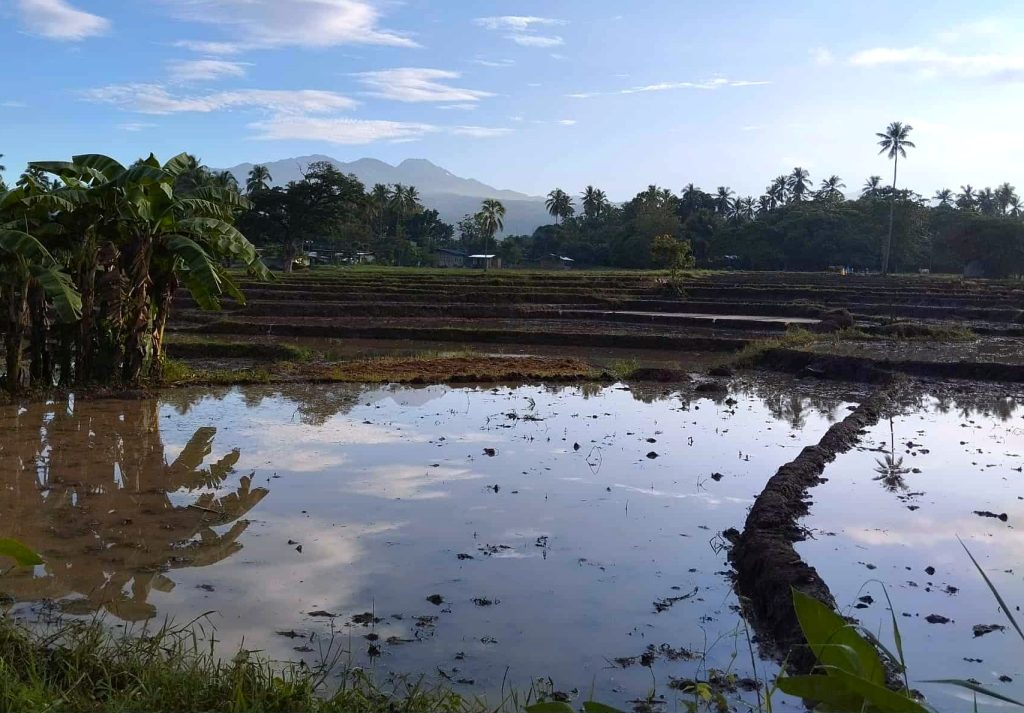
Some sources described Mount Apo also as a dormant volcano. Most volcanologists would assert that a volcano or volcanic field which erupted during the Holocene (the present geologic epoch, commencing at the conclusion of the most recent ice age approximately 11,650 years ago), or possesses the capability to erupt again in the future, ought to be classified as “active.”
“This does not mean that the volcano is erupting right now, although such a volcano would certainly qualify as ‘active,’” the United States Geological Survey explains. “Rather, it means that the volcano has a youthful magmatic system, and if it is not erupting now, it could be in the future.
Meanwhile, volcanologists employ the terminology “dormant,” a concise way to refer to “potentially active.” Thus, “dormant” volcano is one that is not currently erupting yet is regarded as “active” due to its potential to erupt in the future.
Since Mount Apo is a “dormant” volcano, it means it is still not an “extinct” volcano. Volcanologists consider a volcano extinct as it is unlikely to erupt again, because the volcano no longer has a magma supply.
A “dormant” volcano is likely to erupt again. “Deep beneath its majestic slopes, it still breathes fire, with nearly a kilometer of sulfur vents hissing along its southeast side, proof of ongoing volcanic activity,” said the social media post.
Why should we be concerned? The eruption of Mount Apo signifies devastation and loss of life. Nearly two million individuals reside a mere 32 kilometers from the nation’s tallest mountain. Countless others throughout Mindanao are also susceptible to its possible wrath.
The social media post wondered: In spite of this risk, the discussions and monitoring regarding this dormant giant are still minimal — raising concerns about the country’s preparedness should it ever awaken.
Forewarned is forearmed, indeed.
Wikipedia gives us this information: “Apo volcano is a basaltic to basaltic-andesitic stratovolcano and part of the Central Mindanao Arc, but its volcanic history is poorly known. The densely forested volcano has a flat summit with 3 peaks, the highest of which is known as Davao volcano and has a 500-meter wide crater with a small lake.
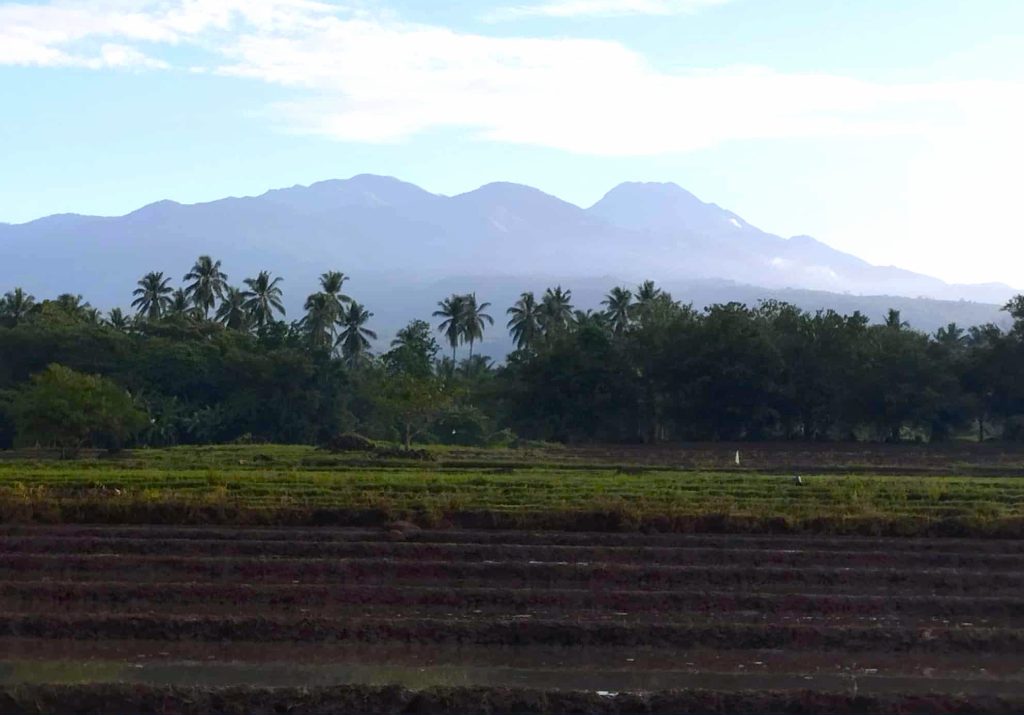
“The youngest crater is located on the northern peak. Several fumaroles and sulfur deposits occur on the volcano, most notably fumaroles along a fissure on the southeast side down to 2400-meter elevation.”
Mount Apo is home to the Mount Apo Geothermal Power Plant, a geothermal power facility with a capacity of 106 megawatts, situated in Barangay Ilomavis, Kidapawan City. This power station extracts steam from the 8.4-square kilometer geothermal production field. Currently, it is integrated into the Mindanao Grid, which provides electricity to both Kidapawan and the Davao Region.
The social media post has this interesting information about Mount Apo:
The name “Apo” comes from the local word for ancestor or grandfather, a title of great respect.
Mount Apo towers at 2,954 meters (9,692 ft) above sea level. It’s the roof of the country.
Declared as a Natural Park and United Nations Education, Scientific and Cultural Organization (UNESCO) tentative site, Mount Apo is under strict protection. Any exploitation, illegal logging, or destructive activity is prohibited, safeguarding its forests, wildlife, and sacred heritage from those with harmful intentions
Mount Apo’s slopes are covered with lush forests, hot springs, and breathtaking lakes — but deep below lies molten magma that could change landscapes overnight.
There are three major trails in scaling the mountain. Climbers reach the summit via Kidapawan, Kapatagan, or Sta. Cruz trails — all passing by active geothermal vents.
Nearly one kilometer stretch of steaming vents (solfataras) on its southeast slope proves that heat and gases are still escaping from deep underground.
Mount Apo is also home to the Philippine Eagle, one of the rarest eagles in the world, and over 270 bird species.
Waters from Mount Apo feed major rivers and hydroelectric dams, powering cities across Mindanao.
Mount Apo has several craters and sulfur fields, showing a complex volcanic system beneath.


 Facebook
 Twitter