
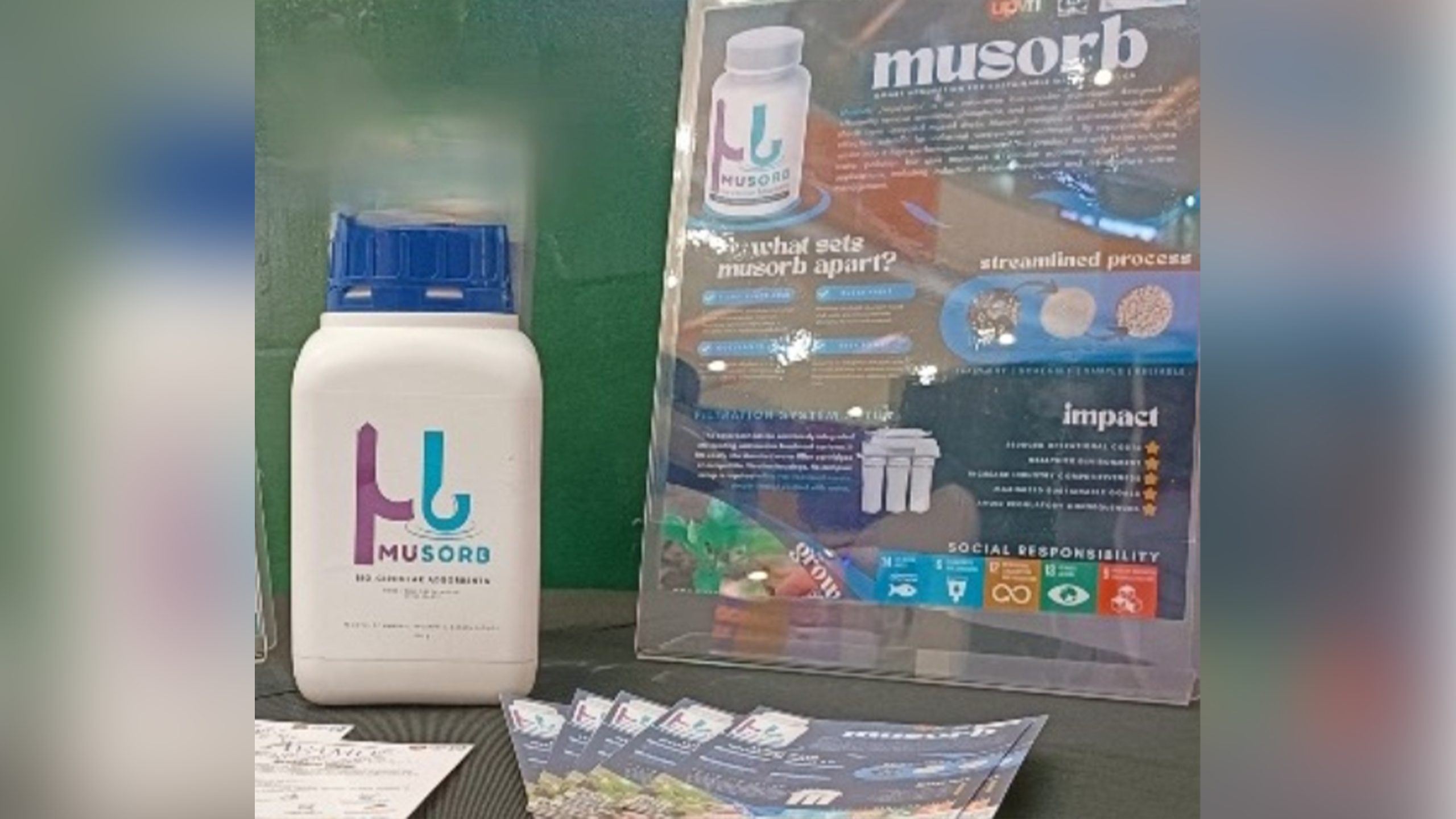
Mussel shell waste is being transformed into valuable agricultural and aquaculture materials under a DOST-PCAARRD-funded research project led by the University of the Philippines Visayas.
A project of the University of the Philippines Visayas (UPV) is turning the mussel shell, a discarded waste, into a valuable resource.
The project, “A Valorization of Agri-fishery Materials using Opportune Science (AVAMOS): Nanomaterials from mussel shells for agri-aquaculture applications” implemented by UPV is funded by the Philippine Council for Agriculture, Aquatic and Natural Resources Research and Development of the Department of Science and Technology (DOST-PCAARRD).
Mussels, locally known as “tahong,” consist of 20–30% meat with 70–80% shell. Owing to its widespread consumption as an affordable source of protein among Filipinos, mussels produce substantial shell waste at 6,000 metric tons in Western Visayas alone, which can cause health and environmental problems.
At the recently concluded 2025 Regional Science, Technology and Innovation Week (RSTW) in Caraga held at the Robinsons Mall in Butuan City, products of the AVAMOS project’s innovative valorization of mussel shell waste were showcased.
Musorb, a sustainable and cost-effective solution for industrial wastewater treatment using upcycled mussel shells as an adsorbent, was exhibited. It was designed to remove ammonia, phosphate, and carbon dioxide from wastewater. It is ideal for industrial effluent treatment and aquaculture water management.
The other featured mussel shell waste-derived product was the humic-acid-functionalized nano-hydroxyapatite, a slow-release fertilizer. It can be used for both aquaculture and agriculture purposes either as a soil nutrient replenishment or as a bioavailable phosphate fertilizer, or for remediation of polluted water bodies.
Traditionally, mussel processing in the country focused only on the meat. The AVAMOS project, on the other hand, recognized the potentials of mussel shells for nanomaterial production and thus generated mussel shell waste processing innovations anchored on green technology and circular economy for use in aquaculture and agriculture. (PR)
Written by Butch S. Pagcaliwagan


 Facebook
 Twitter