
The Philippine banana industry remains one of the most important pillars of the country’s agricultural sector, supporting thousands of farmers and contributing significantly to exports.
“Banana is still the most important crop in the Philippines.” That was what Dr. Patricio S. Faylon said when he was still the executive director of the Laguna-based Philippine Council for Agriculture, Aquatic, and Natural Resources Research and Development (PCARRD).
Bananas are grown in 132 countries worldwide, more than any other fruit crop. The Philippines is, in fact, the only country in Asia to be among the top 5 banana exporters, according to the Pilipino Banana Growers and Exporters Association (PBGEA), a group of 18 companies , including their respective subsidiary firms and their member growers or farmers.
A report released by the United Nations Food and Agriculture Organization (FAO) states that the country’s Cavendish bananas continue to be the most popular kind among its Asian neighbors. The FAO’s “Banana Market Review 2023” showed the country providing around 60% of Asia’s Cavendish banana needs.
But the future is not as rosy as it looks. PBGEA Executive Director Stephen Antig, in a news report by Maya Padillo, said the country is losing important international banana markets as a result of poor production levels brought on by pests and diseases, particularly fusarium wilt.
According to Antig, the percentage of fresh bananas grown in the country has steadily decreased since 2012. Philippine bananas had a 94% market share in Japan until 2023, when it dropped to 79%. The People’s Republic of China, the country’s largest market, had an 82% market share in 2012 but fell to 40% in 2023. In South Korea, it decreased from 98% of the market share to 69% in 2023.
The worst, according to Antig, was in the United Arab Emirates, where Philippine bananas accounted for 83% of the market in 2012; by last year, however, that percentage had dropped precipitously to only 8%.
The local banana industry is not spread out around the country; rather, it is concentrated in Mindanao. Most of the bananas are produced in Davao region, northern Mindanao, Soccskargen (South Cotabato, Sultan Kudarat, Sarangani, and General Santos City), AND BARMM (Bangsamoro Autonomous Region in Muslim Mindanao).
Bananas are also grown in some areas in the Visayas and Luzon but it is not as huge as those in Mindanao.
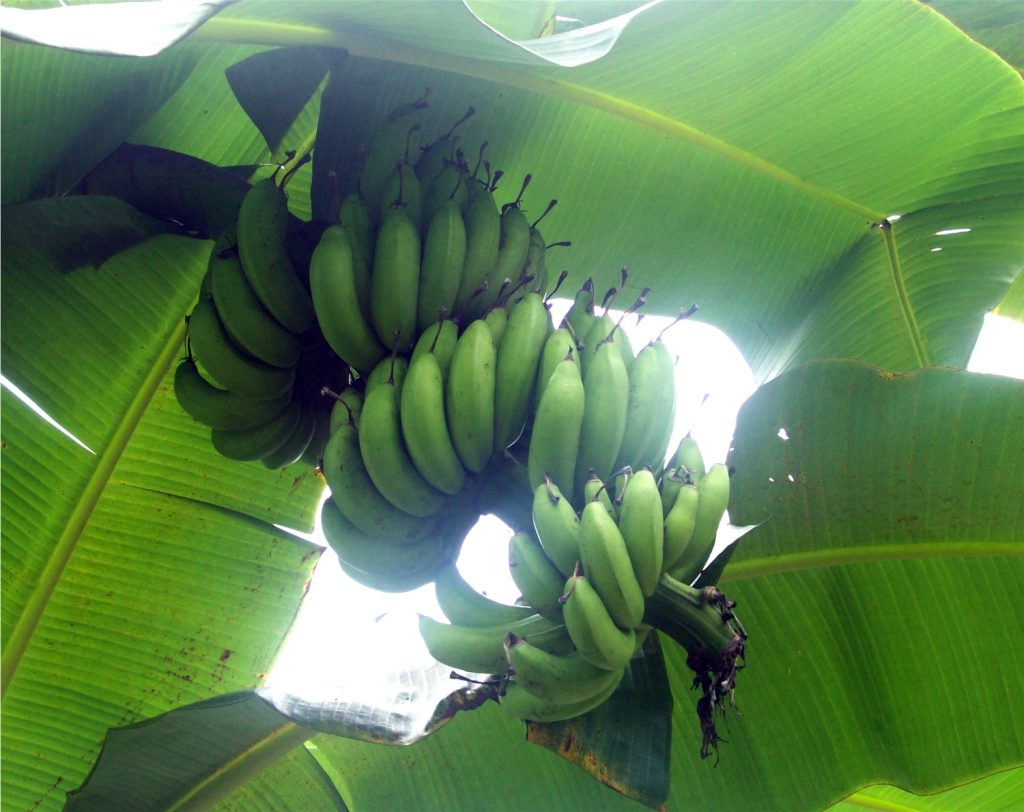
“Not all is well with our bananas,” observed a policy briefing issued by the PCAARRD some years back. “The world today is endangered with another banana apocalypse – the emergence and evolution of the dreadful banana bunchy top (BBT), banana streak, banana bract mosaic, and fusarium wilt,” the policy briefing warned.
It’s nothing new. The 1923 musical hit, “Yes, We Have No Bananas,” was reportedly penned after songwriters Frank Silver and Irving Cohn were denied in an attempt to purchase their favorite fruit by a syntactically colorful, out-of-stock neighborhood grocer.
Big Mike, the prominent banana variety in the 1950s in the Western hemisphere, doesn’t exist anymore after a disease infected the plant causing it to be wiped out from most farms and plantations.
“In the Philippines, BBT remained in most farms that brought considerable damage to prime banana-producing provinces in the country,” the PCAARRD policy brief explained. “Diseases have even evolved and multiplied, which created new banana monsters, such as the black sigatoka, bugtok, moko, and other infectious diseases of quarantine concern.”
Antig blamed the pests and diseases, particularly Fusarium wilt, which devastated most banana plantations in Davao region. Also known as Panama disease, Fusarium wilt is a wilting disease caused by the fungus whose pathogen is resistant to fungicides.
During the 1950s, an outbreak of Panama disease almost wiped out commercial Gros Michel banana production. The Gros Michel banana was the dominant cultivar of bananas, and Fusarium wilt inflicted enormous costs and forced producers to switch to other, disease-resistant cultivars. Since the 2010s, a new outbreak of Panama disease caused by the strain Tropical Race 4 (TR4) – which attacks the roots of the banana causing the disease by clogging its vascular system – has threatened the production of the Cavendish banana, today’s most popular cultivar.
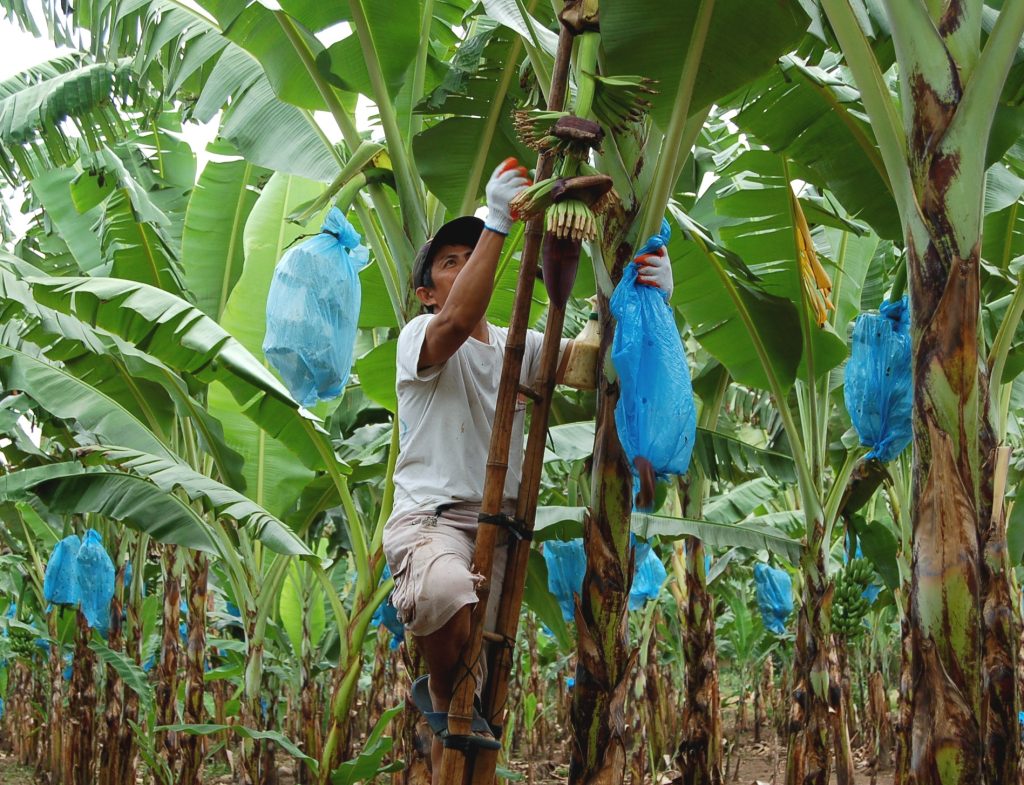
It must be recalled that in the 1950s, an epidemic of Panama disease nearly eradicated the commercial production of the Gros Michel banana, which was the leading variety at the time. The impact of Fusarium wilt resulted in significant financial losses and compelled growers to transition to alternative cultivars that were resistant to the disease.
Since the 2010s, a resurgence of Panama disease, attributed to the Tropical Race 4 (TR4) strain, has posed a serious risk to the cultivation of the Cavendish banana, which is currently the most widely consumed variety.
The Philippines was alarmed by the development. So much so that then Science Secretary Mario G. Montejo met with banana growers and exporters, researchers and heads of local line agencies to discuss the next steps in the ongoing united response against the Fusarium wilt.
“We acknowledge the urgency of the issue,” said Sec. Montejo, who pushed for the science and technology intervention in managing the Fusarium wilt in Davao. Among those recommended were the use of biological control agents against the fungus causing the disease.
But as stated earlier, Fusarium wilt was a banana enemy that is hard to defeat. One good solution is to leave the banana farms affected by the disease and find other areas where bananas can be grown.
But it’s easier as it seems. In the news report written by Padillo, Antig asserts that replacing the areas impacted by Fusarium wilt and expanding these plantations poses significant challenges due to the Comprehensive Agrarian Reform Law, which restricts landowners to a maximum of five hectares of land.
The banana is mentioned for the first time in written history in Buddhist texts in 600 BC. Alexander the Great discovered the taste of the banana in the valleys of India in 327 BC. In the Middle Ages, both Muslims and Christians thought that the banana was the forbidden fruit of paradise.
The word “banana” is derived from the Arabic word “finger.” They initially originated from the Malesian region, where ancestors continue to exist in the forests. The local inhabitants recognized that certain plants bore edible fruits and could be propagated through suckers. Over thousands of years, human selection has significantly transformed the characteristics of these wild species in the humid tropics.
J.A. Samson’s Tropical Fruits gives more insights of the history of the fruit: “Malayan sailors probably took bananas to Madagascar about the fifth century AD and they spread to the east coast and mainland of Africa from there; plantains arrived much later. Both forms were already known on the west coast of Africa when the Portuguese arrived in the fourteenth century. Later, bananas were introduced into the western hemisphere and into other parts of the world.”
Southeast Asian farmers are credited with the initial domestication of bananas. Recent archaeological findings at Kuk Swamp in the Western Highlands Province of Papua New Guinea indicate that banana cultivation in this area dates back to at least 5000 BC, and potentially as far back as 8000 BC.
It is likely that other banana species were subsequently and independently domesticated in various locations throughout Southeast Asia. This region is recognized as the primary center of banana diversity.
There are several types of banana. In the commercial market, Cavendish bananas – named after William Cavendish, 6th Duke of Devonshire – is the most common type eaten worldwide. They are distinguished by their sweet flavor, yellow skin, and creamy flesh.
In the domestic market, the most popular varieties are cardaba, lakatan, latundan, and saba. Most of these are planted in or along the periphery of the farms, thus generating minimal production.
Bananas are among the healthiest fruits the world has known. Alexander the Great was so fascinated by the virtues of this fruit that he described it as “the heavenly fruit that tastes like nectar sweetened in honey.”
Health experts claim that bananas are low in protein, free of fats but high in energy. A fully ripe banana has 20%-25% sugar. It has a significant amount of B-vitamins, especially B1 and B6. B1 is a brain tonic whereas B6 relieves, in particular, uncomfortable symptoms of the premenstrual tension syndrome like irritability, headaches, tender breasts, and water retention.
According to a recent survey undertaken in the United States among people suffering from depression, many felt much better after eating a banana. This is because bananas contain tryptophan, a type of protein that the body converts into serotonin, known to make you relax, improve your mood and generally make you feel happier.
“One medium-sized banana boasts of 100-125 kilo calories, 4-5 grams fiber, about 400 milligrams potassium, 17 milligrams calcium, 36 milligrams phosphorus and traces of other minerals like iron,” said Professor Kanwar, an eminent biophysicist who writes for the Health Tribune.
Recent research conducted at the University of Minnesota’s School of Medicine supports previous findings that diets high in potassium, including bananas, can lead to reduced blood cholesterol levels. Participants who increased their dietary potassium intake exhibited a lower susceptibility to hypertension, strokes, and atherosclerosis, along with significantly decreased mortality rates. A significant study indicates that diets rich in potassium, particularly from bananas, may reduce the risk of strokes by one-third.
Should you be experiencing difficulties related to stress, consuming a banana rich in potassium may prove beneficial. Potassium is an essential mineral that aids in normalizing heart rhythms, delivering oxygen to the brain, and maintaining the body’s fluid balance. During periods of stress, our metabolic rate increases, leading to a depletion of potassium levels. This deficiency can be effectively addressed by incorporating a potassium-rich banana into your diet.
When comparing bananas to apples, it is noteworthy that bananas contain four times the amount of protein, twice the carbohydrates, three times the phosphorus, five times the vitamin A and iron, and double the quantity of other vitamins and minerals. It may be appropriate to reconsider the popular American saying to reflect that “A banana a day keeps the doctor away.”


 Facebook
 Twitter