
Philippine eagle maternal lineage diversity remains strong, according to a scientific study examining the genetic makeup of captive and rescued individuals.
The research was carried out by scientists affiliated with the University of the Philippines Mindanao–Philippine Genome Center (PGC) and the PEF, both based in Davao City.
The findings revealed that the captive-bred eagles possess all 17 haplotypes identified in the study, demonstrating that the existing breeding population retains a substantial portion of the known genetic variation of the species.
Information obtained by Edge Davao revealed that this was the first mitochondrial genome research of Philippine Eagles from the Greater Mindanao Faunal Region (GMFR), offering new genetic insights to assist in captive breeding and future reintroductions into their natural habitat.
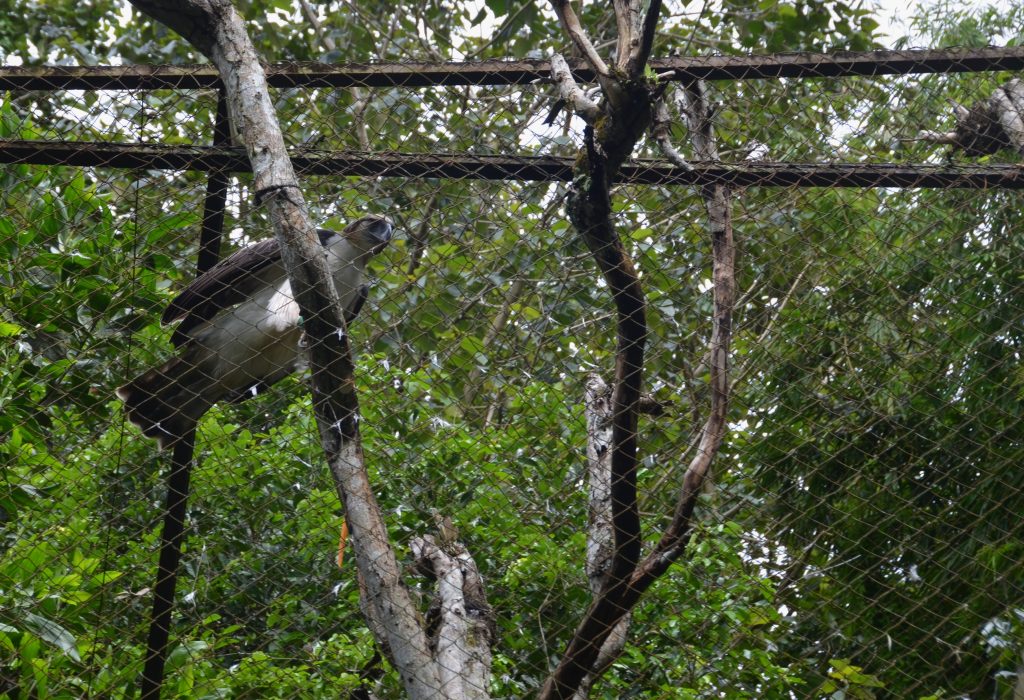
The research examined mitochondrial genomes from 32 Philippine eagles at PEF’s two facilities in Davao City – the older Philippine Eagle Center (PEC) and the newly established National Bird Breeding Sanctuary (NBBS).
The research team discovered that Philippine eagles throughout the GMFR exhibit minimal genetic diversity, thereby confirming the species’ critical proximity to extinction.
For the uninformed, mitochondria are tiny energy-producing parts of a cell, often called its “powerhouses.”
“Unlike most DNA found inside the cell’s nucleus, mitochondria have their own separate DNA, passed almost entirely from the mother to her offspring,” said PEF in a press release. “Because mitochondrial DNA (or “mtDNA”) changes slowly over time and is inherited through the maternal line, it is widely used to trace bloodlines or ‘gene families.’”
In the field of conservation genetics, mtDNA assists researchers in determining the number of unique maternal lineages that exist within an endangered species. This data is particularly crucial for the breeding of threatened species such as the Philippine eagle, as preserving a diverse array of bloodlines can enhance genetic vitality and increase the chances of survival for both captive populations and those reintroduced into their natural habitats.
The researchers identified at least two primary genetic clusters of Philippine eagles and recognized three notably distinct haplotypes, one of which originates from Samar Island Natural Park.
The findings from Samar, along with significant biodiversity areas such as Mt. Busa–Kiamba, Mt. Kampalili–Puting Bato, and Mt. Pantaron that exhibited genetic uniqueness, underscore the necessity for better representation of geographically significant lineages in the existing genetic stock.
“Our work shows that even if overall genetic diversity is low, the Philippine Eagle still holds a surprising variety of maternal lineages,” explained lead author Michael G. Bacus of the Philippine Genome Center Mindanao and the Department of Biological Sciences and Environmental Studies at UP Mindanao on how the results of the study can directly support conservation breeding.
“By mapping these lineages, the PEF can now secure new genetic stocks from the wild and pair more birds in a smarter way—aiming to keep as much genetic diversity as possible in every chick that hatches,” he added.
The PEF expressed great satisfaction with the study, as its findings offer a scientific validation of decades of captive breeding efforts and outline a strategy for future pairings and releases.
“For years, we have carefully bred eagles using pedigree records and field experience,” said Dennis I. Salvador, PEF’s executive director. “This study clearly shows that nearly four decades of careful pairing and breeding at the Philippine Eagle Center have produced a healthy mix and preservation of precious haplotypes (bloodlines) ex situ.
He further said that the study’s insights “also show where new genetic stocks can be secured from the wild and can guide us in choosing pairs and release candidates more wisely, so we can keep the gene pool as healthy as possible for the long term as a safety net against extinction.”
The Biodiversity Management Bureau (BMB), a line agency under the Department of Environment and Natural Resources, expressed great satisfaction with the outcomes of the study.
“We congratulate the researchers from UP Mindanao–PGC and PEF for advancing a genomic-based study on the Philippine Eagle — such science gives us the critical tools to ensure captive-bred and reintroduced eagles are not only demographically viable but genetically robust,” said Mariglo Rosaida I. Laririt, BMB assistant director.
The authors emphasize that mitochondrial data represent merely a fragment of the overall genetic puzzle. They advocate for subsequent studies utilizing nuclear DNA and larger sample sizes from other islands, including Luzon, as well as additional locations in Leyte and Samar, to create a more comprehensive understanding of the species’ genetic health.
Designated as Critically Endangered on the IUCN (International Union for Conservation of Nature) Red List since 1994, the Philippine eagle ranks among the rarest birds of prey globally, with recent assessments indicating that only a few hundred breeding pairs—significantly fewer than 1,000 mature individuals—persist in the wild throughout its habitat on Luzon, Samar, Leyte, and Mindanao.
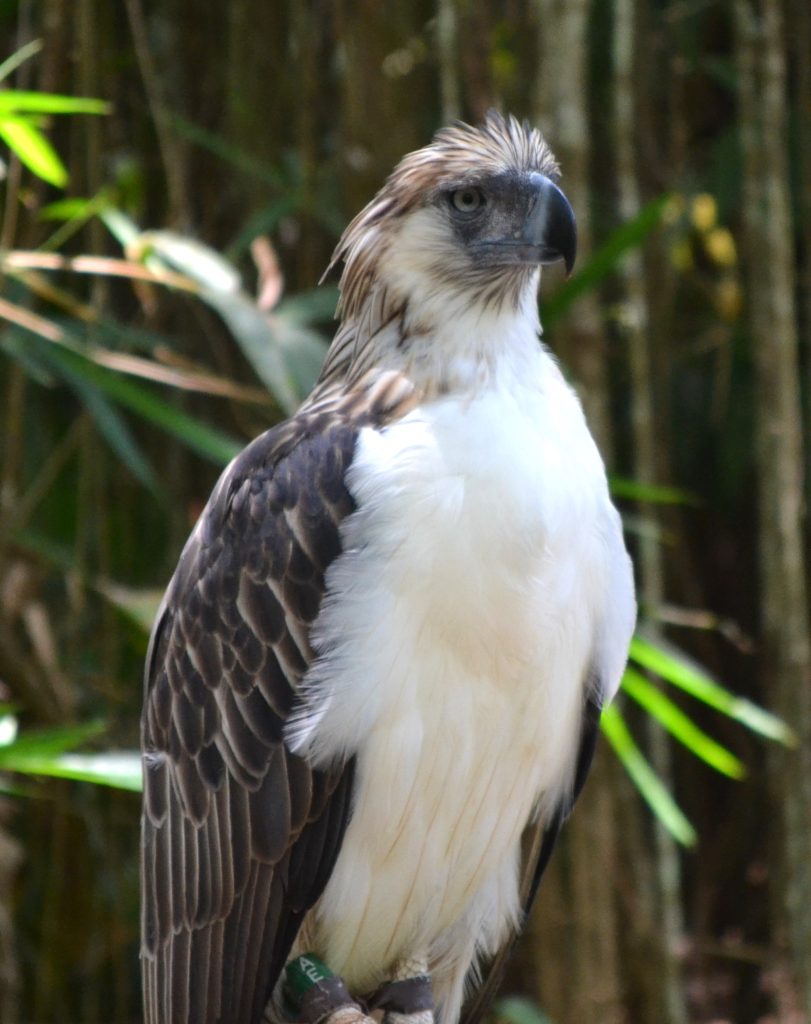
The Philippine eagle, which is featured in the 1,000-peso bill and scientifically known as Pithecophaga jefferyi, serves as the national bird of the Philippines and stands as a prominent symbol of the country’s remaining forests.
The Philippine eagle was initially examined in 1896 by the English explorer and naturalist, John Whitehead. He noted the bird in the company of his servant and gathered the first specimen. Subsequently, he dispatched the bird’s skin to William Robert Ogilvie-Grant in London within the same year. Robert showcased it in a local restaurant and later proceeded to describe the species a few weeks afterward.
The Philippine eagle – referred to by the renowned American aviator Charles Lindbergh as “the world’s noblest flier” – was officially designated as the national bird by then President Fidel V. Ramos, thus replacing the maya in that role.
The Philippine eagle is second only to the Madagascar sea eagle in rarity. In size, it beats the American bald eagle; it is the world’s second biggest after the Harpy eagle of Central and South America.
Efforts to save the Philippine eagle were started in 1965 by Jesus A. Alvarez, then director of the autonomous Parks and Wildlife Office, and Dioscoro S. Rabor, another founding father of Philippine conservation effort.


 Facebook
 Twitter