
Philippine mango has officially been confirmed as the most favorite tropical fruit in the Philippines. Based on a survey conducted by the author, more than 50% of 70 respondents chose mango as the fruit of all seasons.
Now, it has been finally confirmed: mango tops as the most favorite tropical fruit in the Philippines. This was based from the survey conducted by this author. More than 50% of the 70 respondents interviewed via e-mail and text messaging have chosen mango as the fruit of all seasons.
Dr. Marimel Yap-Veloso, consultant ophthalmologist at the Asian Eye Institute in Makati City, reasons out: “Mango is sweet and satisfying – and it has great texture, too! It’s great on cakes, pies and as a juice or shake. It’s a versatile fruit. The green variety is also delicious with fish and bagoong.”
Lionel Tierra, a Filipino who now lives in California, prefers ripe mango. “It is succulent, sweet and heavenly to the taste,” he wrote. “I’ve tried durian, star apple, and atis, among others – they are all very good to taste, but mango, to me, is still the best. Mango is like my best friend and sweetheart. All other fruits are just good friends and acquaintances.”
When it comes to mango, Philippine mangoes are the number one. “They are the best in the world,” said Dr. Kenneth Y. Hartigan-Go, the director of Food and Drug Administration. Dr Yap-Veloso echoed the same sentiment, “I’ve tried mangoes from Mexico and other countries – nothing comes close to the Philippine mango.”
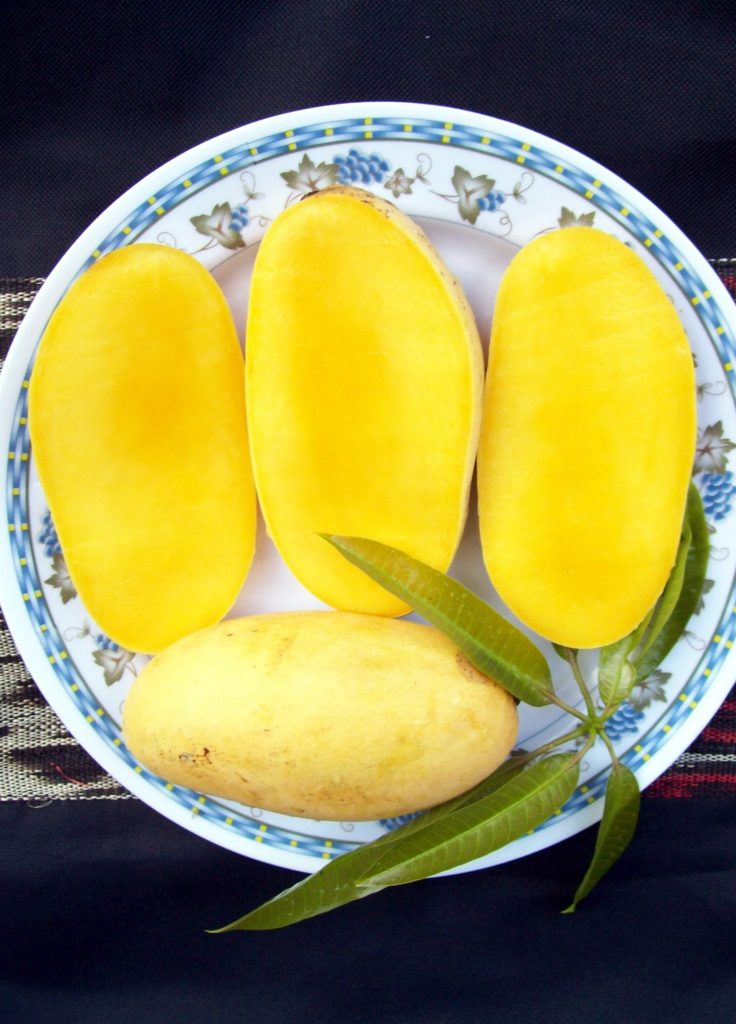
Larry Stoffel, an American who is married to a Filipino, confirmed this. “The rich juicy flavored mango from the Philippines is the most fantastic fruit I have ever tasted,” he revealed. “It’s true that we import mangoes from other countries but those imports cannot duplicate the mangoes I have eaten in Bohol. I miss the mangoes and can’t wait until I can have some more when I go back there.”
For sure, the Philippine mango is one of the country’s sources of pride. Former Agriculture Secretary Leonardo Q. Montemayor said the “Super Manila Mango” variety has found its way in the Guinness Book of World Records as the sweetest of its kind in the world.
A ripe super mango emanates a sweet fragrance, reminding you of tropical summer breezes which sweep across warm, blue seas. No other mango has ever looked like this – bright yellow as the blazing afternoon sun, smooth to the tongue, and leaves a persistent craving for a next one. These are the images that only Philippine super mangoes can evoke.
Whatever variety, mango is a vitamin powerhouse. “One small mango provides a quarter of your recommended daily allowance for vitamin C, nearly two thirds of your daily quota for vitamin A, good amounts of vitamin E and fiber. They also contain vitamin K, phosphorus and magnesium. Mangoes are particularly rich in potassium,” wrote Fiona Wilkinson, author of “Health Benefits of Mangoes.”
Mango is also considered a ‘high volume’ food; it means you get a lot of food for a relatively small amount of calories. “One mango contains around 135 calories,” wrote Wilkinson. “However, they are quite high in natural sugar with one mango containing around 30 grams.”
Mango, being high in calories and carbohydrates, is good for those who are trying to gain weight. As it is high in iron, mango is said to be very good for pregnant women as well as for people suffering from anemia.
“Mango has three times the vitamin C of a single orange or apple and important minerals essential to prevent cancer and other diseases,” said Dr. Martin Hirte, a German health food researcher and pediatrician.
Health benefits
The German physician also found that mango contains minerals that are vital for pregnant mothers and stressed-out people. “The calcium and magnesium of mango relaxes the muscles, relieves stress and prevents miscarriage,” Dr. Hirte wrote in his research paper entitled, “The Benefits of Mango for Human Health.”
The skin can also benefit from the fruit, whether it is eaten or applied. Diana Herrington, in a piece titled “10 Health Benefits of Mangoes” for the Care2 Healthy Living newsletter, says the fruit clears clogged pores and eliminates pimples.
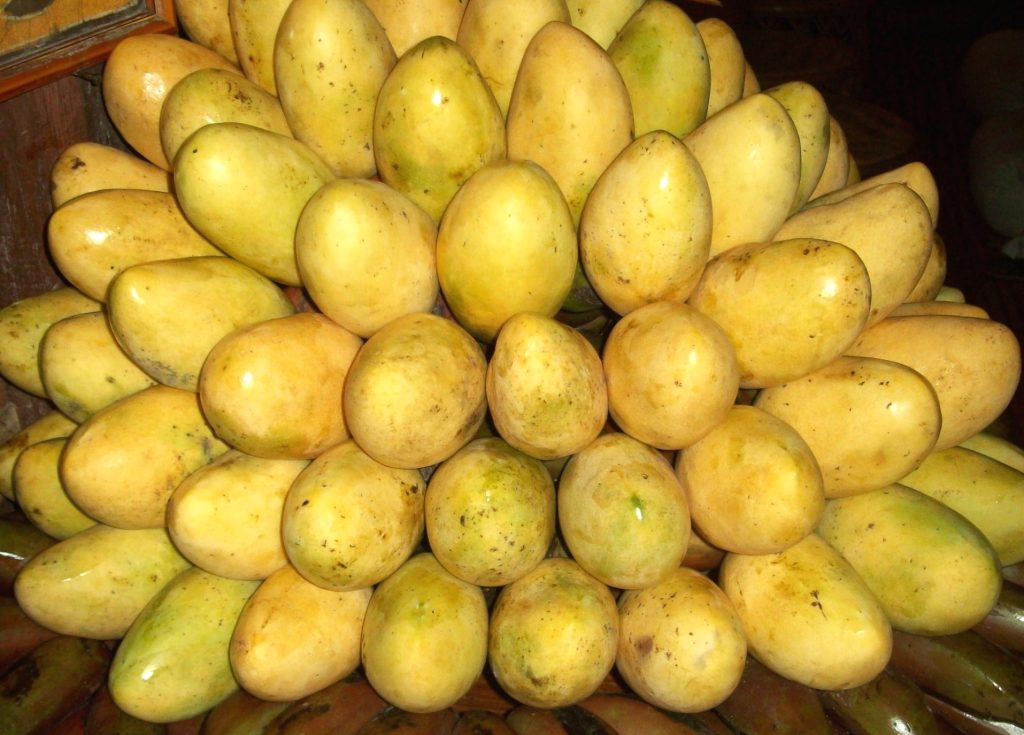
Mango may be processed in a blender and applied to the face easily and quickly. Mangoes contain beta-carotene that the body converts into vitamin A which, like vitamin C, is “crucial to skin self-repair,” Herrington adds. “When eaten, mangoes help resolve all skin problems including pimples,” Herrington says.
But that’s not the only health benefit you get from mangoes. The fruit contains a soluble dietary fiber called pectin, which has been shown to lower blood cholesterol levels. Recently, scientists at The Institute for Food Research discovered that a fragment released from pectin binds to, and inhibits galectin 3, a protein that plays a role in all stages of cancer progression.
Research has shown antioxidant compounds in mango fruit have been found to protect against colon, breast, leukemia and prostate cancers. These compounds include quercetin, isoquercitrin, astragalin, fisetin, gallic acid and methyl gallat, as well as the abundant enzymes.
Those having diabetes can also get help from mangoes. “Mango leaves help normalize insulin levels in the blood,” Herrington wrote. “The traditional home remedy involves boiling leaves in water, soaking through the night and then consuming the filtered decoction in the morning. Mango fruit also has a relatively low glycemic index (41-60) so moderate quantities will not spike your sugar levels.”
Eating mango can also help those with eye disorders. Ripe mangoes are highly beneficial in the treatment of night blindness in which one cannot see properly in dim light. This disease is caused by vitamin A deficiency. It is very common among children who are victims of malnutrition due to poverty.
“One cup of sliced mangoes supplies 25 percent of the needed daily value of vitamin A, which promotes good eyesight and prevents night blindness and dry eyes,” Herrington noted.
Taking an examination soon? Why not try drinking fresh mango juice. “A regular consumption of fresh mango juice is linked to better memory, higher abilities to focus and concentrate, better performance while studying or memorizing something,” says the guide2herbalremedies.com. “That is why mango juice is recommended to all students.”
Some cautions
Health experts caution not eating unripe mangoes in excess. Here’s a statement of warning from a physician: “Their excessive intake may cause throat irritation, indigestion, dysentery and abdominal colic. One should, therefore, not consume more than one or two green mangoes daily. Water should not be drunk immediately after eating the green mango because it coagulates the sap and makes it more irritant. Sap or milky juice which comes out on breaking the stalk of the green mango is irritant and astringent. Eating green mangoes without draining the sap may cause mouth, throat and gastrointestinal irritations. The sap should, therefore, be fully squeezed out or the skin should be peeled before using raw mango.”
Ripe mangoes are eaten fresh as a dessert or processed into dried mangoes, puree, juice, concentrate, shakes, and many more. When eaten green, they are a tasty treat for lovers of sour fruits as they are usually dipped in salt, fermented fish, or shrimp (bagoong). Green mangoes are also pressed into juice and shakes.
Mango is also used to make juices, both in ripe and unripe form. Pieces of fruit can be mashed and used in ice cream or blended with milk and ice to make thick milkshakes. In Thailand and other Southeast Asian countries, sweet glutinous rice is flavored with coconut then served with sliced mango on top as a dessert.
History records showed that mangoes originated from the Myanmar region, where it was known to have been cultivated 4,000 years ago. Buddhist monks took mango to Malaya and eastern Asia in the 5th century B.C. Later in the 18th century, Portuguese explorers would introduce mango in Brazil. From there, mango cultivation would reach Florida, United States in 1833 and eventually in Africa and in other lowland tropical and sub-tropical areas. Today, there are about 83 mango-producing countries in the world.


 Facebook
 Twitter