
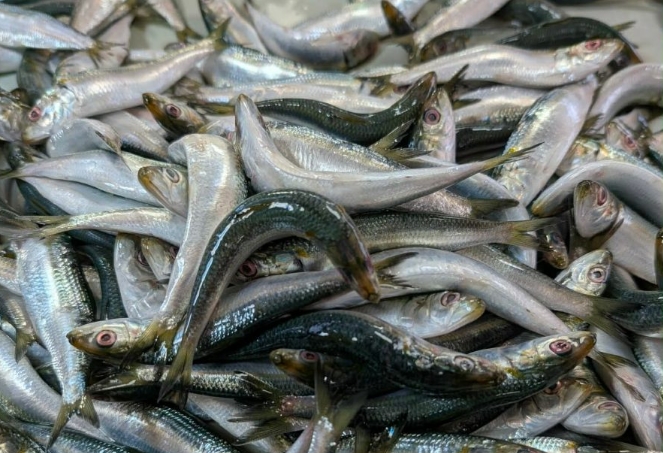
Sardine surge Dapitan was observed on the evening of March 3 as high tide swept across the northern waters of Taquilon Port in Dapitan City, bringing dense schools of sardines close to the shoreline.
On the evening of March 3, as high tide swept across the northern waters of Taguilon Port in Dapitan City, the shoreline of Barangay Taguilon came alive with a remarkable sight—dense schools of sardines surging into the shallows, signaling a notable display of marine abundance.
Personnel from BFAR IX Provincial Fisheries Office of Zamboanga del Norte conducted site verification following reports from the community and confirmed the occurrence at approximately 7:00 PM. The surge lasted for nearly an hour before the fish gradually dispersed back into open waters.
During that brief window, local residents were able to gather an estimated five tubs of sardines—equivalent to roughly 225 kilograms. The catch was dried the following day, with a portion sold at the public market in Banonong.
For many residents, including retired fishermen who witnessed the event firsthand, the surge was both extraordinary and encouragingly familiar. Similar occurrences have been observed in previous years, including three years ago and in cycles prior. In some instances, the phenomenon extended for up to three days. While the overall volume remains naturally limited by the confined area where the fish congregate, the recurring presence of sardines along these shores reflects a sustained and resilient stock.
On the same evening, a similar sardine surge was reported at Galas Port in Dipolog City—an occurrence likewise documented in previous years. The synchronized events across coastal areas underscore the broader stability of sardine populations within Zamboanga del Norte.
According to coastal residents in the area, environmental conditions such as high tide, illumination from port lights, or predator movement may have contributed to the temporary congregation of sardines in shallow waters. Moreover, they also recognize a more enduring factor behind this visible abundance: the consistent implementation of science-based conservation policies, particularly the sardine closed fishing season under Bureau Administrative Circular No. 255.
“This sardine surge is more than a transient coastal spectacle. It is a clear indicator that strategic fisheries management is strengthening fish populations, reinforcing food security, and supporting the livelihoods of coastal communities,” said DA-BFAR national director Elizer Salilig.
Through enforcement and strong collaboration among multi-sector partners including BFAR, local government units, non-governmental organizations, the scientific community, and partner government agencies, the management efforts for sardines has protected spawning periods and allowed sardine stocks to regenerate.
Photo from BFAR Philippines


 Facebook
 Twitter