
Philippine biodiversity is among the richest in the world, yet it is increasingly threatened by deforestation, habitat loss, and human activity.
“Most of us find it hard to comprehend the sheer variety of the natural world, and to appreciate just what this variety means to us. Even scientists have no idea how many plant and animal species there are. Estimates range wildly between five and 80 million, of which only around one and a half million have actually been identified.”—Worldwide Fund for Nature
***
The Philippines is an archipelago consisting of 7,641 islands, covering a total land area of 300,000 square kilometers, making it the fifth largest island nation in the world. Unfortunately, its forest cover is dwindling fast.
Recent data from the Forest Management Bureau (FMB) under the Department of Environment and Natural Resources (DENR) indicates that only 7,014,154 hectares, representing 23.3% of the country’s total land area, are covered by forests.
Some Filipinos express concern over the unfortunate condition of the forests only in the aftermath of typhoons or floods. For instance, the devastation caused by super typhoon “Pablo” (international name: Bopha) in the Davao Region resulted in nearly 400 fatalities and numerous injuries as it departed from the country. Many lives were lost due to flash floods and mudslides.
During a press conference convened following this disaster, the Department of Environment and Natural Resources (DENR) reported that approximately 80% of the remaining illegal logging “hot spots” in the country were situated in the provinces most severely affected by “Pablo.”
But there’s more to forests than just protection against floods and typhoons. They are home to thousands of species of plants and animals, many of which are found nowhere else on Earth.
Recent studies indicate that the canopies of tropical forests globally may harbor approximately 30 million insect species. This suggests that these forests, which occupy merely 6% of the Earth’s surface, are home to 70% and potentially up to 90% of all species on the planet.
You might question the significance of this information. If a number of insects were lost yesterday and the sun still rises today, does it truly have any impact?
The answer is yes! The coffee you enjoyed this morning, the banana you consumed at breakfast, the margarine that enhanced the flavor of your bread, and the clothing you wore all originated from tropical forests.
Tropical forests, insects, plants, animals, microorganisms, and the ecosystem where they harbor are all part of biodiversity (coined from two words: biological diversity). “We should preserve every scrap of biodiversity as priceless while we learn to use it and come to understand what it means to humanity,” said Eward O. Wilson, American biologist and naturalist.
“Human beings could not exist without the abundance and diversity of nature: all our food and many of our industrial materials and medicines are provided by plants, animals, and microorganisms,” points out the World Wide Fund for Nature (WWF).
The Department of Science and Technology (DOST) is trying to bridge the gap between biodiversity conservation and sustainable utilization. Its Biodiversity Science and Technology program supports the goals of the Philippine Biodiversity Strategy and Actional Plan and the initiatives of the environment department.
The College of Agriculture and Food Science of the University of the Philippines at Los Baños (UPLB) has identified five indigenous fruit trees from the CALABARZON and explored their natural culinary potential.
These are the “binayuyo” (Antisdemsa ghaesembilla), “bitongol” (Flacourtia rukam), “tibig” (Ficus nota), “libas” (Spondias pinnata), and “kalumpit” (Terminalia microcarpa). The latter is also known as Batangas cherry.
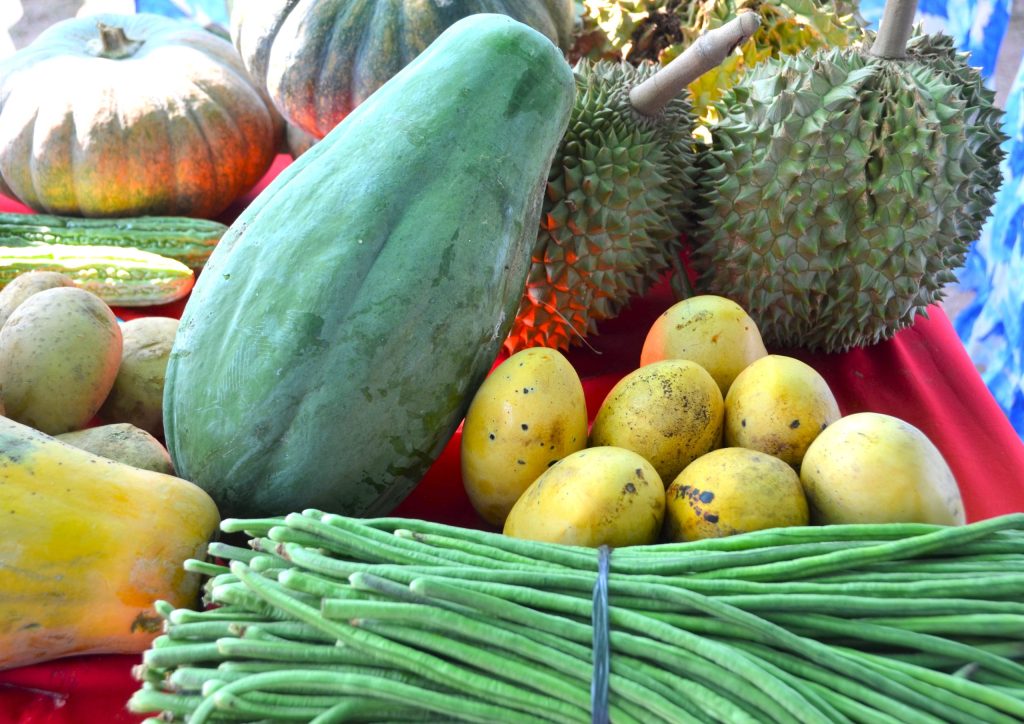
The researchers have investigated the most efficient methods to enhance the colorant and flavor properties of indigenous fruits through various drying techniques, as well as an ice cream flavor that closely mimics the taste of frozen yogurt.
The UPLB team also examined other sour and color-rich fruits of the region, namely “katmon” (Dillenia philippinensis), “lipote” (Syzygium polycephalaoides), and “baligang” (Syzgium garciae).
In Bukidnon, the Central Mindanao University, which has established the first and only spore bank in the country, has examined the morphoanatomy, propagation techniques, and product development related to ferns.
Among the biodiversity-based products developed are fern-enriched pandesal, known as “ferndesal,” as well as frozen food items such as sausages, food balls, and patties made from fern-based mixtures, in addition to noodles and cookies.
In Cebu, the Cebu Technological University spearheaded an initiative aimed at evaluating, profiling, and promoting economically significant key biodiversity areas (KBAs) within the province. This project investigated the viability of terrestrial snails as a supplementary food source to enhance food security.
Among the identified land snails, the endemic and edible “takyong” (Helicostyla daphnis) has been developed into various food products, including tomato sauce, sisig, protein bars, cookies, meatloaf, ramen, and spreads.
The Philippines is recognized as one of the 17 countries globally with the highest biological diversity. Its land and marine ecosystems exhibit significant endemism, with almost 50% of its plant and animal species being exclusive to its islands.
Ongoing discoveries of new species further highlight this richness. The country is home to 228 designated Key Biodiversity Areas (KBAs), which support 855 species of plants and animals that hold global significance, including corals, molluscs, elasmobranchs, fish, amphibians, reptiles, birds, and mammals.
“The Philippines has tremendous wildlife resources,” wrote Jesus B. Alvarez Jr. in a 1981 position paper. “We have unique and beautiful birds which are in great demand, both here and abroad. We also have rare, interesting mammals. Most outstanding are the tamaraw and the Philippine eagle which could be placed alongside the world’s finest species.”
Unfortunately, many of the country’s endemic biodiversity are on the verge of extinction. “A few decades ago, the wildlife of the Philippines was notable for its abundance; now, it is notable for its variety; if the present trend of destruction continues, Philippine wildlife will be notable for its absence,” commented Dr. Lee Talbot, who was once a member of the Southeast Asia Project on Wildlife Conservation of Nature and Natural Resources.
Noted Filipino wildlife expert Dioscoro Rabor echoed the same sentiment. “It is about time that we, Filipinos, stop making ourselves internationally blind to the real status of our wildlife resources,” he said. “We should face the fact that our country is no longer rich in forests and consequently, of wildlife which used to be a normal component of our forests.”
A species is deemed extinct when it has not been observed in the last 50 years. Endangered species are defined as those whose populations have declined to a critical threshold or whose habitats have been compromised, modified, or diminished.
Rare species are characterized by their limited global populations, often confined to a small number of habitats. Currently, rare species are not classified as endangered but are considered at risk. Conversely, the term “threatened” broadly refers to animal or plant species that may fall into the categories of “endangered” or “insufficiently known.”
The Convention for International Trade of Endangered Species (CITES) has listed almost 50 wildlife species in the country that are rare, threatened, or endangered. Among those that are included in the list are five marine turtles, two crocodile species, the Philippine eagle, tamaraw, and dugongs.
“Once these species are gone, they are gone forever, leaving behind an imbalance in ecology and beauty difficult to determine and restore,” deplored a committed Filipino environmentalist.


 Facebook
 Twitter