
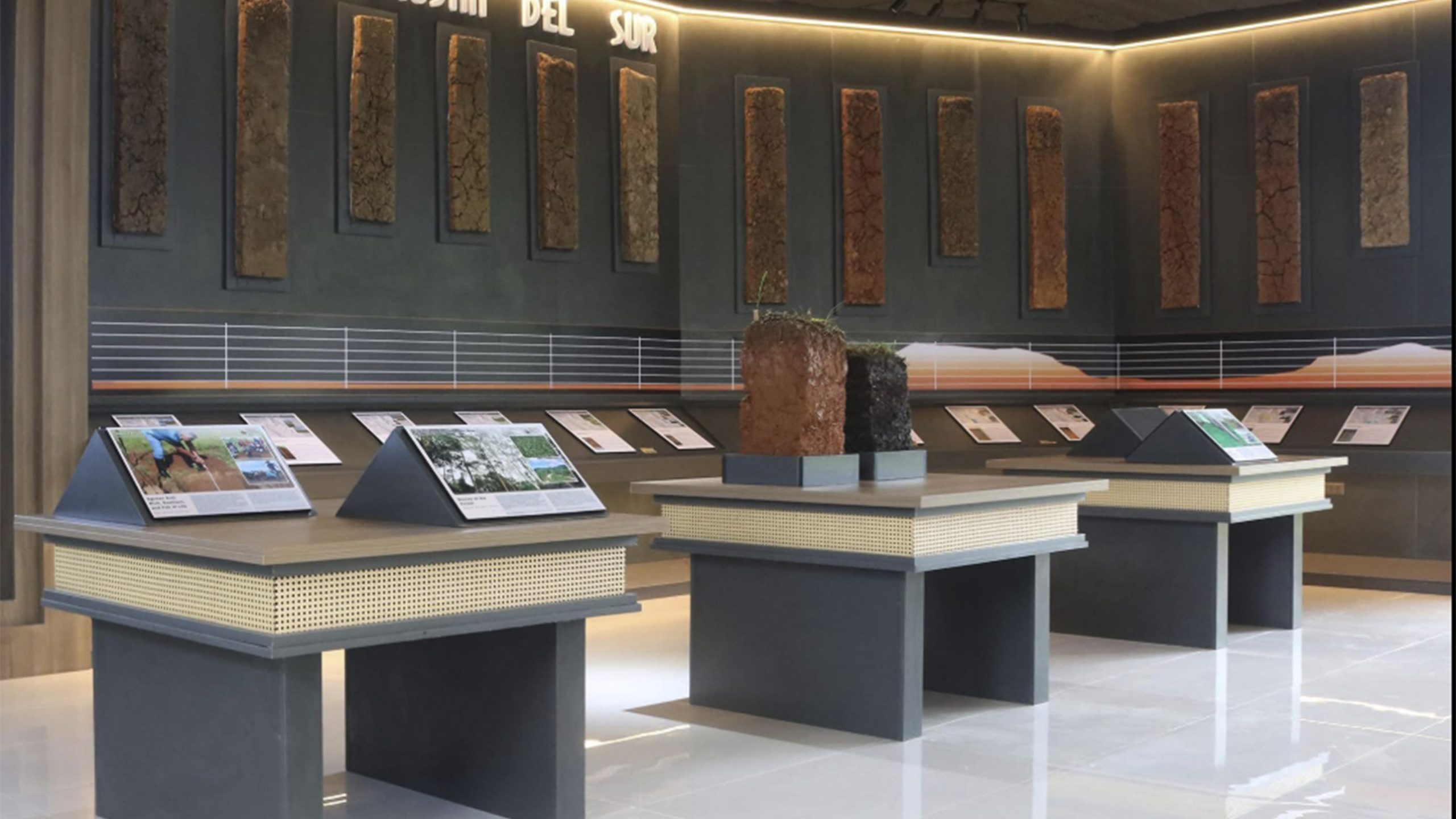
Soil testing is necessary to help farmers improve crop quality, determine proper fertilizer use, and increase agricultural productivity.
“Be it deep or shallow, red or black, sand or clay, the soil is the link between the rock core of the earth and the living things on its surface. It is the foothold for the plants we grow. Therein lies the main reason for our interest in soils.” — Roy W. Simonson, USDA Yearbook of Agriculture, 1957
***
While the rest of the country was observing the Feast day of St. John the Baptist, the people of Agusan del Sur were also busy witnessing the inauguration of the country’s first state-of-the-art soil research laboratory.
This facility, located at Prosperidad, functions as a center for soil analysis and testing, in addition to crop research and development. Its objective is to assist local farmers by determining the characteristics of their farm soils and the most appropriate fertilizers to use, thereby improving both crop quality and yield.
“What we inaugurate today is more than just a structure. It is a milestone. A product of vision, persistence and deep collaboration,” said Agusan del Sur Governor Santiago B. Cane, Jr.
“We, in the provincial government, are proud to see this dream finally take shape. But in our hearts and heads, we know this is not the end but the beginning. We have so much more in mind, not simply to run a laboratory but to unlock its full potential,” he added.
In his message, Congressman Adolph Edward G. Plaza of Agusan del Sur District 2 said, “We are confident that through soil testing-based fertilization, our farmers’ harvest will improve by leaps and bounds while driving down cost.”
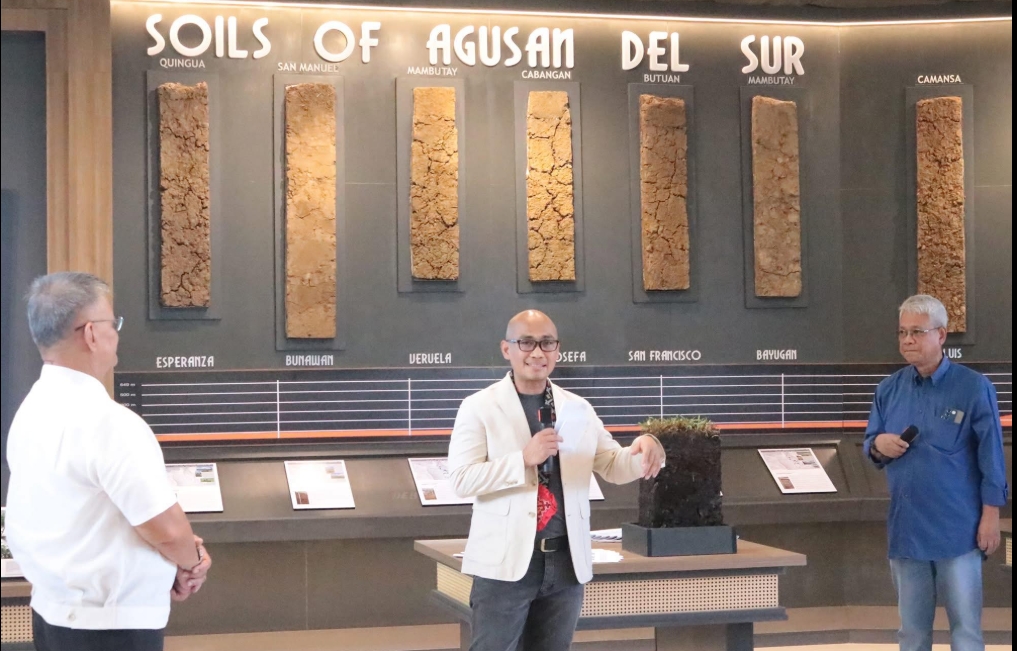
Many Filipinos are unaware of the significance of soil. Some believe that simply planting crops will yield the desired results. Others apply fertilizers to their crops, assuming that they are necessary for growth. However, what they fail to realize is that fertilizers are intended for the soil, not the crops.
“The soils are the foundation of it all,” said Dr. Johnvie B. Goloran, an agricultural and environmental scientist. “Over decades, we’ve invested in technologies and practices to boost crop production but often overlooked the soils that make it all possible.
“From precision irrigation to crop monitoring drones, and genetically modified seeds to integrated pest management, we’ve focused on the visible, above-ground aspects,” he pointed out. “But what about the soils that nourish our crops, filter our water, and support biodiversity? Let’s give the recognition soils deserve!”
Dr. Goloran, who grew up in Agusan del Sur, is one of the brains in the development of the soil research laboratory in the province.
At one time, I came to Agusan and heard him doing a lecture. He said healthy soils contribute 40% to 60% of the yield potential of the farm. Yet, when he asked the farmers if they knew the soils of their farms, no one raised his hand.
“We need to get to know our soils: Healthy soils produce healthy food and healthy people, and also support a healthy environment,” he said. “Knowing the health of your soil is worth investing in.”
Just like the crops grown and livestock raised, soils need tender loving care from farmers. But how will these farmers take care of their lands if they know the kind of soil they are tilling?
“I am very sure no Filipino farmer wants their fields to be infertile or degraded,” said Dr. Goloran. “However, most farmers don’t know their soils. Because of this, they lose the opportunity to design or develop a strategic program/practice suitable for their farm lands.”
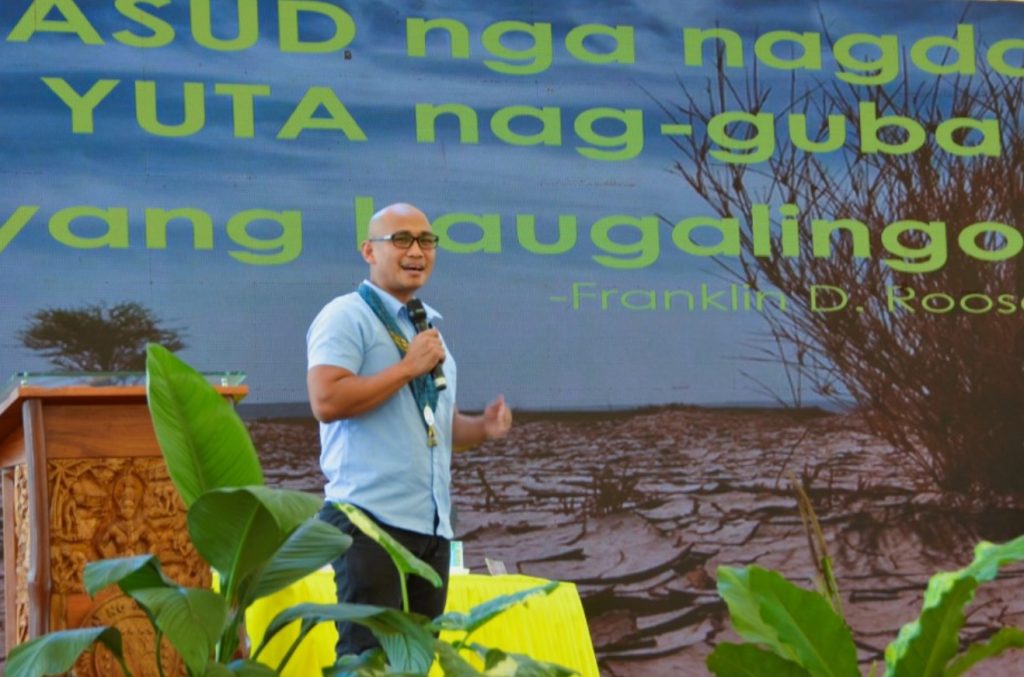
He believed the lack of soil information among farmers is the main cause of soil infertility. “The factors that we have been observing now – such as over tillage and excessive fertilizer applications – are just simply manifestations of this reality that farmers have no physicochemical information on their farm lands,” he said.
This is where soil testing comes in. The goal of soil testing is to provide farmers an accurate assessment of the soil’s fertility to make proper fertilizer recommendations.
“Soil testing gives you the critical information on the nutritional status of your farm,” Dr. Goloran explained. “This means that farmers would be able to select what type and rate of fertilizers are suitable to maintain a good nutritional status of the soils and at the same time address the nutritional requirements of the crops.”
During his lecture, he cited the case of phosphorus, a critical nutrient for plant growth. By conducting soil testing, a farmer will know if his farm has less phosphorus. If the result shows that it lacks phosphorus, then he needs to provide the nutrient for his farm. But if the farm still has lots of phosphorus, applying it with phosphorus is not necessary. In fact, putting more phosphorus makes the farm acidic, which is not good for crop production.
Soil testing can really help farmers in optimizing their crop production. “The standard practice should be that farmers would get not just the soil test results but also a set of recommendations for the crop that they prefer to plant on their farms,” Dr. Goloran said.
Doing so, the farmer can have a saving. “You don’t give your plants what they don’t need,” he philosophized.
Farmers can use both organic and inorganic fertilizers to restore the fertility of their farmers. “We have to understand that organic and inorganic fertilizers are both food to crops,” he pointed out. “The former takes time as it needs to be mineralized before it will be taken up by the plants. The latter is already available for crop uptake.”

 Facebook
 Twitter