
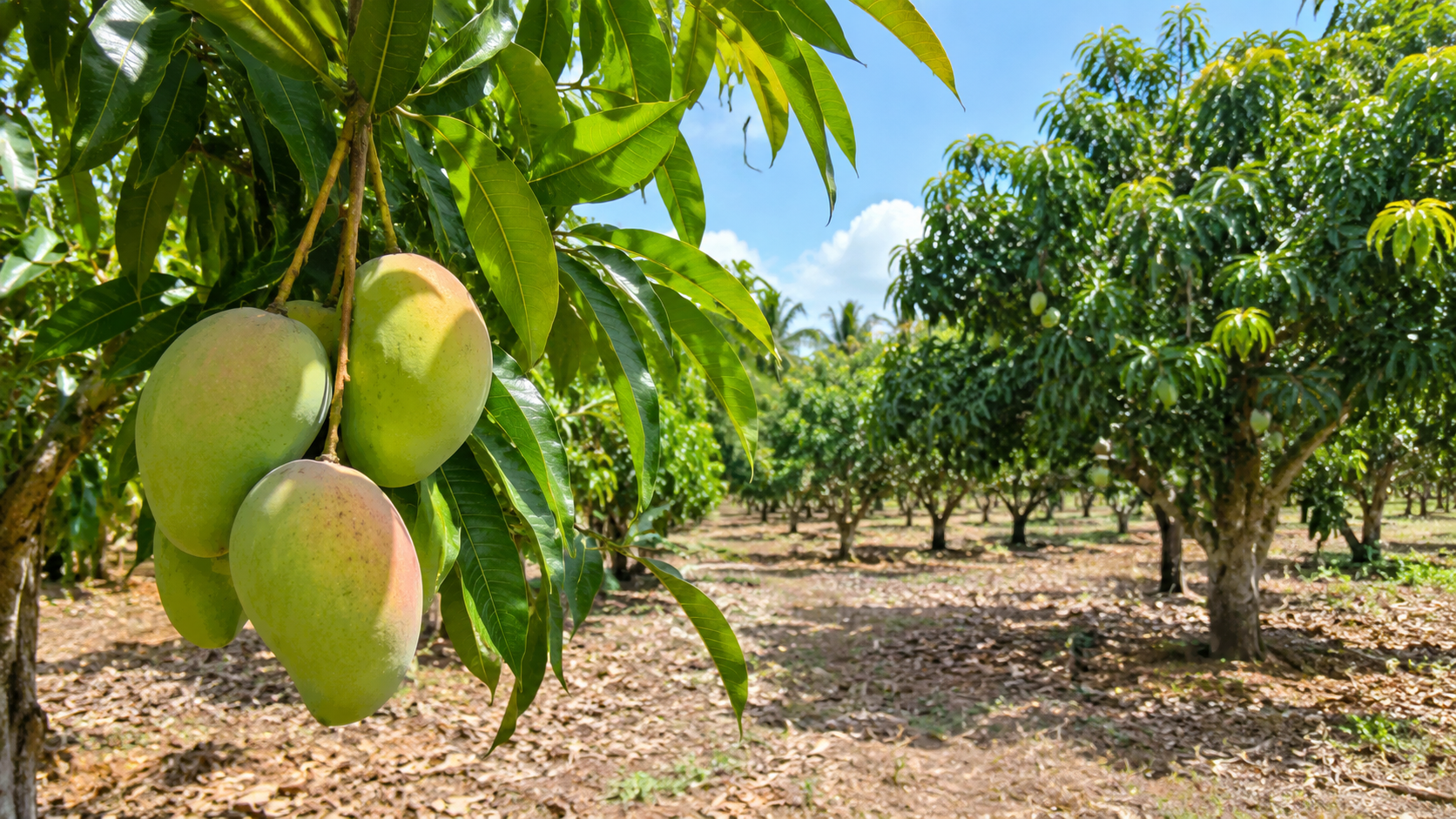
The best fruits to plant during El Niño in the Philippines are those that can tolerate dry conditions once established and require manageable amounts of water. With prolonged dry weather threatening agricultural production, Filipino farmers are considering fruit crops such as cashew, mango, guava, and tamarind as potential options for farms exposed to limited rainfall. Choosing suitable varieties and preparing reliable water sources can help reduce the risks associated with planting during drought conditions.
Prolonged dry weather can create serious challenges for Filipino farmers, particularly those growing fruit trees and other agricultural crops that depend on a consistent water supply. During El Niño, reduced rainfall and higher temperatures can affect soil moisture, slow plant growth, and increase the risk of crop losses.
However, not all fruit crops respond to dry conditions in the same way. Some tropical fruit trees can tolerate extended periods of limited rainfall once their root systems are established, making them potential options for farmers planning long-term agricultural investments.
For farmers in Mindanao, including areas of Basilan, choosing suitable crops before the dry season becomes especially important. Rather than planting fruit varieties that require frequent watering, farmers can consider crops with relatively good drought tolerance and manageable water requirements.
Here are seven fruit crops worth considering during El Niño in the Philippines, along with important planting considerations to help protect them during dry weather.
1. Cashew (Kasoy)
Cashew is one of the fruit and nut crops worth considering in areas that experience extended dry periods. Established cashew trees can tolerate relatively dry conditions, making them an option for farmers looking for a long-term agricultural investment.
The crop produces cashew nuts and cashew apples, which may provide different marketing opportunities depending on local demand and available processing facilities.
Why consider planting cashew?
- Relatively tolerant of dry conditions once established.
- Can grow in suitable tropical environments.
- Produces nuts with food-processing and commercial uses.
- Suitable for long-term orchard development.
Farmers should select well-drained land and obtain planting materials suited to local conditions. Young cashew trees still require adequate moisture while developing their root systems.
2. Mango (Mangga)
Mango is among the most commercially established fruit crops in the Philippines. Varieties such as Carabao mango are widely recognized in domestic markets, while Philippine mangoes also have export potential.
One advantage of mango cultivation is that mature trees can tolerate seasonal dry periods. A distinct dry period can also help induce flowering in productive mango trees.
However, farmers should not confuse this natural flowering requirement with allowing young trees to suffer from severe water stress.
Why consider planting mango?
- Established local and export markets.
- Mature trees can tolerate seasonal dry periods.
- Suitable for long-term orchard investment.
- Multiple opportunities for fresh-fruit and processed-product sales.
Well-drained soil, suitable varieties, proper pruning, and appropriate orchard management are important for successful production.
3. Guava (Bayabas)
Guava is another fruit crop worth considering for farmers who want to diversify their orchards. It is adaptable to different tropical growing conditions and can be cultivated in suitable backyard gardens and commercial farms.
Established guava plants can tolerate some dry conditions, although prolonged water shortages may affect fruit development and quality.
Guava is also consumed fresh and used in juices, jams, and other processed products.
Why consider planting guava?
- Adaptable to different growing environments.
- Has potential for fresh-fruit and processed-food markets.
- Can be incorporated into mixed fruit orchards.
- Suitable for small-scale and larger farming operations.
Farmers should maintain adequate soil moisture during establishment and fruit development, particularly during prolonged dry weather.
4. Tamarind (Sampalok)
Tamarind is known for its ability to survive in relatively dry environments once its root system has developed. It is a practical long-term tree to consider in areas where rainfall is seasonal.
Its fruits are widely used in Filipino cooking, particularly in sour soups and traditional food preparations. Tamarind can also be processed into juice, candies, concentrates, and other products.
Why consider planting tamarind?
- Established trees tolerate dry conditions.
- Has familiar uses in Filipino cuisine.
- Can provide long-term fruit production.
- Suitable for mixed orchards and farm boundaries where space allows.
The main consideration is patience. Tamarind is a long-term investment, and farmers should not expect immediate commercial harvests after planting.
5. Citrus Fruits (Calamansi, Lemon, and Other Citrus)
Citrus crops, including calamansi, are important options for Filipino farmers because of their established uses in households, restaurants, food processing, and beverage production.
Some established citrus trees can withstand moderate dry periods, but citrus production can be affected by insufficient water. Prolonged drought may reduce fruit size, quality, and overall production.
For this reason, farmers should consider citrus cultivation only when they can provide adequate water during critical growth and fruit-development stages.
Why consider planting citrus?
- Strong household and food-service demand for calamansi.
- Potential for fresh-fruit and juice markets.
- Can be incorporated into diversified farms.
- Offers opportunities for small-scale commercial production.
Proper drainage, disease management, and reliable access to water are important considerations.
6. Avocado (Abokado)
Avocado is another fruit tree worth considering for farmers interested in diversifying their long-term fruit production.
Some established avocado trees can tolerate moderate dry periods, but young trees need sufficient water to establish healthy roots.
Farmers should carefully assess the land before planting, especially in areas where heavy rainfall during the wet season can cause waterlogging.
Why consider planting avocado?
- Growing opportunities in fresh-fruit markets.
- Potential demand from households and food businesses.
- Can complement other fruit crops in a diversified orchard.
- Established trees can tolerate some dry periods.
Choosing suitable varieties and planting them in well-drained soil is essential.
7. Jackfruit (Langka)
Jackfruit is widely grown in tropical parts of the Philippines and offers several uses for farmers and food businesses.
The fruit can be sold ripe for fresh consumption or harvested while young for cooking. It can also be processed into chips, preserves, sweets, and other food products.
Established jackfruit trees may tolerate seasonal dry conditions, but young trees still require adequate moisture.
Why consider planting jackfruit?
- Multiple uses for ripe and unripe fruits.
- Established local market familiarity.
- Potential for fresh and processed products.
- Suitable for diversified tropical farming systems.
Farmers should provide sufficient space for mature trees and consider the accessibility of the farm when planning harvesting and transportation.
Which Fruit Crops Are Best for Commercial Farming?
Not every drought-tolerant fruit is automatically profitable. Farmers should also consider market demand, planting costs, harvesting schedules, transportation, and the availability of buyers.
Here is a practical comparison:
| Fruit | Dry-weather suitability | Commercial consideration |
|---|---|---|
| Cashew | Good once established | Nut market |
| Mango | Good for seasonal dry periods | Fresh and export markets |
| Guava | Moderate | Fresh fruit and processing |
| Tamarind | Good once established | Food and processing |
| Calamansi | Moderate | Household and food-service demand |
| Avocado | Moderate | Fresh-fruit market |
| Jackfruit | Moderate | Fresh and processed products |
These are general planning assessments, not guarantees of survival or production during severe drought.
For farmers in Mindanao, mango, cashew, calamansi, and jackfruit are worth investigating first, depending on local growing conditions and market access.
How to Protect Fruit Trees During El Niño
Choosing drought-tolerant crops is only one part of preparing for prolonged dry weather. Farmers must also protect newly planted trees and conserve available water.
Here are several practical measures:
1. Apply organic mulch
Cover the soil around fruit trees with dried leaves, rice straw, grass clippings, or other suitable organic materials.
Mulching helps reduce moisture loss from the soil and protects roots from excessive heat.
Keep mulch a short distance away from the tree trunk to reduce the risk of rot and pest problems.
2. Establish a rainwater collection system
Farmers can collect and store rainwater in tanks, drums, or farm reservoirs when rainfall is available.
Stored water can provide an additional supply during prolonged dry periods.
3. Avoid planting without a reliable water source
Even drought-tolerant fruit trees need water during their early development.
Farmers should avoid establishing large orchards if they cannot provide supplemental watering during extended dry periods.
4. Use drip irrigation when possible
Drip irrigation delivers water directly to the root zone, reducing unnecessary water loss.
Although installation requires an initial investment, it can help farmers manage limited water supplies more efficiently.
5. Maintain soil health
Adding appropriate organic matter can improve soil structure and water retention.
Farmers should also avoid unnecessary soil disturbance around established trees because damaged roots can make plants more vulnerable to drought.
What Farmers in Mindanao Should Consider
Mindanao has many agricultural areas suitable for fruit production, but growing conditions differ considerably between provinces and municipalities.
Farmers in Basilan, for example, should assess their soil type, elevation, drainage, water availability, and exposure to prolonged dry weather before choosing which fruit trees to plant.
The Department of Agriculture’s National Color-Coded Agricultural Guide provides location-specific crop suitability information based on soil, climate, elevation, and other environmental conditions.
Farmers can use this resource to help determine which crops are appropriate for their particular agricultural locations.
Another important consideration is planting schedule.
If sufficient rainfall is still available, farmers can prepare their land and establish fruit trees while taking advantage of existing soil moisture. However, planting should be postponed if the farm cannot provide enough water to keep young trees alive during the coming dry months.
Is November 2026 a Good Time to Plant Fruit Trees?
The answer depends on the availability of water on the farm.
According to DOST-PAGASA’s October 21, 2026 update, a strong to very strong El Niño is present in the Tropical Pacific. Forecasts indicate that it may persist through the first quarter of 2027, with associated impacts potentially continuing into the first half of the year.
This means farmers should be particularly careful when establishing new fruit trees.
If the soil still has sufficient moisture and supplemental irrigation is available, planting may be possible. Otherwise, preparing planting holes, securing quality seedlings, installing water storage, and preparing mulch may be more practical until reliable rainfall returns.
Farmers should regularly monitor PAGASA advisories and coordinate with their local Municipal Agriculture Office for updated planting recommendations.
Final Thoughts
El Niño presents challenges for Filipino farmers, but choosing appropriate crops and preparing farms for dry conditions can help reduce agricultural risks.
Cashew, mango, guava, tamarind, citrus, avocado, and jackfruit are worth considering because of their relative ability to withstand dry conditions once established.
However, drought tolerance does not mean that fruit trees can survive indefinitely without water. Young trees, in particular, need proper care and adequate moisture to develop healthy root systems.
For farmers planning to establish a fruit orchard, the best approach is to choose crops suited to local conditions, secure a dependable water supply, and prepare the farm before the most difficult months of the dry season.
With careful planning, fruit farming can remain a viable long-term agricultural activity even as changing weather conditions create new challenges.

 Facebook
 Twitter