
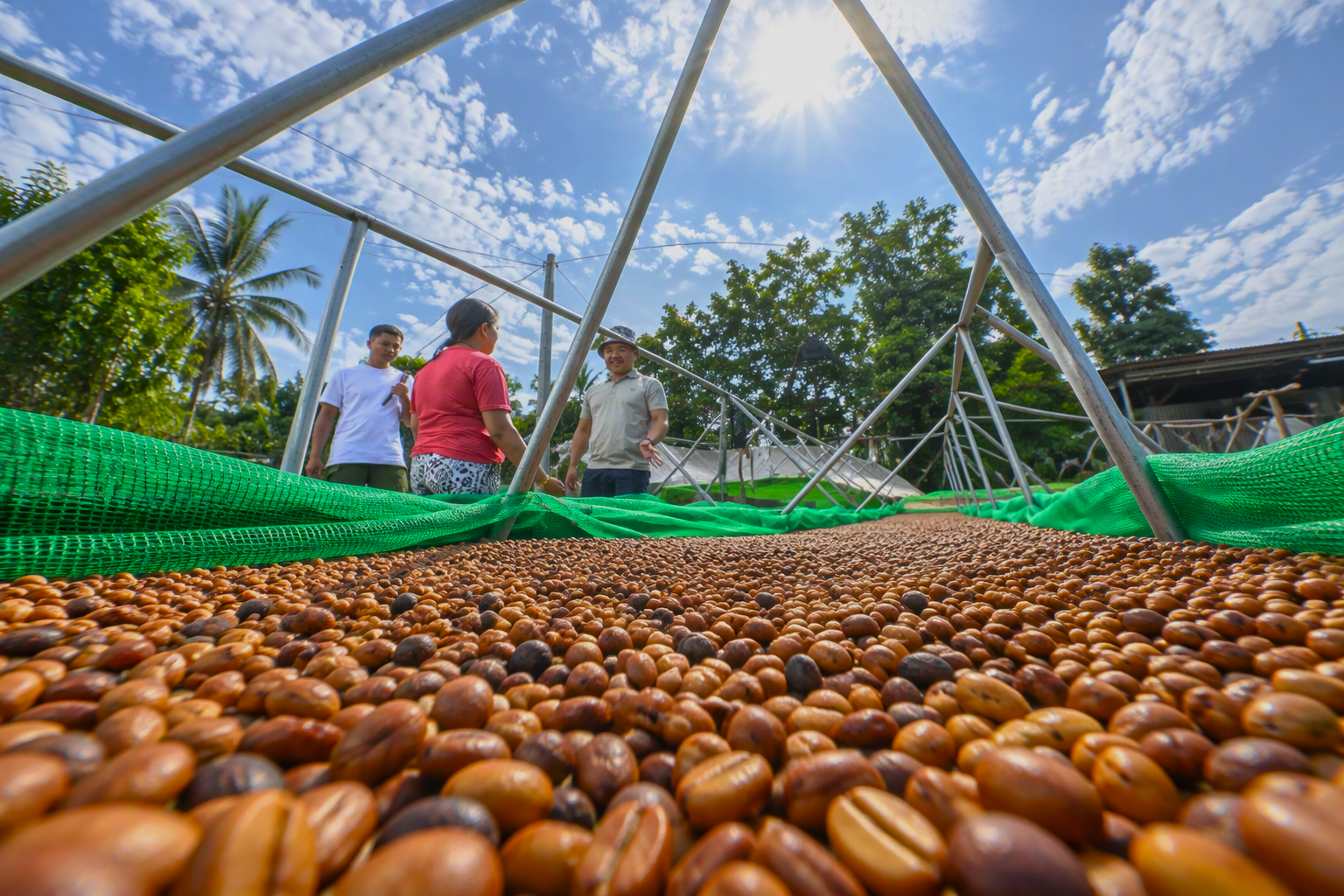
Balutakay coffee has become an important part of the agricultural identity of Barangay Managa in Bansalan, Davao del Sur, where the cool highland climate and fertile volcanic soil support the cultivation of Arabica beans. Located in the foothills of Mount Apo, the area is gaining attention not only for its mountain scenery but also for its specialty coffee production. Behind this growing recognition is a community of farmers whose patience and agricultural knowledge continue to sustain the area’s coffee-growing tradition.
High in the undulating foothills of Mount Apo, the highest peak in the Philippines, lies Balutakay—a cool, misty sitio tucked within Barangay Managa in Bansalan, Davao del Sur. Today, travelers make the trek up its winding mountain roads for panoramic views, crisp air, and budding tourist attractions. Yet long before visitors arrived with cameras in hand, Balutakay’s reputation was rooted in something far quieter and deeply agricultural: coffee.
Sitting at an elevation averaging around 1,200 meters above sea level, the area possesses the exact natural alchemy that specialty coffee growers dream of. Cool mountain temperatures slow down the maturation of coffee cherries, allowing complex sugars and acids to develop inside the seed, while nutrient-rich volcanic soil feeds the trees from below. These conditions make Balutakay prime territory for Arabica coffee, a varietal prized across the globe for its nuanced aroma and delicate, vibrant flavor profile.
For years, however, that heritage faced a quiet threat. When international market prices for coffee plunged, many local growers found themselves unable to wait out the long, uncertain cycles of coffee farming. Seeking faster returns to feed their families, farmers across the slopes began clearing or shifting their focus toward high-value cash crops—cabbage, carrots, radishes, bulbs, green onions, sweet peppers, and lettuce—that could be harvested and sold within weeks.
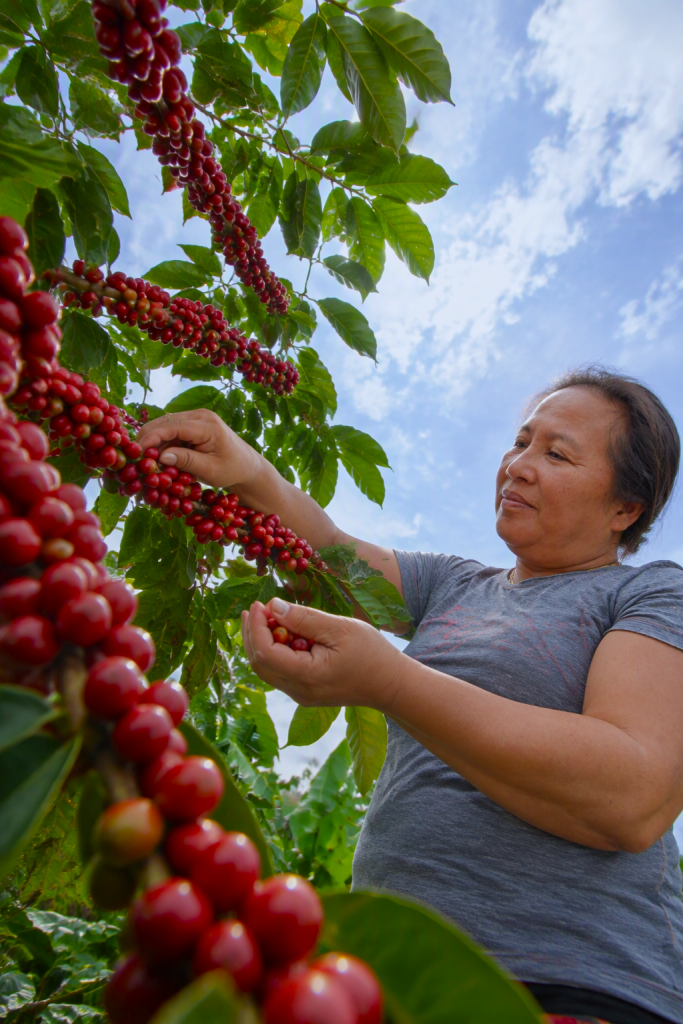
Fortunately, not everyone walked away from the coffee trees. Standing at the center of a quiet agricultural revival in Bansalan is Janet E. Escalera, a former coffee trader who crossed over into farming, mastered the intricate art of post-harvest processing, and built La Escalera Café into a thriving regional enterprise. Her Arabica coffee was recently recognized as one of the finest entries in the Southeast Asia (SEA) Green Coffee Competition, a distinction that places her among the region’s most promising specialty producers.
Yet Escalera’s rise is more than a story of agricultural persistence or competition accolades. It is an intimate portrait of women’s labor, quiet endurance, and the unseen, meticulous work that transforms raw mountain cherries into an extraordinary cup of coffee.
A Woman’s Work in Coffee
In many farming communities across the southern Philippines, agricultural labor is divided along deeply ingrained, unspoken lines. Men typically dominate the visible, heavy work in the fields—clearing land, planting seedlings, tending soil, and hauling harvests down steep slopes. Women, meanwhile, often take charge of what happens after the harvest leaves the field: the slow, exacting tasks that determine whether a crop commands a commodity price or a specialty premium.
Escalera has observed this dynamic firsthand throughout her years in the industry. Speaking in Bisaya as she reflects on how local farmers navigate tough economic seasons, she points out why so many growers abandoned coffee for vegetables.
“Many male farmers prioritize quick cash,” Escalera says. “This is why they often opt for cash crops. Immediately after harvesting, they can take their produce to the market for immediate sales.”
Coffee refuses to operate on that timeline. A newly planted Arabica tree takes years before bearing its first viable cherries, and even after those cherries are picked from the branch, the work is barely halfway done. Raw coffee cherries cannot simply be bagged and trucked to a wet market for instant cash; they must be fermented, pulped, dried, hulled, and sorted before a single bean is ready for roasting.
“Before coffee can be sold, it must undergo processing,” Escalera explains. “The process of coffee processing is time-consuming. It requires meticulous attention, and typically, men lack the necessary patience. However, we women possess that quality.”
In Escalera’s view, that patience is not a passive trait—it is an economic superpower. While quick-turnaround vegetables keep household cash flowing in the short term, careful post-harvest processing is what unlocks the true value of Mount Apo’s volcanic terroir.
From Sari-Sari Store Trader to Coffee Farmer
Remarkably, Escalera did not begin her career walking the steep rows of a mountain farm. For twenty years, she operated on the commercial side of the supply chain as a coffee trader. At her family’s sari-sari store situated along the highway leading up to Balutakay, she bought harvested beans from local farmers making their way down from the highlands, then resold those stocks to larger traders who visited her storefront. Over two decades, she became a trusted, familiar fixture in Bansalan’s local coffee economy.
Working at the crossroads of farmers and buyers gave her a front-row seat to the industry, yet it also revealed a ceiling she could no longer ignore. Her curiosity deepened when she learned about the Philippine Coffee Quality Competition (PCQC), the country’s premier stage for evaluating and celebrating top-tier green coffee. Escalera wanted to see how the beans passing through her hands stacked up on a national level—only to discover a strict rule: as a trader, she was ineligible to enter.
That restriction became the defining turning point of her life. If she wanted to compete, innovate, and prove what Balutakay coffee could become, she had to grow it herself. With the steadfast support of her husband, Luis, Escalera took a leap from buyer to producer, purchasing a two-hectare farm in Balutakay already planted with Arabica trees.
What started as a modest foothold steadily grew. Over time, through outright ownership and leased parcels across different locations, she expanded her agricultural footprint to eight hectares of coffee farms.
Managing eight hectares across mountainous terrain requires careful stewardship rather than constant physical presence. In the early days, Escalera traveled up to the farms every weekend to immerse herself in the land. Today, because of the steep terrain and distance, she makes the trip once a month—and every visit is deliberate. She inspects the canopy and health of the trees, assesses whether the soil requires fertilizer, and checks in closely with the four farm workers who tend the land day to day.
“I depend on them,” she says candidly of her four-person farm crew. “I have informed them that without a successful harvest, we will not generate sufficient income to sustain our farming operations.”
Learning the Craft from the Ground Up
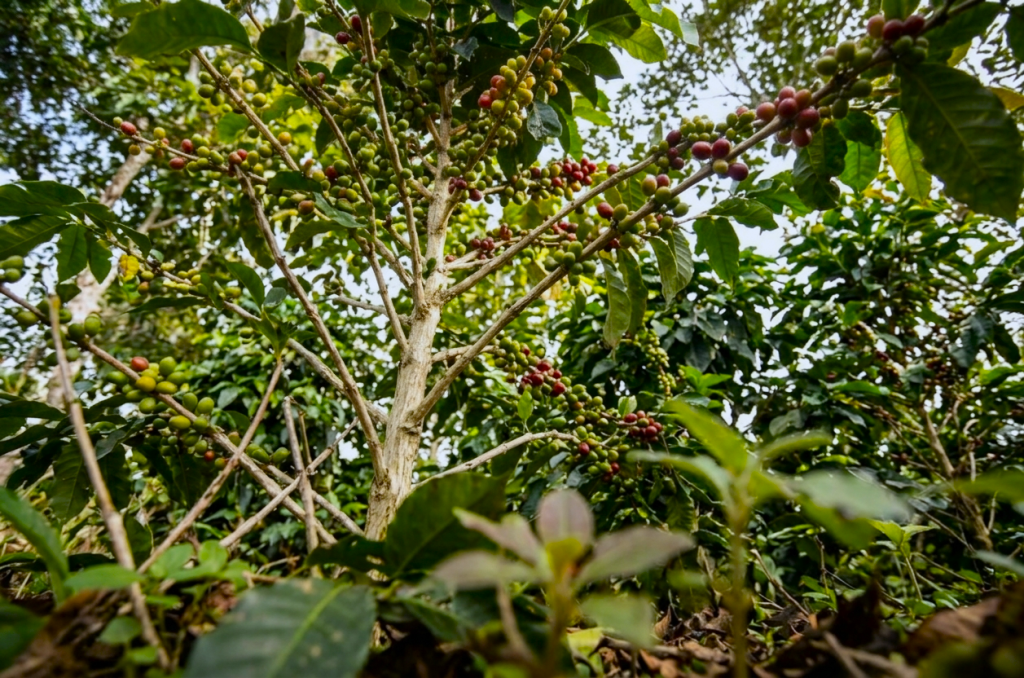
Transitioning from running a highway storefront to managing high-altitude orchards came with a steep learning curve. Arabica coffee requires years of care before yielding a return, typically bearing fruit four to five years after planting. Today, the trees across Escalera’s farms span different stages of maturity—the older stands have reached six years old, while the younger trees are at four.
Timing the harvest is critical to flavor. “We harvest coffee cherries thirty days after flowering commences,” Escalera explains. “We often harvest as soon as the coffee beans start to ripen or mature.”
In the beginning, however, even basic agronomy felt like uncharted territory. “I had no knowledge of farming, let alone the cultivation of coffee,” she admits. “I resorted to conducting my own research. I sought advice from coffee traders who came to purchase coffee from our location whenever I faced challenges.”
Rather than letting inexperience hold her back, Escalera treated every conversation with visiting buyers and fellow growers as a masterclass. Her hunger to learn eventually connected her with Marivic Dubria, widely celebrated as the “Coffee Queen of Davao.” Dubria—who captured first place in the 2019 PCQC and went on to represent the Philippines at international coffee expos—became a pivotal mentor, introducing Escalera to modern, science-driven post-harvest techniques.
Among the most transformative methods Dubria shared was anaerobic natural fermentation. By fermenting whole coffee cherries in sealed, oxygen-deprived environments, producers can guide microbial activity to unlock complex, fruity, and syrupy flavor profiles highly sought after by specialty roasters around the world. For Escalera, learning these techniques bridged the gap between traditional highland farming and global specialty standards.
The Patience of Processing
If the volcanic soil of Balutakay provides the raw potential, Escalera’s post-harvest station is where that potential is sculpted into award-winning quality. Every batch follows a disciplined, multi-stage protocol where rushing a single step can ruin months of agricultural work.
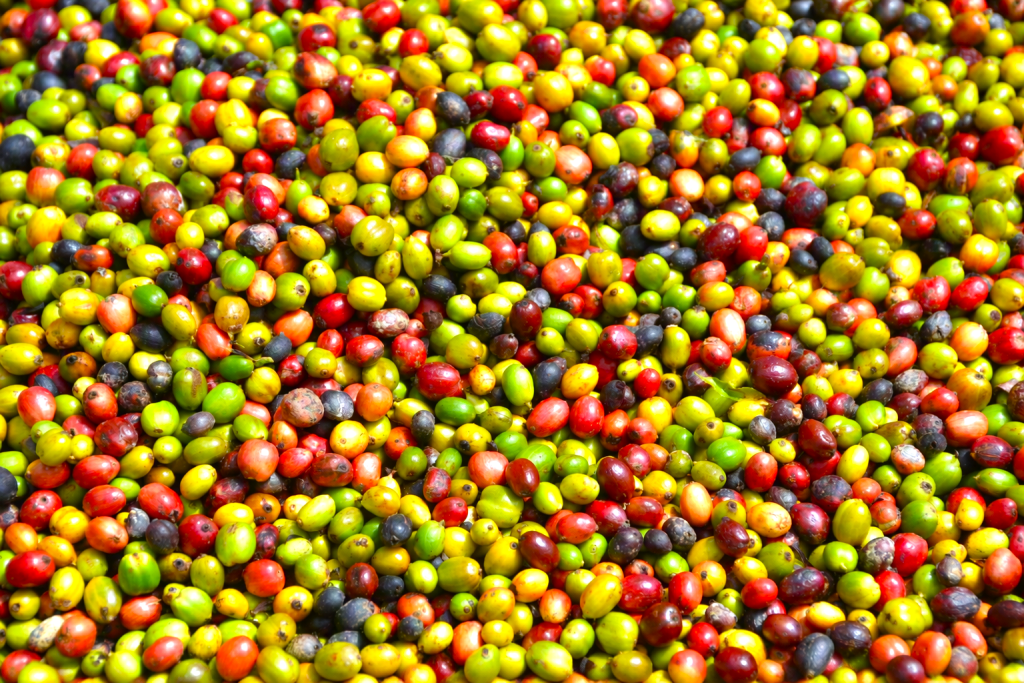
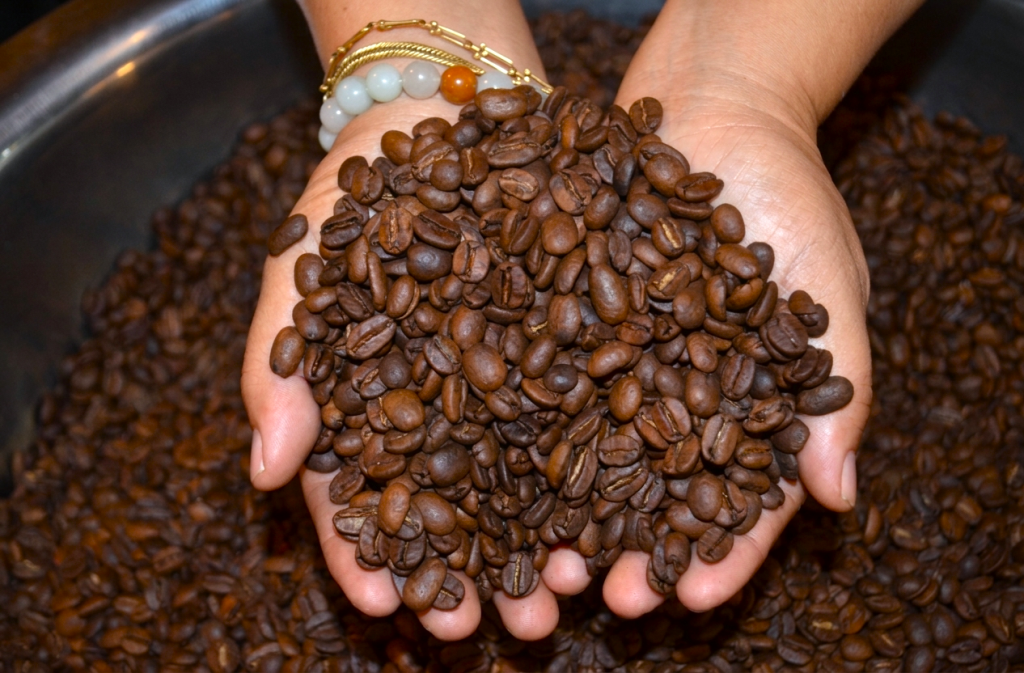
The process begins at the harvest basket: only ripe, deep-red cherries are selected. Once gathered, the cherries are thoroughly washed, cleaned, and sorted by density in water. Physics does the first quality check—defective, insect-damaged, or under-developed cherries float to the surface, while dense, healthy cherries sink to the bottom. After skimming away all floaters and unripe green cherries, Escalera packs the remaining red cherries into plastic bags and submerges them in water to undergo controlled fermentation.
Once fermentation reaches the right threshold, the cherries are pulped to remove their outer skin, leaving behind the sticky, sugar-rich mucilage coating the inner seeds. Because this mucilage is essential for developing sweetness and body in the cup, it is left intact as the beans move to the drying phase: three days of careful air-drying, followed by three days of sun-drying.
Of course, mountain weather at 1,200 meters rarely follows a neat schedule. Cloud cover and rain frequently roll down from Mount Apo, testing a processor’s resolve.
“Air drying can take between one week to twenty days when sunlight is not available for drying,” Escalera notes. During those prolonged stretches without sun, the beans must be monitored and turned consistently to prevent mold or uneven moisture levels.
Only after the beans reach optimal dryness is the papery parchment layer removed—revealing the green coffee seeds beneath, which then face one final, exhausting hurdle: hand sorting.
Empowering Housewives and Students
Even the finest harvest from Mount Apo can be undone by a handful of defective beans slipping into a roast batch, creating bitter or sour off-flavors in the final cup. Eliminating those defects requires inspecting beans one by one—a task far too massive for one person to shoulder alone.
Instead of viewing hand sorting as a bottleneck, Escalera turned it into a community-wide livelihood program.
She opens her doors to local housewives and students, entrusting each sorter with roughly 100 kilograms of dried green beans at a time. At a rate of ₱20 per kilogram, workers take the sacks home and sort through the beans at their own pace—during quiet afternoons between household chores or late at night after schoolwork is finished.
“They are pleased with this venture,” Escalera says. “For students, it provides them with an allowance. For housewives, it offers an additional source of income for the family.”
Through this simple, decentralized arrangement, Escalera has built a thriving micro-economy around her coffee operations. Women and young people earn dignified supplemental income without having to leave their homes or abandon their studies, while La Escalera Café achieves the spotless, uniform bean quality required for specialty-grade roasting.
Booming La Escalera Café
To bring her green beans to their final aromatic expression, Escalera collaborates on roasting with BACOFA—the Balutakay Coffee Farmers Association, a respected collective of smallholder growers renowned in Philippine specialty coffee circles for producing standout Arabica. Working alongside BACOFA ensures that the delicate fruit and syrupy notes cultivated during her fermentation and drying stages are honored in the roaster.
Today, La Escalera Café has grown far beyond its humble beginnings along the Bansalan highway. The brand enjoys strong recognition not only within Bansalan but across the wider Davao Region. Word of mouth has carried her coffee into neighboring provinces, with loyal customers and wholesale buyers regularly placing bulk orders. In fact, her biggest challenge nowadays is no longer finding buyers—it is keeping enough inventory on hand.
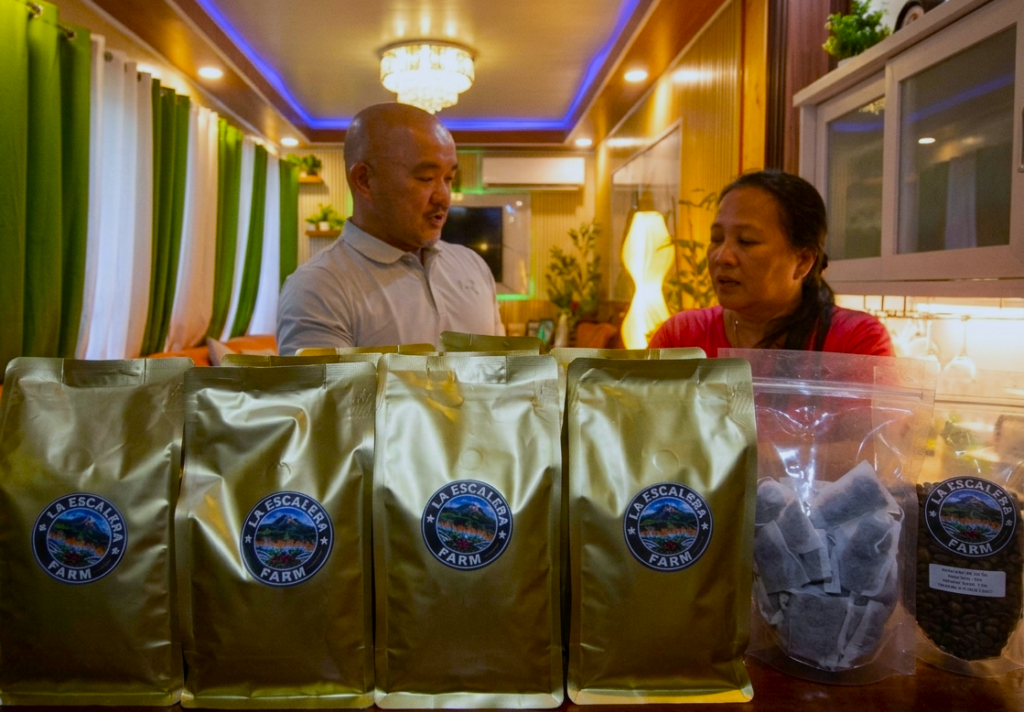
“In some instances, we run out of coffee beans for our customers,” she says with a smile. Standing where she is today, Escalera is harvesting the full rewards of her patience. The businesswoman who once stood behind a sari-sari store counter buying beans from passing growers is now a respected farmer, processor, and entrepreneur in her own right—one whose coffee stands tall on the Southeast Asian stage.
While tilling steep mountain slopes and overseeing orchards may still be viewed by many as a man’s domain, Escalera has shown that the true soul of specialty coffee is forged in the meticulous, patient care that follows the harvest. Her journey across the foothills of Mount Apo affirms a quiet truth too often overlooked in agriculture: behind every exceptional cup of coffee is a woman whose dedication shapes its character, quality, and future.

 Facebook
 Twitter