
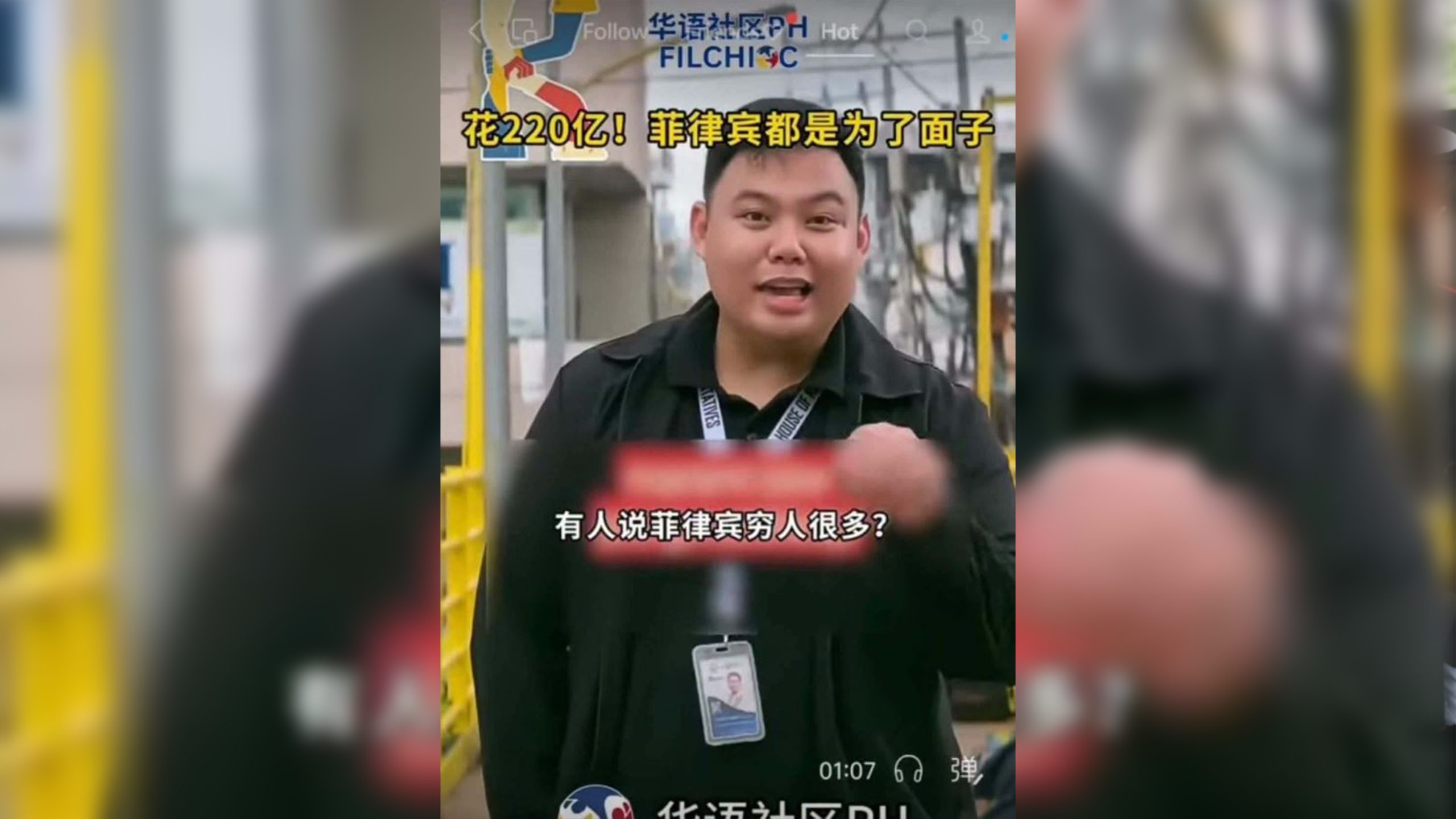
The ASEAN Summit budget for the Philippines’ 2026 chairmanship has drawn public scrutiny following the disclosure of approximately ₱22.9 billion in government allocations. The funding has raised questions about how taxpayers’ money will be spent, particularly after claims emerged that videos of Congressman Eli San Fernando discussing the summit had circulated on Chinese social media platforms.
The controversy gained attention following a November 15 social media post by Jesus Falcis, who claimed that videos featuring San Fernando had been circulating on China’s WeChat and Douyin platforms. Falcis raised concerns that the content could be used to damage the Philippines’ image on the international stage.
However, the extent of the videos’ circulation in China has not been independently established, and no verified audience figures have been made publicly available.
Government Explains the ₱22.9-Billion ASEAN Allocation
Malacañang has defended the ₱22.9-billion allocation, explaining that the amount covers the Philippines’ entire 2026 ASEAN chairmanship rather than just the main summit scheduled in November.
On November 16, Palace Press Officer Undersecretary Claire Castro clarified that the funding covers both the 48th ASEAN Summit held in Cebu in May and the 49th ASEAN Summit and Related Summits in Metro Manila.
According to Castro, the allocation also covers approximately 550 ASEAN-related meetings conducted or scheduled throughout the year.
She emphasized that the ₱22.9 billion represents an allocated budget and does not mean that the entire amount has already been spent.
The government said the preparations involve several areas, including venue improvements, security arrangements, personnel deployment, transportation and airport facilities.
How the ₱22.9 Billion Was Allocated
The amount comes from appropriations under the national budgets for 2025 and 2026.
Based on figures reported by the government, approximately ₱5.4 billion was allocated under the 2025 General Appropriations Act, while ₱17.495734 billion was appropriated under the 2026 budget.
Combined, the allocations amount to approximately ₱22.9 billion.
The 2026 General Appropriations Act also identifies various government agencies responsible for implementing activities related to the country’s ASEAN hosting.
These include the Office of the President, Department of Information and Communications Technology, Department of the Interior and Local Government, Department of National Defense, Department of Tourism and Department of Transportation, among others.
Eli San Fernando’s Videos Draw Attention Online
The online discussion took another turn after Falcis claimed that videos of Congressman Eli San Fernando discussing and criticizing aspects of the ASEAN Summit had reached Chinese social media platforms.
His November 15 post specifically mentioned WeChat and Douyin, China’s major social media platforms.
The claim sparked discussion about how domestic political criticism could be viewed by international audiences, particularly during an important diplomatic event hosted by the Philippines.
However, the claim should be distinguished from independently verified information. The original posts and available reporting do not establish how many Chinese users viewed the videos, whether they gained widespread traction or whether Chinese media organizations amplified the content.
San Fernando’s criticisms should also be understood within the context of public debate over government spending and accountability.
Public Spending and Government Accountability
The ₱22.9-billion allocation has also drawn comparisons with previous Philippine ASEAN hosting budgets.
Reports cited approximately ₱1 billion spent during the country’s 2007 ASEAN hosting under former President Gloria Macapagal-Arroyo and ₱3.79 billion during the 2017 hosting under former President Rodrigo Duterte.
While these figures have fueled questions about the substantial increase in the 2026 allocation, direct comparisons require caution because the amounts may cover different activities, accounting periods and budget categories.
The government has previously expressed its willingness to submit the ASEAN hosting expenditures for audit and provide reports explaining how public funds were used.
For taxpayers, the key issue is not simply the size of the allocation but whether the money is spent properly, supported by transparent procurement processes and accounted for through official financial reports.
Transparency Remains Central to the ASEAN Budget Debate
As the Philippines hosts one of the region’s major diplomatic gatherings, the government faces the dual responsibility of ensuring a successful international event and maintaining public confidence in its spending decisions.
The ASEAN Summit provides an opportunity for the country to strengthen diplomatic relationships and showcase its capabilities as a regional host. At the same time, public officials and government agencies remain accountable for the use of taxpayers’ money.
Ultimately, criticism of government spending and questions about the country’s preparations are part of public accountability. Whether the controversy gains further international attention or not, the government will still need to demonstrate that the ₱22.9-billion allocation delivers value for the Filipino people.

 Facebook
 Twitter