
National Measurement Institute Bill proposals are gaining momentum as the Department of Science and Technology (DOST) intensifies efforts to secure legislative backing for a dedicated national authority on measurement standards. The measure aims to strengthen metrology services, improve consumer protection, support trade and industry, and align the Philippines with international measurement systems.
The Department of Science and Technology’s (DOST) ramps up legislative support from both the House of Representatives and the Senate for its proposed National Measurement Institute of the Philippines (NMIPhil) Act to strengthen the country’s measurement infrastructure.
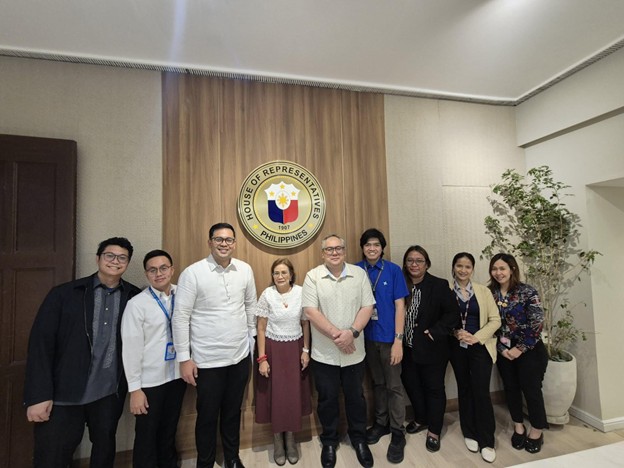
The meetings were held with the Legislative and Legal Officers of Speaker Faustino “Bojie” De Guzman Dy III and Congressman Albert Raymond “Abet” Garcia, as well as the Legislative Officers of Senator Francis “Chiz” Escudero and Senator Bam Aquino, to generate broader support for the proposed National Metrology Institute of the Philippines (NMIPhil) Act and encourage legislative champions to file the measure in both houses of Congress.
Through the DOST-Office of the Undersecretary for Special Concerns, the Department Legislative Liaison Office (DLLO), and the National Metrology Division (NMD) of the DOST-Industrial Technology Development Institute (DOST-ITDI), DOST conducted a series of activities to further build a broader support for the bill.
During the discussions, Mr. Michael Jason Solis of the NMD emphasized that the absence of a national measurement authority has led many sectors, at both the national and local levels, to face metrology-related challenges such as inconsistent measurements, unavailability of measurement services locally, and limited alignment with international standards.
“Measurement is a public good,” Mr. Solis said. He added that these challenges are already resulting in risks to public health and safety, losses to agricultural productivity, creating barriers to trade and industrial growth, and reducing national competitiveness, among others.
Further, Director Lita S. Suerte Felipe of the DOST-LLO explained that accurate measurement and proper enforcement can protect consumers and improve trust in local markets.
“Tataas ang confidence ng consumer sa gobyerno kasi ang mga ginagamit na device ay reliable and compliant sa international standards. [Consumer confidence can be increased since the devices that would be used are reliable and compliant with international standards.],” Dir. Suerte Felipe said.
The proposed NMIPhil Act seeks to establish the country’s national metrology institute, a premier research and development institution in measurement science and the lead authority for providing trusted, innovative measurement solutions. Its work will serve as the foundation of fair trade, consumer protection, industrial competitiveness, scientific advancement, and regulatory integrity across the country.
A strong national measurement system, with the NMIPhil as its driver, will help ensure that every measurement affecting health, safety, commerce, agriculture, energy, and the environment is reliable and trusted both locally and globally.
The bill has already been approved by the House of Representatives Committee on Science and Technology and is now for endorsement to the Committees on Ways and Means and Appropriations.
The NMIPhil measure is included in the Philippine Development Plan (PDP) 2023–2028 under Chapter 8: Advancing Research and Development, Technology, and Innovation.
The lobbying sessions with key congressional offices and in the Senate were held on May 5 and 11, 2026, respectively, while the endorsement of the proposed NMIPhil Act was submitted to all 24 senators on April 7, 2026.
The lobbying session for legislative support of the NMIPhil Act is one of the initiatives of the Department of Science and Technology (DOST) aimed at providing science-based, innovative, and inclusive solutions across four strategic pillars: human well-being, wealth creation, wealth protection, and sustainability.

 Facebook
 Twitter