
Philippine Flag Recycling Law proposals are gaining attention as the Department of Science and Technology-Philippine Textile Research Institute (DOST-PTRI) pushes for amendments to existing regulations governing the retirement of worn-out national flags. The initiative aims to introduce environmentally responsible recycling and repurposing methods while maintaining respect for one of the country’s most important national symbols.
The Department of Science and Technology, through its Philippine Textile Research Institute (DOST-PTRI), conducted a ceremonial disposal of worn-out Philippine flags on May 26, 2026, ahead of the observance of Philippine Independence Day and in proper observance of the proper handling of national symbols.
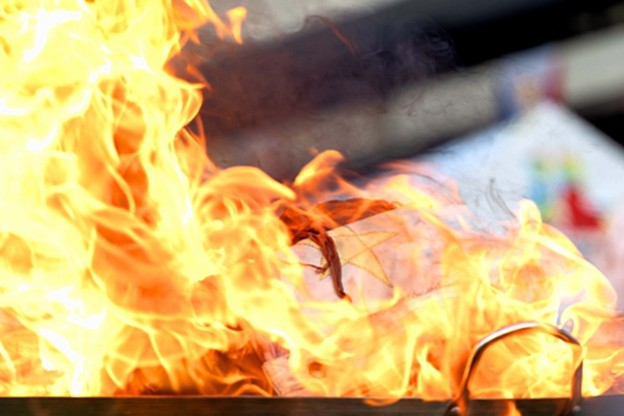
Under the Republic Act No. 8491 or the Flag and Heraldic Code of the Philippines, worn-out or damaged Philippine flags must be disposed of through dignified burning. The law states that the flag “shall be solemnly burned to avoid misuse or desecration.”
During the event, DOST officials also highlighted the need to revisit the law to allow environmentally friendly ways of retiring old flags through recycling and repurposing.
DOST-PTRI Director Julius L. Leaño explained that the institute is proposing amendments specifically to the provision requiring burning as the sole method of flag retirement.
“Nakalagay kasi mismo sa titik ng ating batas na talagang ang pagsusunog po ang pamamaraan ng pagre-retiro ng watawat,” Leaño explained.
However, he said that DOST-PTRI wants to recognize recycling as another respectful option as long as the flag can no longer be identified in its original form.
“Bagkus binibigyan natin ng panibagong buhay yung watawat,” he added.
Leaño also stressed that recycling gives worn-out flags a renewed purpose instead of treating them as waste. He further explained that the recycling process uses physical fiber recovery, where the fabric is separated to recover fibers that can later be reused for other textile applications. The institute said around 90 to 95 percent of the material can still be recovered through the process.
Meanwhile, DOST Secretary Renato U. Solidum Jr. said in an interview that the country should begin exploring more sustainable alternatives while still respecting the dignity of the Philippine flag, saying, “Our law is old, so we need to change it. And we can use it properly.”
He also emphasized the importance of reducing waste and supporting environmental protection.
“Of course, it is in the law that it should be burned. But hopefully in the very near future, we can actually modify the law by using, repurposing this flag for better use. Especially on our advocacy of the circular economy. We need to make sure that the new law will be able to not only honor our flag but make sure that our advocacy for the use of lesser plastic and natural fiber will be promoted,” he added.
Solidum added that DOST-PTRI is leading efforts to study how old flags may still serve a meaningful purpose after retirement, stressing that beyond the traditional use of the flag, the threads can be used for other purposes.
Moreover, Leaño announced that DOST-PTRI continues to accept worn-out Philippine flags throughout the year. The public may coordinate with DOST-PTRI directly or through provincial science and technology offices for the proper turnover and retirement of old flags.
As of May 26, the institute has already collected 3,333 worn-out flags for proper retirement and possible recycling initiatives.
The Philippine Textile Research Institute (PTRI) is one of the attached agencies of the Department of Science and Technology (DOST) aimed at providing science-based, innovative, and inclusive solutions across four strategic pillars: human well-being, wealth creation, wealth protection, and sustainability.

 Facebook
 Twitter