
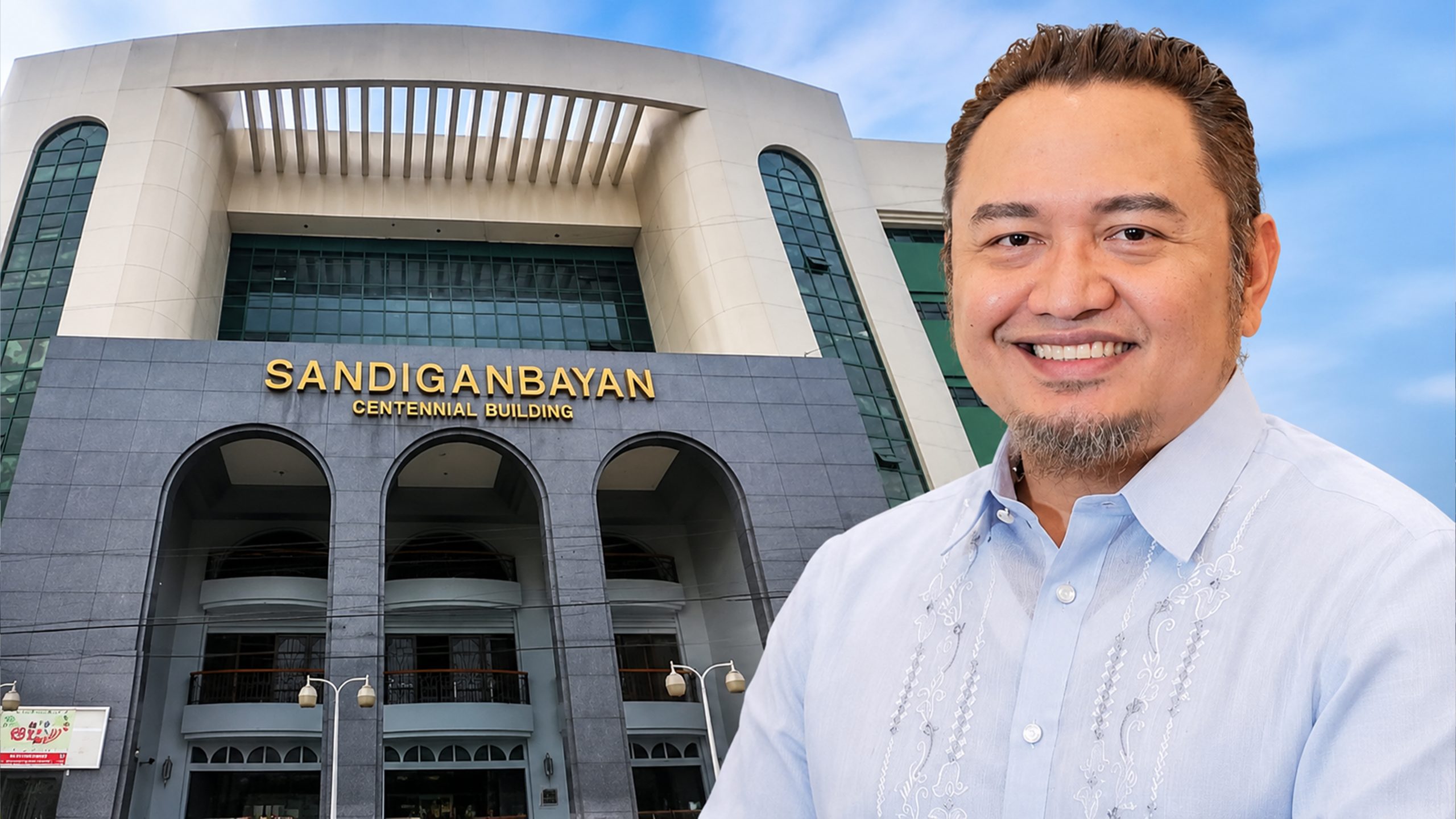
Grex Lagman acquitted of indirect bribery and illegal gambling charges after the Sandiganbayan ruled that prosecutors failed to prove his guilt beyond reasonable doubt in a case involving alleged ₱8.1 million in jueteng payoffs in Albay. The decision, issued on November 13, 2026, followed the withdrawal of earlier allegations by key prosecution witnesses who had linked the former governor to illegal gambling operations.
MANILA, Philippines — The Sandiganbayan has acquitted former Albay governor Edcel Greco “Grex” Lagman of indirect bribery and illegal gambling charges stemming from allegations that he received millions of pesos in protection money from jueteng operations in the province.
In a decision promulgated on November 13, 2026, the anti-graft court’s Third Division ruled that the prosecution failed to establish Lagman’s guilt beyond reasonable doubt after key witnesses withdrew their earlier sworn statements linking him to the alleged illegal gambling activities.
The case involved accusations that Lagman received approximately ₱8.1 million in payments between August 2019 and June 2022, when he was serving as Albay vice governor and presiding officer of the provincial board.
The court acquitted him of indirect bribery under Article 211 of the Revised Penal Code and violation of Republic Act No. 9287, or the Anti-Illegal Numbers Game Act.
Witnesses Withdraw Allegations Against Lagman
The criminal cases originated from a complaint filed by Alwin Nimo, a former barangay chairman of Anislag in Daraga, Albay, before the Office of the Ombudsman on February 13, 2024.
Nimo alleged that he served as a middleman between Lagman and jueteng financiers operating in the province.
According to his original sworn statement, Lagman allegedly received ₱60,000 in weekly payments in exchange for protecting illegal gambling operations and refraining from using his position to investigate their activities.
Nimo also claimed that the payments were initially delivered in cash before arrangements were made to deposit money directly into a bank account under Lagman’s name.
Two other individuals, Jeffrey Mangalinao and Dexter Maceda, also submitted statements supporting the allegations.
However, all three witnesses later withdrew or contradicted their earlier statements during the proceedings.
Nimo and Maceda subsequently claimed that the bank deposits were repayments of a personal loan extended by Lagman to Nimo, rather than proceeds from illegal gambling operations.
The court considered the witnesses’ subsequent statements and testimony in assessing the prosecution’s evidence.
Court Questions Sufficiency of Remaining Evidence
Despite the withdrawal of the witnesses’ original allegations, the prosecution presented other evidence, including a Toyota Fortuner allegedly used to deliver payments and 60 bank deposit slips showing transactions in small denominations under Lagman’s name.
However, the Sandiganbayan majority ruled that these pieces of evidence were insufficient to establish his criminal liability without the necessary context provided by the witnesses’ original statements.
The court explained that the initial sworn statements could not be used to establish the truth of the allegations or corroborate the remaining evidence after the witnesses testified contrary to their earlier accounts.
It also found that Lagman’s position as vice governor, combined with the remaining evidence, was insufficient to establish his guilt with the required moral certainty.
The decision emphasized the constitutional presumption of innocence, which requires the prosecution to prove criminal guilt beyond reasonable doubt.
Justice Karl Miranda Disagrees With Bribery Acquittal
Although the Third Division acquitted Lagman, Associate Justice Karl Miranda issued a separate concurring and dissenting opinion, disagreeing with the majority’s ruling on the indirect bribery charge.
Miranda agreed with Lagman’s acquittal on the charge involving the Anti-Illegal Numbers Game Act but believed the prosecution had established sufficient circumstantial evidence to convict him of indirect bribery.
The justice argued that corruption cases are often difficult to prove because transactions involving public officials can be concealed and rarely produce direct evidence.
He maintained that the original sworn statements of Nimo, Mangalinao and Maceda should not automatically be disregarded simply because the witnesses later recanted.
Miranda also pointed to the bank deposits, the alleged cash deliveries and the circumstances surrounding the transactions as evidence that should be evaluated collectively.
He questioned Lagman’s explanation that the deposits represented repayment of a personal loan, arguing that the totality of the evidence supported the prosecution’s claim that the payments were connected to the protection of jueteng operations.
The justice stressed that indirect bribery does not necessarily require proof that the money received by a public official directly originated from illegal gambling activities. The central issue, he explained, is whether gifts or payments were accepted because of the official’s public position.
Ombudsman Previously Dismissed Lagman Over the Same Allegations
The latest Sandiganbayan ruling comes after the Office of the Ombudsman ordered Lagman’s dismissal from government service in a separate administrative case in 2025.
In a decision dated January 28, 2025, which was made public on April 29, the Ombudsman found Lagman guilty of grave misconduct over allegations that he received approximately ₱8.1 million in jueteng-related payoffs.
The administrative ruling cited bank deposit slips and the original sworn statements of Nimo and other witnesses as evidence supporting the allegations.
Lagman denied receiving illegal payments and said he would appeal the Ombudsman’s decision.
The administrative case and the criminal proceedings before the Sandiganbayan were separate legal proceedings. Consequently, the latest criminal acquittal does not automatically reverse the earlier administrative dismissal.
Questions Remain Over Witness Recantations
Miranda also called for the Office of the Ombudsman to examine the circumstances surrounding the witnesses’ original statements and their subsequent withdrawal.
The justice raised concerns about whether the changes in their accounts were influenced by improper circumstances.
He suggested that authorities examine whether any statements were deliberately falsified or whether the witnesses had been induced to make or withdraw allegations.
He also raised the possibility of perjury proceedings under Article 183 of the Revised Penal Code if an investigation establishes sufficient grounds.
However, these recommendations do not constitute a finding that the witnesses committed perjury.
What the Acquittal Means
Lagman’s acquittal highlights the importance of the constitutional presumption of innocence and the prosecution’s responsibility to establish criminal guilt beyond reasonable doubt.
The case also demonstrates the challenges of prosecuting alleged corruption when witness credibility and the interpretation of financial transactions become central issues.
While the majority found the remaining evidence insufficient to sustain a criminal conviction, Justice Miranda’s separate opinion showed that members of the court had differing interpretations of the evidence presented.
For now, the Sandiganbayan’s ruling acquits Lagman of both criminal charges. The separate administrative case, however, should not be considered automatically resolved by the criminal court’s decision.

 Facebook
 Twitter