
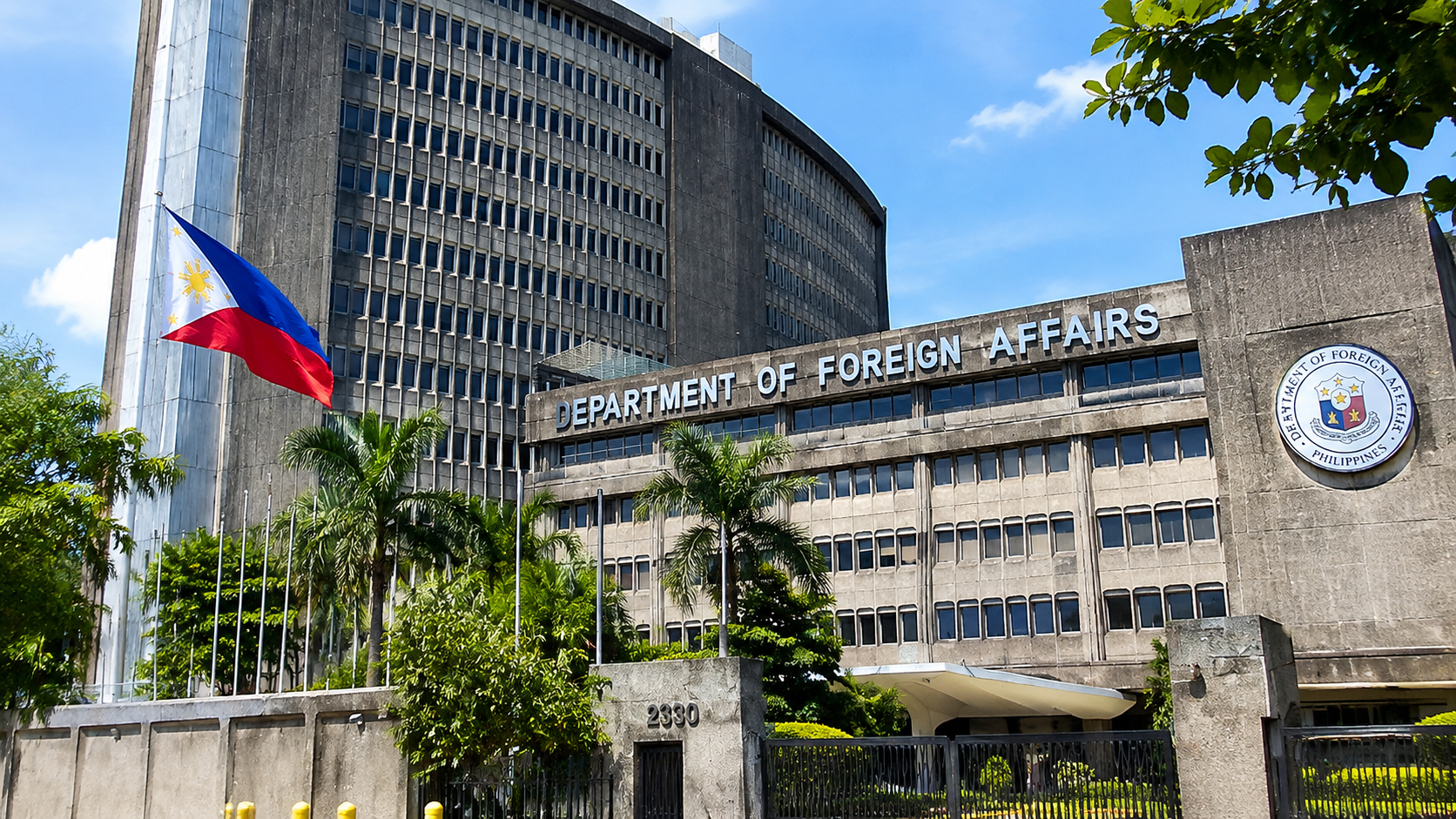
MANILA, Philippines – The DFA China policy debate has intensified as the Department of Foreign Affairs calls on government officials to maintain a unified position toward Beijing amid continuing tensions in the West Philippine Sea. The department’s warning highlights the Marcos administration’s challenge of balancing diplomatic negotiations, public transparency and national defense while protecting the country’s maritime interests.
In a statement issued on November 8, the DFA said government officials, including civilian and military personnel, must align their public positions with President Ferdinand Marcos Jr.’s foreign policy direction.
The department emphasized that the President is the chief architect of Philippine foreign policy under the Constitution, adding that individual officials and government agencies cannot independently determine the country’s international relations.
The statement comes amid growing public discussion over how the Philippines should respond to China’s actions in disputed waters, particularly the role of the military and Philippine Coast Guard in documenting and publicizing maritime incidents.
DFA Says Transparency Must Support Diplomacy
The DFA acknowledged that the Philippines’ transparency campaign has helped establish facts, counter disinformation and increase international awareness of developments in the West Philippine Sea.
However, it stressed that releasing videos, photographs and other information about maritime encounters cannot replace diplomatic negotiations, legal action or other instruments of statecraft.
The department also cautioned against presenting diplomacy and transparency as competing approaches, saying both should contribute to protecting Philippine national interests.
It warned that public statements that undermine the government’s diplomatic efforts could create an impression of internal division that foreign parties might exploit.
The DFA added that policy disagreements within the Executive branch should be addressed through established inter-agency mechanisms rather than public exchanges.
Tarriela Defends the Philippines’ Transparency Campaign
The DFA’s statement followed a November 7 opinion piece by Philippine Coast Guard spokesperson for West Philippine Sea concerns Commodore Jay Tarriela, who defended the government’s transparency policy.
Tarriela argued that documenting and publicly releasing information about Chinese activities at sea has changed the information battle between Manila and Beijing.
He maintained that photographs, videos and real-time accounts of maritime incidents allow other countries to assess developments based on verifiable evidence and help sustain international support for the Philippines.
Tarriela also warned that reducing public attention on the West Philippine Sea could allow China greater control over the narrative surrounding the maritime dispute.
The DFA, however, maintained that transparency should complement diplomacy rather than become a substitute for a broader national strategy.
Tensions Follow Lazaro-Wang Yi Phone Conversation
The diplomatic disagreement emerged after Foreign Affairs Secretary Ma. Theresa Lazaro spoke with Chinese Foreign Minister Wang Yi on November 3.
According to the DFA’s account, both officials discussed the importance of maintaining stable and predictable relations through dialogue, mutual respect and the peaceful management of differences.
However, China’s official account included stronger remarks from Wang, who accused certain Philippine politicians of repeatedly criticizing Beijing and crossing what he described as China’s red lines.
Wang urged Manila to exercise greater restraint over the individuals concerned and maintain a unified position on China.
The differing emphasis in the two governments’ accounts highlighted the diplomatic sensitivity surrounding public statements about the South China Sea dispute.
Teodoro Emphasizes Deterrence and National Defense
Defense Secretary Gilberto Teodoro Jr. has also stressed the importance of strengthening the country’s defense capabilities and maintaining a strategic presence across the Philippine archipelago.
During the Philippine Marine Corps’ 76th anniversary celebration on November 7, Teodoro emphasized the need for deterrence rather than simply reacting to developments.
He said an effective military presence is an important element of deterrence and called for sustained development of the Marine Corps.
Earlier, Teodoro also criticized Wang’s remarks urging the Philippines to restrain certain officials, describing them as a threat of censorship.
His position highlights the defense establishment’s emphasis on maintaining the country’s ability to protect its territory and maritime interests.
Sara Duterte Calls for Negotiated Approach
Vice President Sara Duterte also weighed in on the controversy, calling for the creation of a team of diplomats and negotiators who could present the Philippines’ demands concerning the West Philippine Sea.
Speaking during her visit to Hong Kong, Duterte said maritime disputes should be addressed through negotiations rather than social media exchanges or military aggression.
She also pointed to the presence of Filipino workers in China as a consideration in managing tensions between the two countries.
Her comments added another perspective to the growing discussion over the administration’s approach to Beijing.
Upcoming Regional Meetings Put Diplomacy in Focus
The developments come as the Philippines prepares to host the 49th ASEAN Summit and Related Summits in November, followed by the APEC Economic Leaders’ Meeting in Shenzhen, China.
These gatherings provide opportunities for Philippine and Chinese officials to maintain communication and discuss regional concerns despite their maritime disagreements.
The DFA has described its engagement with Beijing as part of a deliberate effort to maintain bilateral relations before, during and after these international meetings.
Balancing Diplomacy and Philippine Sovereignty
The latest developments highlight the challenge facing the Marcos administration as it tries to maintain diplomatic engagement with China while defending Philippine maritime rights.
The Philippines secured a landmark victory in the 2016 South China Sea arbitration, which rejected China’s claim to historic rights within the nine-dash line beyond the maritime entitlements allowed under international law.
China continues to reject the ruling.
For Manila, the challenge is ensuring that diplomatic negotiations do not weaken its legal position, defense readiness or efforts to document maritime incidents.
The DFA has maintained that diplomatic engagement does not mean abandoning the country’s sovereignty claims, while the transparency campaign remains an important means of informing the public and international community.
How the government coordinates these different approaches could shape the Philippines’ position as it enters another round of high-level diplomatic engagements with China and other regional partners.
Sources: Department of Foreign Affairs statements, Philippine News Agency, GMA News, BusinessMirror and OneNews.PH.

 Facebook
 Twitter