
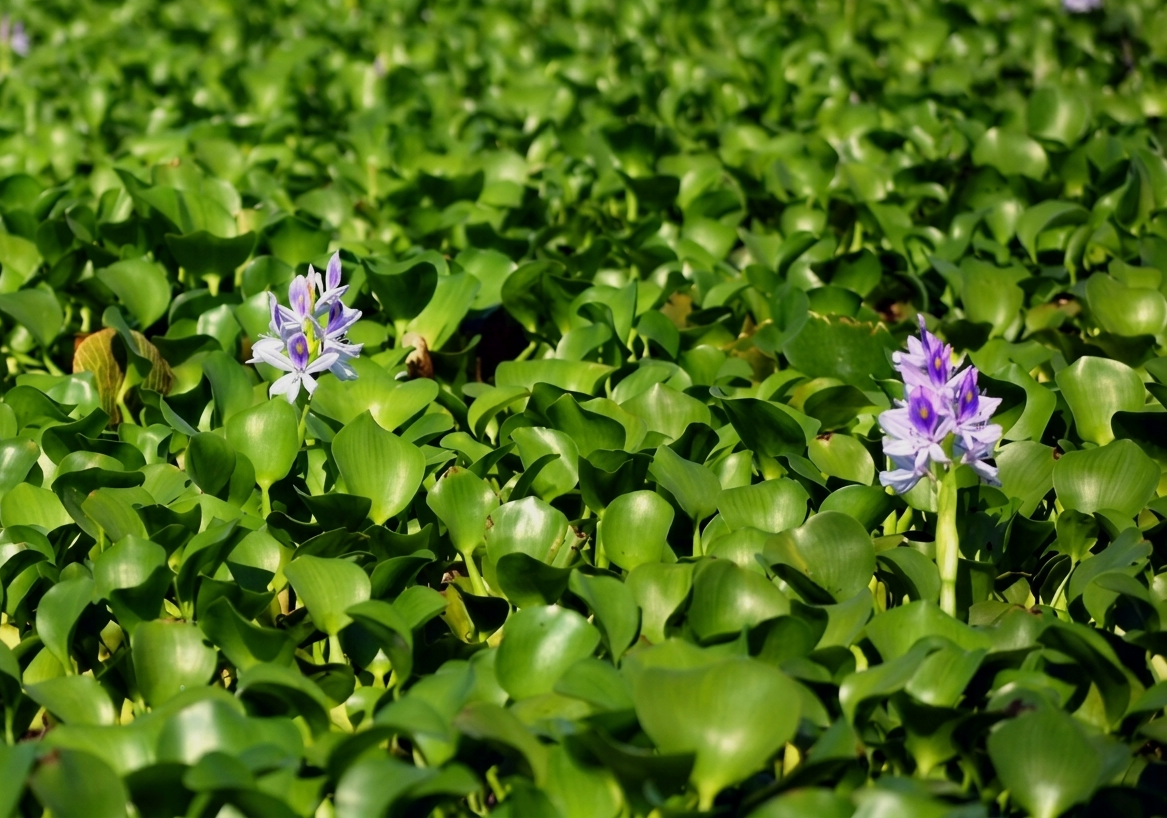
Water hyacinth in the Philippines has become a growing environmental concern, affecting rivers, lakes, and wetlands across the country. Scientifically known as Eichhornia crassipes, this floating aquatic plant was originally introduced as an ornamental species because of its attractive lavender flowers. However, its rapid growth and ability to spread across freshwater surfaces have turned it into an invasive plant that threatens aquatic ecosystems, disrupts fishing activities, and creates challenges for communities that depend on waterways.
Known to scientists as Eichhornia crassipes but more commonly called “water lily” by Filipinos, water hyacinth is one of the most fascinating yet troublesome plants on earth. Introduced as an ornamental plant because of its attractive lavender flowers, it has since become a serious environmental threat in many countries, including the Philippines.
What makes it especially problematic is its astonishing growth rate. Under normal conditions, water hyacinth can produce more than 200 tons of dry matter per hectare annually. In sewage-rich waters, production can soar to as much as 657 tons per hectare.
“The plant is far more productive than the crops that have been carefully cultivated by man under near-ideal conditions of fertilization, irrigation, and pest control,” noted agricultural writer John Bunton in Far Eastern Agriculture.
Its ability to multiply rapidly is staggering. Just 10 plants can generate more than 650,000 offspring in only eight months.
The Cost of an Ecological Menace
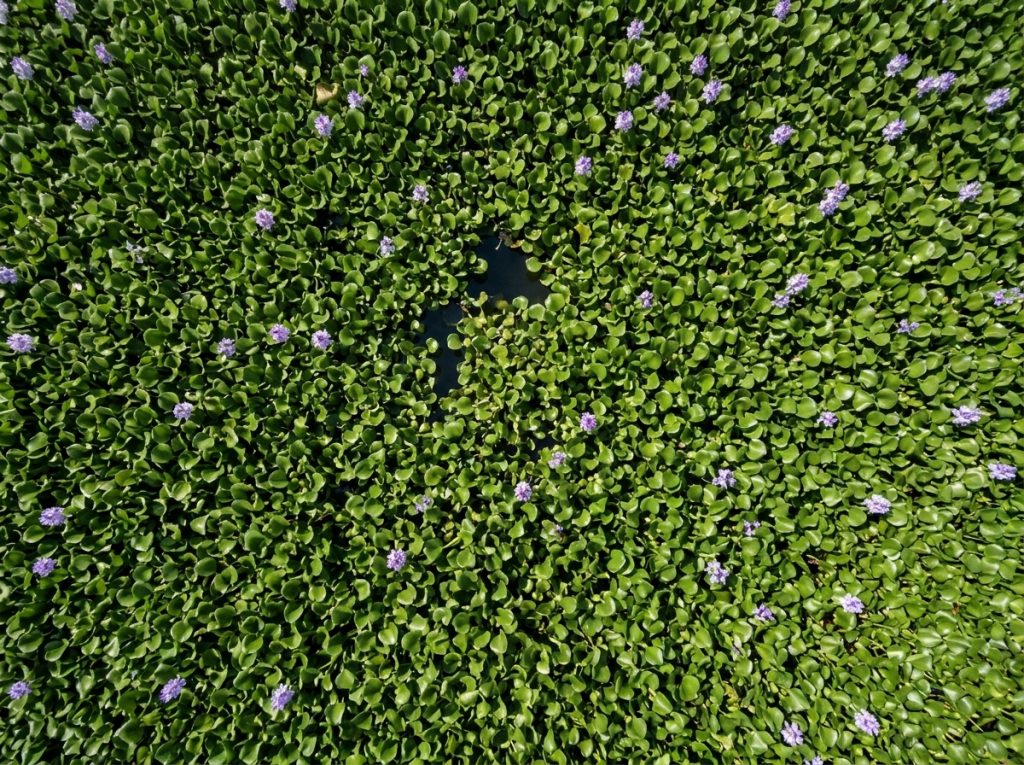
The rapid spread of water hyacinth has created serious environmental and economic problems worldwide. In China’s Dianchi Lake, one of the country’s most polluted water bodies, the weed has become notorious for choking waterways.
“The plant grows particularly fast in polluted water,” observed Dr. Zanwin Wang, associate professor at Yunnan University.
In the Philippines, water hyacinth infestations have become common in places such as the Pasig River, Laguna de Bay, and the Liguasan Marsh in Central Mindanao.
Dense mats of floating plants block sunlight from reaching underwater vegetation, causing native plants to die. They alter aquatic ecosystems, reduce biodiversity, and destroy habitats used by fish, birds, and other wildlife.
The impacts on people are equally severe. The thick vegetation clogs irrigation systems, hampers fishing activities, obstructs transportation routes, and interferes with hydropower operations. Even more alarming, water hyacinth creates breeding grounds for disease-carrying organisms that threaten public health.
Traditional Control Methods Fall Short
For decades, authorities have relied on three major approaches to control water hyacinth: chemical, physical, and biological methods.
Chemical control is often considered the least desirable option because of concerns over its long-term impacts on ecosystems and communities.
Physical removal, through dredging, mowing, or manual extraction, is commonly practiced but comes with significant costs. Worse, it often treats only the symptom rather than the cause. Large infestations can quickly return.
Once removed, the weed often ends up in landfills where it decomposes and releases methane and carbon dioxide, contributing to climate change.
Clearly, merely removing water hyacinth is not enough. The challenge is finding a way to transform the nuisance into something useful.
The Biogas Solution
One promising answer comes from an innovative concept: converting water hyacinth into biogas. Supported by the Economy and Environment Program for Southeast Asia (EEPSEA), a study led by Dr. Wang examined whether water hyacinth could be utilized as feedstock for renewable energy production.
The results were encouraging. “Compared with the current water hyacinth control method, the use of water hyacinth to produce biogas has two major advantages,” Dr. Wang explained. “For one, the biomass of water hyacinth is used rather than disposed of as a waste. For another, the emission of landfill gas is avoided.”
Instead of paying simply to collect and dump the weed, communities can harvest it as a valuable raw material. The study estimated that a biogas facility could generate hundreds of thousands of liters of renewable energy annually while also producing organic fertilizer. In addition to creating marketable products, the project would contribute to water quality improvement and reduce greenhouse gas emissions.
“The inclusion of the economic value of its contribution to environmental improvement, the production of biogas using water hyacinth is economically feasible,” Wang pointed out.
The numbers support this claim. Government spending for collection and disposal of water hyacinth is significantly higher than the cost of using the plant for biogas production.
Turning Waste into Useful Products
Biogas is only one of several productive uses for water hyacinth:
Water Purification. Water hyacinth can help clean polluted water. Its roots provide an ideal environment for beneficial aerobic bacteria that absorb nutrients and contaminants. In some drinking water treatment facilities, water hyacinth has already been used as part of pre-treatment purification systems.
Animal Feed. Across Asia, farmers have traditionally used water hyacinth as livestock feed. In Malaysia, fresh water hyacinth is mixed with rice bran, fishmeal, and copra meal to feed pigs and ducks. Because the plant contains large amounts of water and minerals, it can supplement feed requirements for different animals.
Organic Fertilizer and Compost. Water hyacinth also has value as green manure and compost. After drying, it can be mixed with soil, ash, and animal manure to create nutrient-rich organic fertilizer. Instead of becoming waste, harvested plants can enrich agricultural soils and reduce dependence on synthetic fertilizers.
The Philippine Innovation
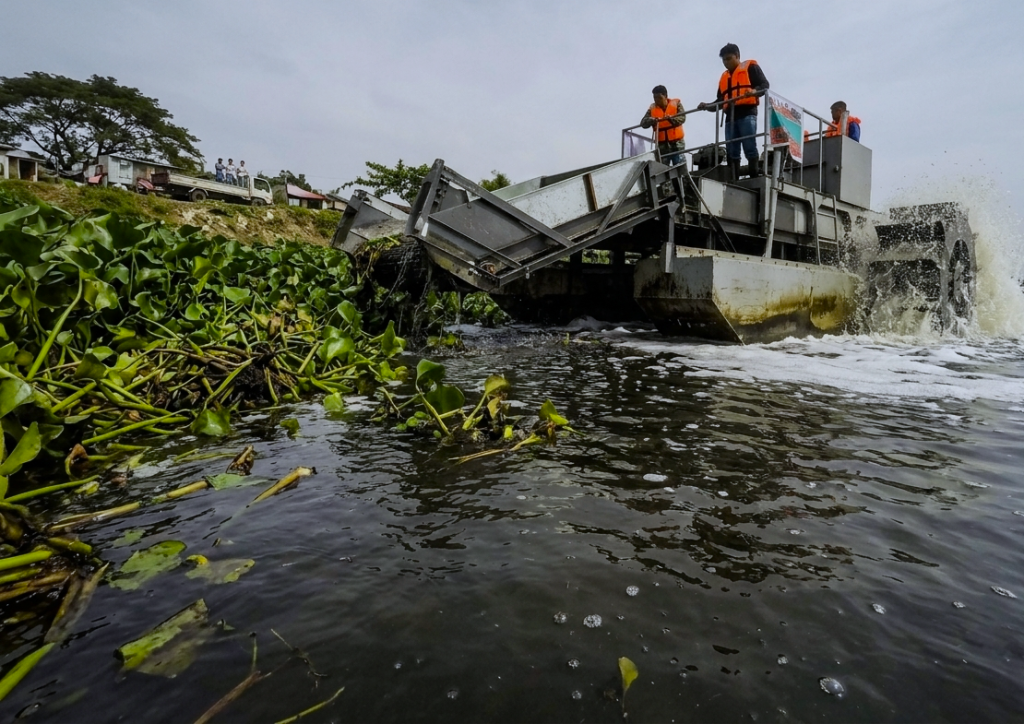
Recognizing that the problem requires practical solutions, the Department of Science and Technology (DOST) has developed a locally engineered answer. Through the Metals Industry Research and Development Center (MIRDC), Filipino engineers created the Water Hyacinth Harvester, a machine specifically designed to collect the invasive weed.
The harvester uses a specially developed conveyor system that mechanically removes water hyacinths from waterways. Each load can carry up to 25 kilograms before unloading its cargo to a designated dumping site or support barge.
“Mechanically removing the plant is the better alternative because chemical methods are hazardous to plants and animals,” the research team explained.
The machine demonstrates how local innovation can help address an environmental problem while creating opportunities for resource utilization.
The Real Solution: Address the Pollution
Experts agree that removing water hyacinth alone will not solve the problem permanently. The weed thrives in nutrient-rich polluted waters, particularly those contaminated with untreated sewage and agricultural runoff. As long as pollution continues, the plant will keep returning no matter how often it is removed.
Therefore, the ultimate solution lies in improving water quality, enforcing pollution-control measures, and reducing nutrient discharge into rivers, lakes, and marshes. Water hyacinth is not merely a weed problem. It is often a symptom of polluted waterways.
From Menace to Opportunity
The water hyacinth crisis presents a valuable lesson: environmental problems can become economic opportunities when approached creatively. By harvesting the plant for biogas, compost, animal feed, and water treatment applications, governments and communities can transform a costly nuisance into a useful resource. Combined with pollution control, technological innovation, and sustainable management, this invasive weed can become part of the solution rather than part of the problem.
As waterways across the Philippines continue to struggle against expanding mats of water hyacinth, the challenge is no longer simply how to remove the plant, but how to use it wisely. The answer may lie in seeing the weed not as waste, but as a resource waiting to be harvested.

 Facebook
 Twitter