
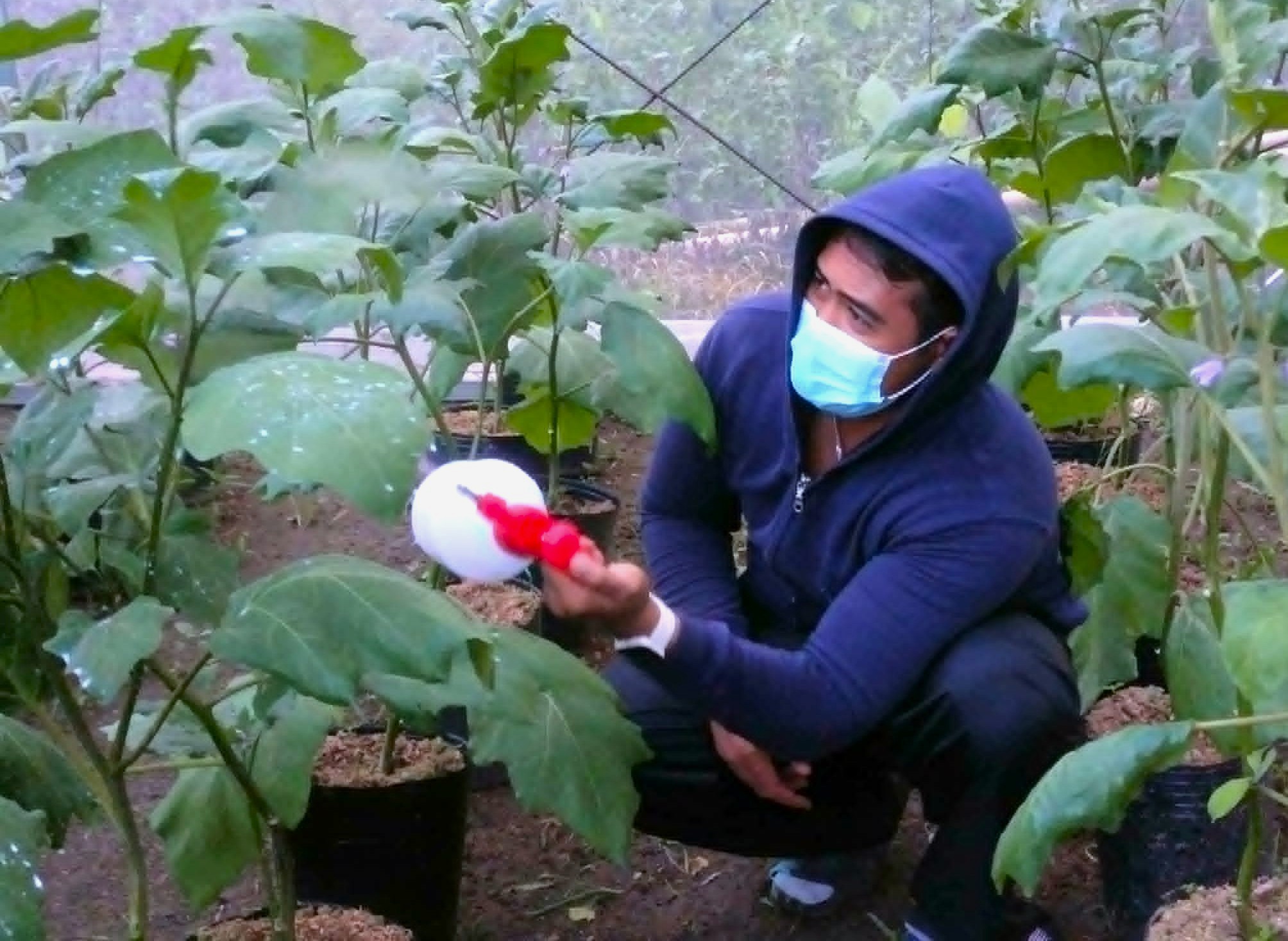
GolBi biopesticide represents an emerging approach to plant-based crop protection developed by young Filipino agripreneur Cyrus C. Bautista. His journey into agricultural innovation began with personal experiences that shaped his understanding of life’s uncertainties and the importance of farming. Now recognized for his work as a scientist-farmer and innovator, Bautista has developed Golden Biopesticide, a crop protection technology that has brought attention to his efforts in agricultural research and innovation.
Long before he became an award-winning agripreneur, Cyrus C. Bautista was a young boy standing in a hospital corridor, watching the flashing lights of an ambulance reflect on cold walls.
Those moments would leave a lasting imprint on him. “I grew up watching my father suffer from his illness at a young age. I understood that life is fragile and full of uncertainty,” Cyrus recalls.
For most children, such experiences become painful memories. For Cyrus, they became motivation. Today, at just 22 years old, he is a scientist-farmer, innovator, and the creator of GolBi, short for Golden Biopesticide, a plant-based crop protection technology that has earned recognition from provincial competitions to international innovation stages.
But his journey began not in a sophisticated laboratory. It began in a farming family where agriculture was woven into everyday life.

A Legacy Rooted in the Soil
Cyrus is the youngest of three siblings and grew up surrounded by stories of farming excellence. On his father’s side, rice farming in Tago, Surigao del Sur was a way of life. On his mother’s side, agriculture was a proud heritage.
At the center of that heritage was his grandfather, Pastor Corpuz Sr., who pioneered upland farming systems, promoted organic agriculture, and became known for propagating fruit trees such as durian and mangosteen. “My grandfather taught us multiple techniques in farming,” Cyrus says.
Agriculture seemed to flow through the family bloodline. Several relatives received distinguished 4-H awards, while one uncle earned the Department of Agriculture’s prestigious Gawad Saka recognition.
Yet, agriculture would also bring profound sorrow. His father worked in the agri-business sector, handling fertilizers and pesticides. Years of exposure eventually took a toll on his health.
“My father had weak lungs, perhaps due to chronic pesticide intoxication,” Cyrus says. When Cyrus was only nine years old, his father passed away. That loss would later become one of the driving forces behind his search for safer farming technologies.
The Dream That Changed Direction
As a child, Cyrus dreamed of becoming an engineer. He wanted to build things, solve problems, and lead innovations that could improve lives. Life, however, had other plans. His path shifted gradually toward agriculture and science. The turning point came from a seemingly ordinary observation made during his elementary school years.
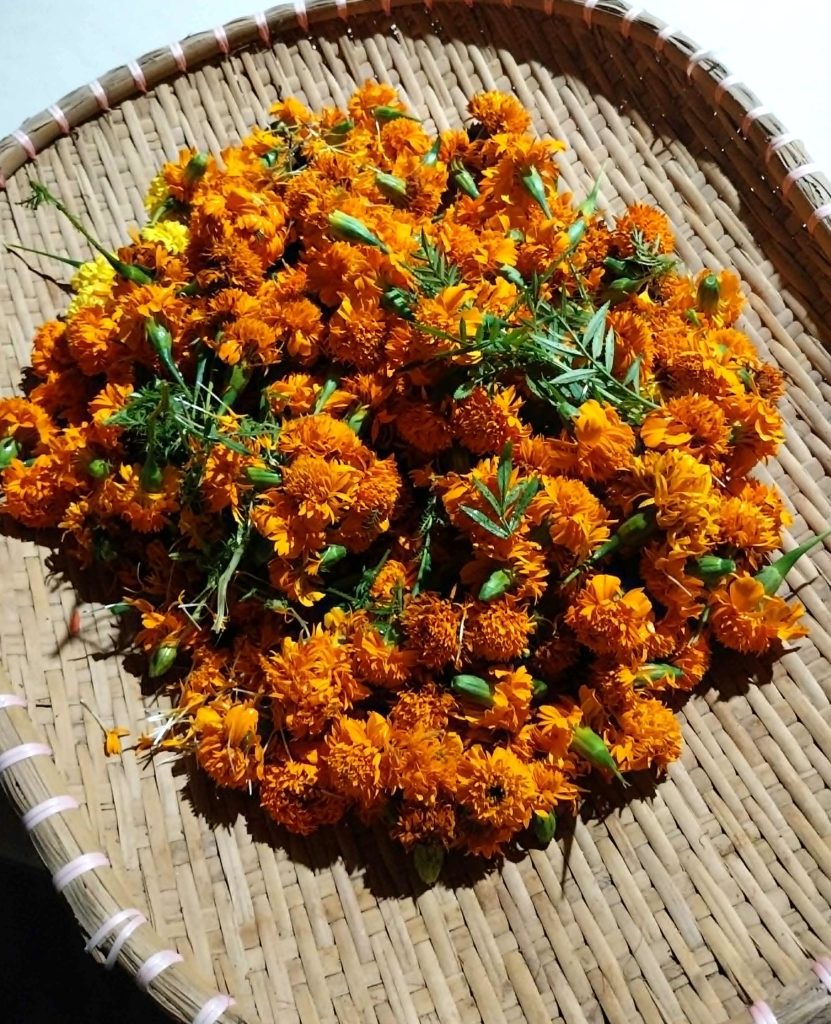
While passing rice fields, he noticed rows of bright golden flowers growing along the paddies. “To me, they were beautiful ornamental plants,” he recalls.
Later, he learned the flowers were marigolds. More importantly, he learned why they were there. His grandfather had intentionally planted them because marigolds naturally repel harmful insects. The revelation fascinated him.
The image of those golden flowers remained in his mind for years, waiting for the right moment to bloom into something far bigger.
Building a Laboratory from Determination
When Cyrus entered college to study agriculture, he hoped to conduct meaningful research. He quickly discovered a major obstacle. His school lacked much of the laboratory equipment needed for advanced experimentation.
For many students, that limitation would have been the end of the story. For Cyrus, it became the beginning. “The college sadly didn’t have equipment and machines. That’s why I am self-taught and bought laboratory equipment and made my own laboratory,” he explains.
Piece by piece, instrument by instrument, he built a personal research facility. His mother purchased his first distillation kit, a gift that would transform his future.
Like many innovators, he started with experimentation. He first explored the distillation of wines and liquors. The process helped him understand extraction techniques, compounds, temperatures, and the behavior of different substances.
Soon his attention shifted toward plants. Flowers became his next frontier. And among them, one flower captured his imagination more than any other. The marigold, scientifically called Tagetes, is a genus of roughly 50 species.
Searching for Hidden Power in a Flower
Marigolds are widely recognized as ornamental plants. In some countries, they are known as symbols of remembrance and are often called the “flowers of the dead.” Few people, however, recognize their hidden agricultural value.
Cyrus believed the flower possessed far greater potential than most farmers realized. He began extracting compounds from marigold petals and plant tissues through various techniques, including maceration and distillation.
The process required patience. There were no shortcuts. No ready-made formulas. No detailed guidebooks waiting on a shelf. Instead, there were countless trials, modifications, failures, and refinements. “It is very hard to innovate without previous information,” he says. “Extracting that information is very expensive.”
Yet he kept going. Every successful extraction offered a clue. Every failed experiment provided another lesson. Slowly, a breakthrough emerged.
The Birth of GolBi
The result of years of experimentation became GolBi. The name is derived from “Golden Biopesticide,” inspired by the golden color of marigold flowers and the product’s biological origins.
GolBi is a botanical pesticide made from compounds extracted from marigolds. Its purpose is simple yet powerful: protect crops without relying heavily on synthetic chemical pesticides. But before making such a claim, Cyrus knew he needed proof.
So, he designed experiments. He raised insect populations, subjected them to different treatments, monitored mortality rates, and carefully recorded observations. The work was tedious and often repetitive. Yet it generated remarkable findings.
According to Cyrus, compounds extracted from marigolds attack the dermal layer of insects. As the outer body layer dries, mortality increases dramatically. The effect becomes even more potent under ultraviolet light exposure.
To strengthen his formulations, he also incorporated knowledge about pyrethrins derived from chrysanthemums, which are known for causing rapid insect knockdown through neurological disruption.
The combination of observation, experimentation, and practical application allowed him to create a product capable of targeting multiple economically important insect pests. “I am no chemist,” Cyrus says humbly. “But more on real-life application of the botanical-based pesticide.”
That practical approach may be one of his greatest strengths. His focus has never been merely discovering compounds. His goal has always been helping farmers.
From Experiment to Champion
Innovations remain ideas until they are tested by others. For GolBi, that test arrived in June 2025. Cyrus presented his project during the Provincial 4-H Achievement Day. The judges were impressed. GolBi emerged as a winner.
The victory propelled him to the National 4-H Convention, where the innovation faced stronger competition from across the country. Again, GolBi prevailed. Again, Cyrus won. The recognition validated years of sacrifice, experimentation, and persistence.
Yet success did not make him complacent. Instead, it deepened his sense of responsibility. “It made me think of accountability,” he says. “This isn’t a one-time thing but something to cultivate.”
The awards were not the destination. They were evidence that the journey was worth continuing.
Taking Davao Innovation to the World
Recognition soon expanded beyond national borders. Cyrus’ work attracted attention from agricultural and innovation communities. Recently, he represented the Philippines in the Global Agri-Innovation Championship in Taiwan.
For the young innovator, the experience was more than a competition. It was proof that ideas developed in provincial farms and improvised laboratories could stand alongside innovations from around the world.
It also reinforced his belief that Filipino ingenuity belongs on the global stage. More importantly, it showed that agricultural innovation does not need to come exclusively from large corporations, elite research institutions, or heavily funded laboratories.
Sometimes it comes from a determined young farmer willing to ask questions others overlook.
Science with a Human Purpose
At its core, GolBi is not merely about controlling pests. It is about creating safer options for farmers. The irony is impossible to ignore.
A child who lost his father to illness potentially linked to years of pesticide exposure has grown into an innovator seeking safer crop protection technologies. Whether consciously or unconsciously, his scientific journey has come full circle.
Through GolBi and his broader concept known as “Phytosphere,” Cyrus hopes to advance plant-derived technologies that protect crops while reducing dependence on more hazardous chemical alternatives.
“Phytosphere means crop protection technologies that are from or derived from plants, for the plants,” he explains.
His vision bridges science and farming. Research and reality. Innovation and practicality.
Inspiring the Next Generation
Despite his accomplishments, Cyrus remains focused on a larger mission. He wants young people to view agriculture differently. Too often, agriculture is perceived as a last-choice profession.
Cyrus wants it recognized as a field filled with discovery, technology, entrepreneurship, and scientific breakthroughs. “I want my studies to inspire people,” he says. “I want the youth to choose agriculture because it’s fun, full of science, and helps humanity with food security.”
Those words reflect a growing reality. Modern agriculture increasingly depends on biotechnology, data science, environmental stewardship, and innovation. Young minds are needed. Creative thinkers are needed. Dreamers are needed.
And Cyrus hopes his example encourages others to enter the field.
The Future of GolBi
Today, Cyrus is building a facility to expand his research and production capacity. He has already applied for patent protection and continues refining his formulations through additional field and greenhouse experiments.
His ambition stretches beyond local markets. He envisions GolBi becoming widely available to farmers and sees Phytosphere evolving into a globally recognized biotechnology enterprise.
He also hopes to establish a learning site through partnerships with organizations such as the Agricultural Training Institute and the Technical Education and Skills Development Authority.
The goal is simple: train future innovators. Perhaps the next breakthrough agricultural technology is waiting inside another curious child who only needs guidance and opportunity.
Making It Exist First
The story of Cyrus C. Bautista is about more than a biopesticide. It is about resilience born from grief. It is about curiosity sparked by a flower. It is about a young man who refused to let limited resources limit his dreams. Most importantly, it is about the courage to begin.
Many people wait for perfect conditions before pursuing an idea. Cyrus never had perfect conditions. He had determination. He had curiosity. He had a purpose. And those proved enough.
His final advice captures the spirit that transformed a childhood memory of golden flowers into an award-winning innovation known across the country: “Don’t even try to make it perfect. Make it exist first; improvements will go on later.”
For farmers searching for safer solutions, for students wondering whether their ideas matter, and for young Filipinos dreaming of changing the world, the story of Cyrus Bautista offers a powerful answer.
Sometimes the next great innovation does not come from a multimillion-dollar laboratory. Sometimes it begins with a flower, a dream, and a young agripreneur brave enough to believe that both can change the future.

 Facebook
 Twitter