
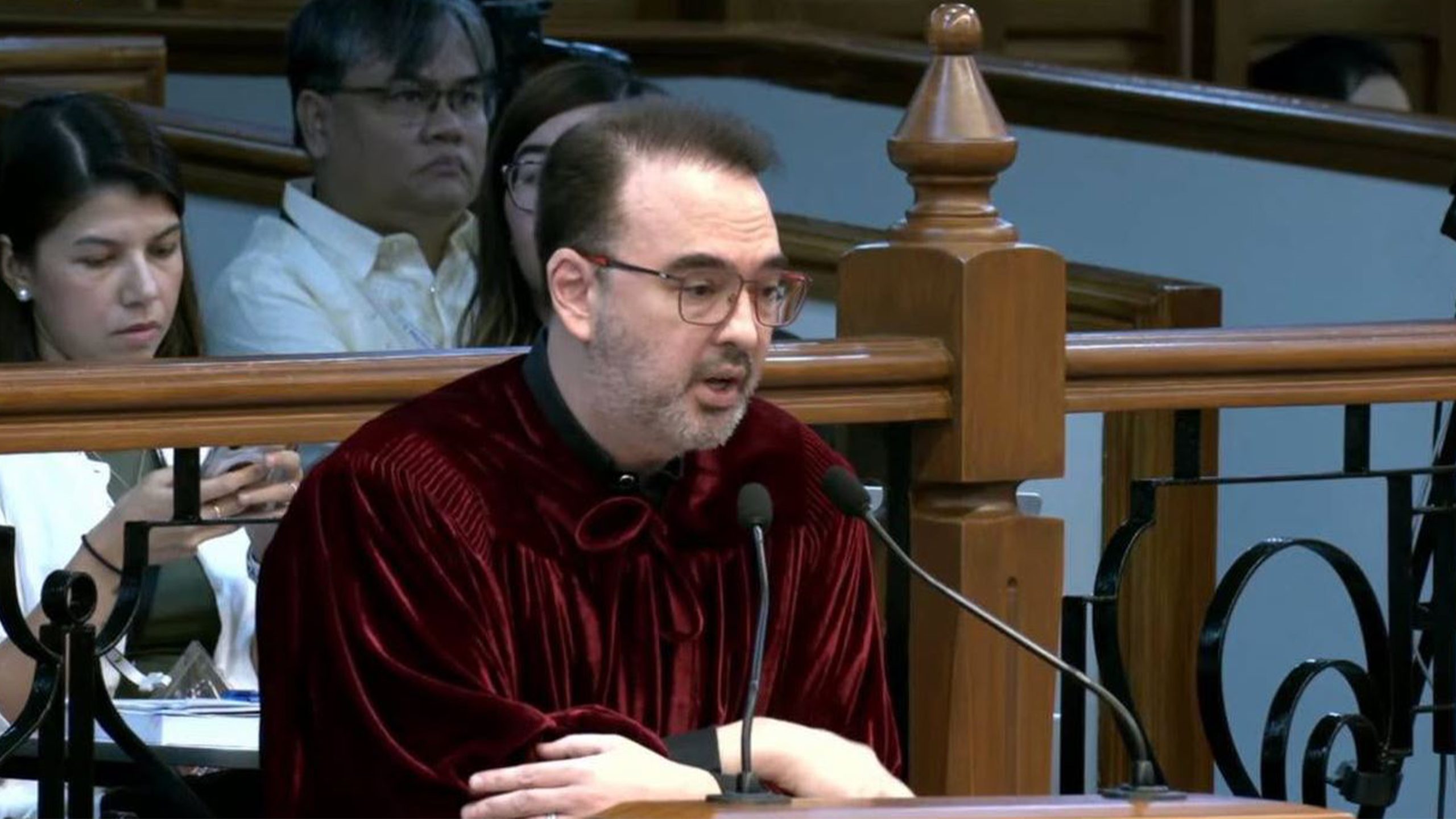
Voluntary debt contributions are being discussed after Sen. Alan Peter Cayetano proposed allowing Filipinos to donate money toward reducing the country’s national debt. The senator said he was willing to contribute around ₱170,000 if the government established a transparent system for accepting payments, as the Philippines’ outstanding national government debt reached approximately ₱19.66 trillion in September 2026.
During discussions on the proposed 2027 national budget, Cayetano said he was willing to contribute around ₱170,000 if the government established a mechanism that would allow citizens to help reduce the country’s debt.
“If I want to be a good citizen and I want to pay my share, P170,000, where do I go?” Cayetano asked, highlighting the absence of a formal system for Filipinos who want to make voluntary contributions.
His remarks came as the country’s national government debt reached approximately ₱19.66 trillion as of September 2026, according to Bureau of the Treasury data.
Cayetano Raises Possibility of Voluntary Contributions
Cayetano said he wanted to contribute beyond his existing tax obligations and encouraged other Filipinos who could afford it to consider doing the same.
However, the senator also acknowledged that public distrust of government institutions could discourage people from donating.
He pointed out that many Filipinos are reluctant to give additional money to the government because of concerns about corruption and the handling of public funds.
“The sentiment is so much distrustful sa government; the sentiment now is lahat tayo magnanakaw,” Cayetano said, explaining why establishing a donation mechanism would require public confidence.
During the discussion, Senate Finance Committee Chairman JV Ejercito suggested that paying the correct taxes was already a way for citizens to contribute to the country’s financial responsibilities.
Cayetano responded that he was already fulfilling his tax obligations but wanted an additional way to help address national debt.
Philippine National Debt Reaches ₱19.66 Trillion
The proposal comes amid the continued increase in the country’s outstanding government debt.
Bureau of the Treasury figures showed that national government debt stood at approximately ₱19.66 trillion as of September 2026.
The amount includes domestic and external borrowings used to finance government programs, infrastructure projects, and other public expenditures.
Cayetano’s suggested contribution of approximately ₱170,598 per Filipino represents an illustrative per-capita share of the country’s debt.
It does not mean that every Filipino is legally required to pay that amount. Citizens do not receive individual debt bills based on this calculation.
The growing debt burden has also brought renewed attention to the government’s borrowing strategy, interest payments, and long-term fiscal sustainability.
South Korea’s Gold Collection Campaign Cited as Inspiration
Cayetano’s proposal also brings attention to South Korea’s experience during the 1997 Asian Financial Crisis.
In 1998, millions of South Koreans participated in a nationwide Gold Collection Campaign, voluntarily surrendering gold jewelry and other valuables to help the country address its foreign currency shortage.
Approximately 3.5 million people participated, contributing around 226 to 227 metric tons of gold.
The campaign demonstrated how collective public participation could support a country during a financial crisis.
However, South Korea’s recovery involved several other factors, including international financial assistance and economic reforms. Its gold campaign was only one part of a much broader recovery effort.
Government Donation Mechanism Still Needs Clarification
One of the biggest questions surrounding Cayetano’s proposal is how the government would receive and account for voluntary contributions.
Existing Philippine government rules recognize certain donations to government agencies, subject to accounting, auditing, and reporting requirements.
The 2026 General Appropriations Act also contains provisions governing the acceptance and use of donations by national government agencies.
However, these existing provisions do not automatically establish a dedicated program allowing individuals to donate directly toward national debt repayment.
A specific mechanism would need to clarify where contributions would go, how they would be recorded, and whether the funds would be applied toward principal payments or interest obligations.
Transparency and independent auditing would also be important in ensuring that contributions are used for their intended purpose.
Public Accountability Remains a Major Concern
While voluntary contributions could provide an additional source of funds, the proposal also raises a broader question about the government’s responsibility to manage public money.
Filipinos already contribute to government revenues through income taxes, value-added tax, excise taxes, and other forms of taxation.
For many citizens, the bigger concern is whether public funds are being spent efficiently and whether government borrowing is producing meaningful benefits for the country.
A voluntary donation campaign would therefore require more than a collection website or government bank account.
It would need clear safeguards, publicly accessible financial reports, and credible assurances that every contribution would be properly accounted for.
For now, Cayetano’s proposal remains an idea rather than an established government program.
Whether the government will develop a formal mechanism for voluntary contributions remains to be seen.
The discussion, however, has brought an important issue back into focus: as the country’s debt continues to grow, rebuilding public trust and ensuring accountability in the use of public funds may be just as important as finding additional ways to pay government obligations.
Sources: Bureau of the Treasury; Republic Act No. 12314 (2026 General Appropriations Act); ABS-CBN News; Congressional Policy and Budget Research Department; historical records on South Korea’s 1998 Gold Collection Campaign.

 Facebook
 Twitter