
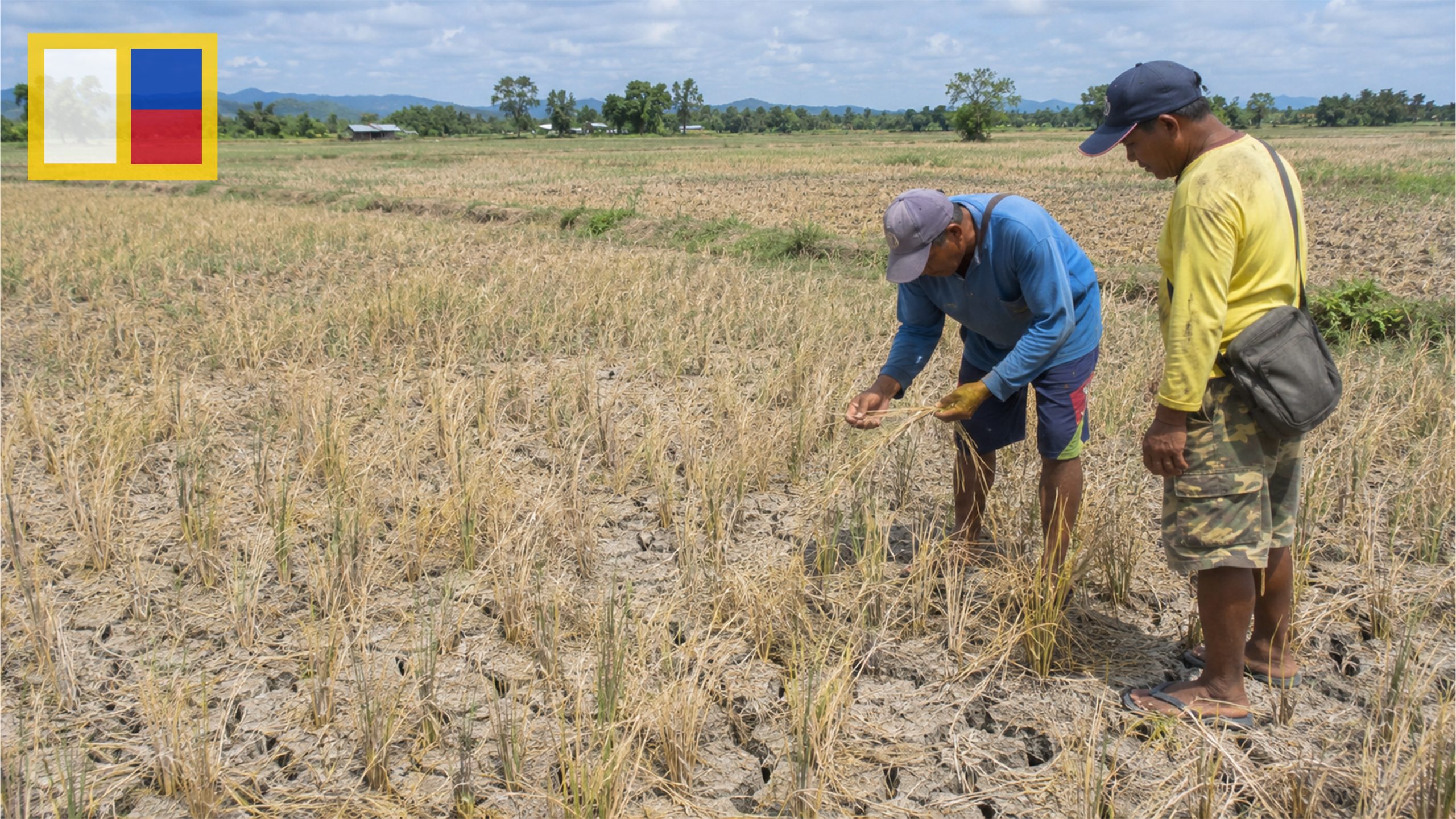
El Niño in the Philippines is raising concerns over worsening drought conditions as the climate phenomenon strengthens across the tropical Pacific, threatening agricultural production, water supplies, and food security. With PAGASA confirming a very strong El Niño on November 4, 2026, authorities are preparing for potentially prolonged dry conditions that could affect communities across the country through the first half of 2027.
The Philippines is preparing for potentially worsening drought conditions as a very strong El Niño continues to develop across the tropical Pacific, raising concerns over agricultural production, water availability, food security, and public health through the first half of 2027.
The Philippine Atmospheric, Geophysical and Astronomical Services Administration (PAGASA) confirmed on November 4 that a very strong El Niño is already present in the tropical Pacific. The weather phenomenon is expected to persist into the first half of next year, with climate models indicating that it could reach its peak before the end of 2026.
The latest warning puts farmers, local governments, water utilities, and households on alert as below-normal rainfall and warmer temperatures increase the possibility of prolonged dry conditions in several parts of the country.
The potential effects extend beyond the agricultural sector, with reduced water supplies, lower crop yields, and rising pressure on food production among the concerns facing the country in the coming months. PAGASA+1
PAGASA Warns of Worsening Dry Conditions
In its November 4 announcement, PAGASA said most parts of the Philippines could experience below-normal to way-below-normal rainfall throughout November.
The agency’s latest assessment also showed that five provinces experienced meteorological drought in October, while 11 provinces were classified under dry-spell conditions. Another 10 provinces experienced dry conditions during the same period.
These conditions could become more widespread if the prolonged rainfall deficit continues.
PAGASA warned that several provinces could experience drought or dry-spell conditions by the end of November. Warmer-than-average temperatures are also expected across most parts of the country, adding to concerns about heat exposure and water demand.
The weather bureau advised government agencies and the public to strengthen conservation measures and improve water resource management to reduce the possible effects of the phenomenon. PAGASA+1
Agricultural Sector Faces Growing Pressure
Agriculture remains among the sectors most vulnerable to the strengthening El Niño.
Reduced rainfall can affect rice and corn production, particularly in farming communities that depend heavily on rainwater or irrigation systems. Prolonged dry conditions can also affect vegetable production, livestock operations, and other agricultural activities.
The Department of Agriculture has already reported billions of pesos in agricultural damage associated with El Niño.
As of November 3, reported agricultural losses had reached approximately ₱8.57 billion, according to figures presented during a House Committee on Agriculture and Food hearing. The damage highlights the economic pressure facing farmers and fishing communities as drought conditions continue.
The Department of Agriculture has been preparing interventions, including additional agricultural inputs, irrigation support, and measures intended to protect food production in vulnerable areas. Jovee Marie N. de la Cruz+2
Water Supply and Household Costs Among Key Concerns
The effects of a prolonged dry period could also reach Filipino households, particularly communities that rely on reservoirs, rivers, groundwater, and other water sources affected by reduced rainfall.
Lower water levels may put additional pressure on local water districts and irrigation systems. Communities with limited access to reliable water infrastructure could face greater difficulties if dry conditions persist.
Water shortages may also affect businesses and industries that require consistent water supplies for daily operations.
The United Nations’ October 30 assessment of the Philippines’ El Niño situation warned that rainfall deficits, heat, and water stress could reduce crop production, strain water systems, and increase health risks. It also noted that food access could remain under pressure into the second quarter of 2027, even after the expected peak of the climate phenomenon. United Nations in Philippines+1
Government Strengthens Preparations for Possible Drought
Government agencies have started preparing for the expected impacts of the very strong El Niño.
The Department of Agriculture has outlined measures to protect farm production and maintain food supplies, including advance purchases of rice, fertilizer, and other agricultural inputs.
Meanwhile, the national government has allocated approximately ₱7.86 billion in disaster response funding for El Niño-related impacts, according to the Philippine News Agency.
Authorities are also looking at irrigation improvements, water management, and other interventions to help vulnerable communities and agricultural areas cope with prolonged dry conditions.
However, the effectiveness of these measures will depend on how quickly assistance reaches affected farmers and local communities. Department of Agriculture+2
Mindanao Also Faces Potential Dry-Weather Challenges
Mindanao is not exempt from the potential effects of the strengthening El Niño.
The Department of Agriculture’s Regional Field Office XII previously warned that parts of the SOCCSKSARGEN region could experience increasingly dry conditions toward the end of 2026 and early 2027.
Its September outlook indicated that rainfall could become generally below normal from November 2026 to January 2027, with drier conditions becoming more widespread in December.
For farming communities in the region, prolonged dry periods could affect planting schedules, irrigation availability, and crop production.
However, rainfall conditions will not be uniform across Mindanao. PAGASA’s November outlook identifies Davao City, Davao del Norte, and Agusan del Norte among the areas expected to experience near-normal rainfall during the month.
Local forecasts and updated advisories will therefore remain important for farmers and residents planning their activities. DEPARTMENT OF AGRICULTURE+1
El Niño Does Not Mean Typhoons and Heavy Rain Will Stop
Despite the growing drought concerns, PAGASA emphasized that El Niño does not completely eliminate the possibility of heavy rainfall.
Tropical cyclones and other rain-bearing weather systems can still affect the Philippines, bringing periods of intense rainfall even while the overall climate pattern favors drier conditions.
This means communities should not abandon their preparations for storms, flooding, and other weather-related hazards.
The public should continue monitoring official weather bulletins, particularly when tropical cyclones approach the country.
The combination of prolonged dry conditions and occasional heavy rainfall also highlights the importance of effective disaster preparedness at the local level. PAGASA+1
What Filipinos Can Do to Prepare
With the very strong El Niño expected to persist into 2027, households, farmers, and local communities can take practical steps to reduce potential risks.
These include:
- Conserve water: Avoid unnecessary water consumption, repair leaking faucets, and reuse water when appropriate.
- Prepare for hotter conditions: Stay hydrated, limit prolonged outdoor activities during extreme heat, and take extra precautions for children and older adults.
- Protect agricultural resources: Farmers should monitor local weather forecasts, coordinate with agricultural offices, and consider appropriate drought-resistant crops.
- Improve water storage: Communities and households should explore safe water storage and rainwater collection where permitted and appropriate.
- Monitor official advisories: Follow updates from PAGASA, the Department of Agriculture, and local government units.
Early preparation can help reduce the impact of prolonged dry conditions, particularly in communities that depend heavily on agriculture and limited water resources.
Drought Risks Could Extend Beyond the End of 2026
Although El Niño is expected to reach its peak before the end of 2026, its effects could continue well into 2027.
PAGASA’s projections indicate that drought conditions could spread to more provinces in the coming months if rainfall remains significantly below normal. A report published by BusinessMirror on November 4 cited projections that as many as 87 provinces could experience meteorological drought by March 2027. Jovee Marie N. de la Cruz+1
For the Philippines, the challenge will be managing the effects of prolonged dry conditions while protecting agricultural livelihoods, maintaining water supplies, and ensuring food remains accessible and affordable.
The coming months will be particularly important as government agencies and local communities prepare for the possibility of a more widespread drought.
PAGASA continues to monitor the developing climate conditions and is expected to issue updated advisories as new forecasts become available.

 Facebook
 Twitter