
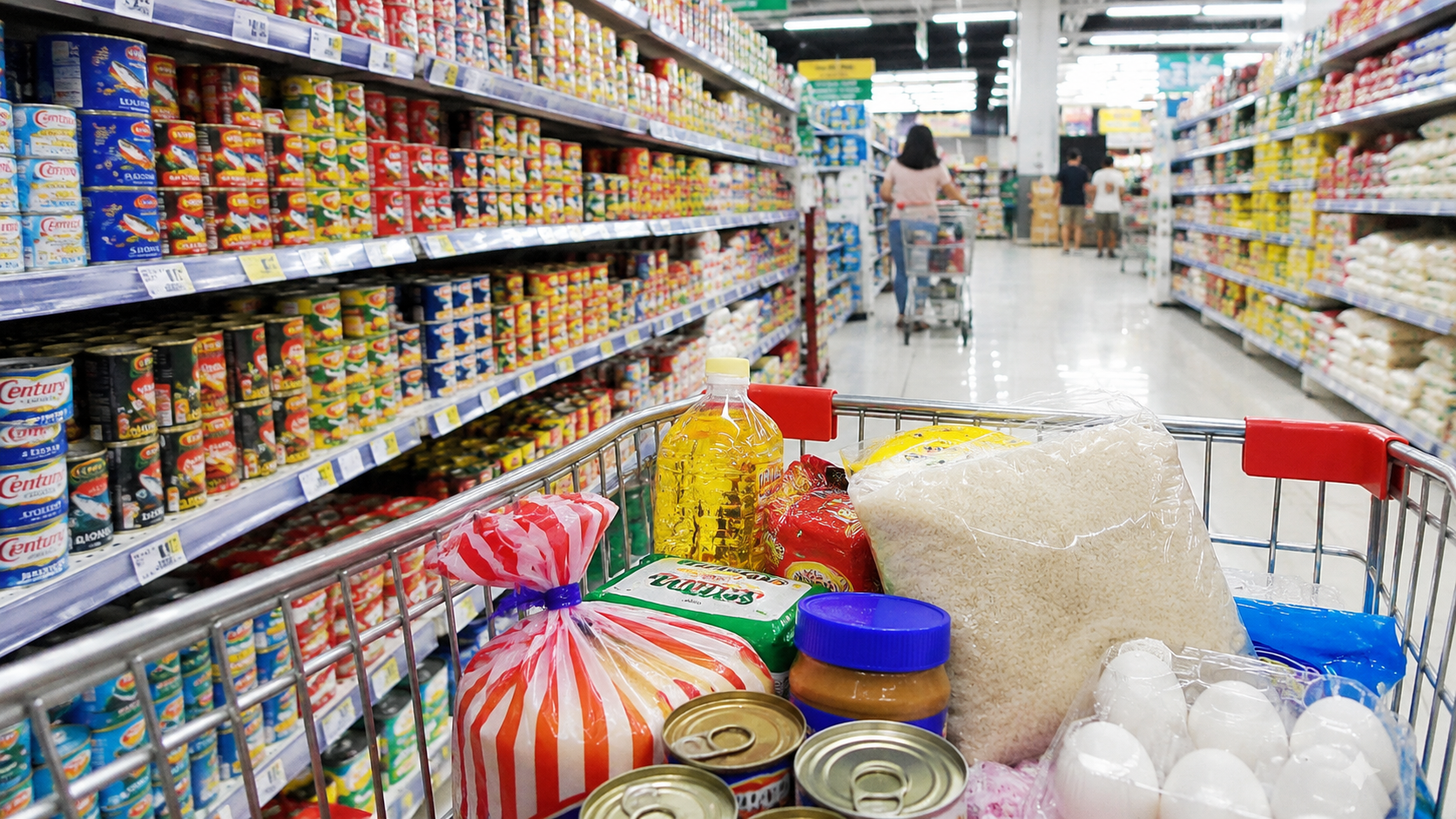
El Niño in the Philippines is raising concerns about prolonged heat, reduced rainfall, and possible disruptions to food and water supplies. With PAGASA confirming a Very Strong El Niño in November 2026, Filipino households are being encouraged to prepare essential food, drinking water, and emergency supplies. Planning ahead can help families manage potential shortages, rising grocery expenses, and other challenges without resorting to panic buying.
As the Philippines prepares for a potentially prolonged period of extreme heat and reduced rainfall, households are being encouraged to plan ahead by securing essential food, drinking water, and emergency supplies.
The Philippine Atmospheric, Geophysical and Astronomical Services Administration (PAGASA) confirmed on November 4, 2026, that a Very Strong El Niño is currently present in the tropical Pacific. The weather phenomenon is expected to persist until the first half of 2027 and could reach its peak before the end of 2026.
The warning raises concerns about possible drought, water shortages, agricultural losses, and higher household expenses in the coming months. While the government continues to monitor the situation, families can take practical steps now to reduce the potential impact on their daily lives.
Preparing an emergency pantry does not mean buying excessive amounts of groceries. Instead, households should prioritize affordable, nutritious, and properly stored food that can remain available when regular supplies become difficult to access.
What Does Very Strong El Niño Mean for the Philippines?
El Niño is a climate phenomenon associated with unusually warm ocean temperatures in the central and eastern tropical Pacific. It can influence weather patterns across the world, including rainfall and temperature conditions in the Philippines.
For the country, El Niño typically increases the likelihood of below-normal rainfall, prolonged dry spells, and drought in affected areas.
In its November 4 announcement, PAGASA said five provinces experienced meteorological drought, 11 provinces were under dry spell conditions, and 10 provinces experienced dry conditions in October 2026.
The agency also expects below-normal to way-below-normal rainfall across most parts of the country in November, alongside warmer-than-average temperatures.
These conditions could affect agricultural production, particularly crops that depend heavily on regular rainfall and irrigation.
Rice, corn, vegetables, and other agricultural commodities may face production challenges if water shortages persist. Livestock and fisheries may also experience additional pressure from prolonged heat and changing environmental conditions.
However, El Niño does not mean that the entire country will experience continuous dry weather. Tropical cyclones and other weather systems can still bring heavy rainfall to some areas.
How El Niño Could Affect Food Prices and Household Budgets
One of the biggest concerns for Filipino families is the possible effect of prolonged drought on food prices.
When agricultural production declines, the supply of certain commodities may become more limited. If demand remains high while supply decreases, consumers could experience higher prices.
Rice is particularly important because it is a staple food for millions of Filipino households. Reduced rainfall and irrigation problems could affect planting schedules, crop development, and harvest volumes.
Vegetables may also become more expensive when farms experience water shortages or lower yields. Meanwhile, livestock and fish production could face additional challenges from high temperatures and changing water conditions.
Transportation and distribution expenses may add further pressure to grocery budgets.
Nevertheless, higher prices are not guaranteed for every commodity. Actual market conditions will depend on harvest results, available inventories, imports, government interventions, and distribution costs.
The Department of Agriculture has been preparing measures to protect agricultural production, including irrigation support, drought-tolerant seeds, crop insurance, and other interventions.
For consumers, maintaining a modest supply of essential food at home can help reduce the need for frequent grocery trips and provide a buffer against temporary disruptions.
15 Food Items Filipino Families Should Keep at Home
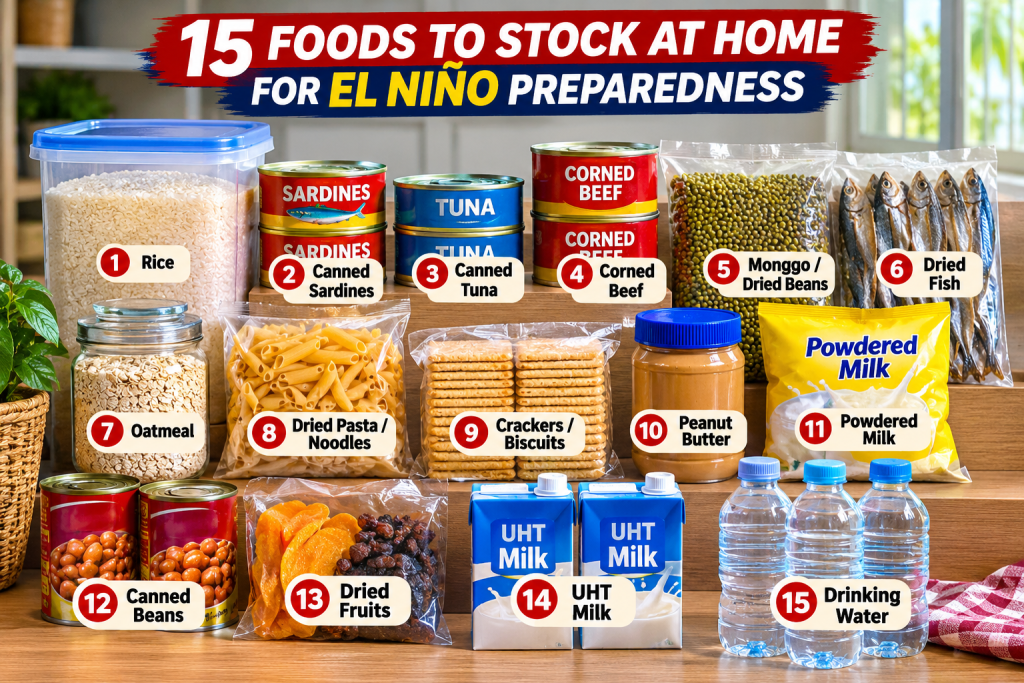
Families can start building an emergency pantry using everyday products available in supermarkets, grocery stores, and local markets.
The following foods are practical options because many can be stored without refrigeration when properly packaged.
1. Rice
Rice should be among the first items in a Filipino household’s emergency pantry. It is a staple carbohydrate that can serve as the foundation of everyday meals.
Store uncooked rice in airtight, food-safe containers and keep it away from moisture, insects, and direct sunlight.
2. Canned Sardines
Canned sardines provide protein and are convenient during emergencies because they do not require refrigeration before opening.
Choose products with intact packaging and check expiration dates before purchasing.
3. Canned Tuna
Canned tuna is another practical source of protein. It can be eaten with rice, mixed with pasta, or used in simple meals.
Families should keep several cans available while rotating older stocks before their expiration dates.
4. Corned Beef
Corned beef is a familiar pantry staple in many Filipino homes. It is convenient to prepare and can be paired with rice or vegetables.
5. Monggo and Other Dried Beans
Dried mung beans, kidney beans, and other legumes provide protein, fiber, and other nutrients.
They have a relatively long storage life when kept in sealed containers in a cool, dry location.
6. Dried Fish
Dried fish is a practical Filipino pantry option because it can be stored without refrigeration before opening when properly dried and packaged.
Keep it sealed to protect it from moisture and insects.
7. Oatmeal
Oatmeal is an easy-to-prepare food that provides carbohydrates and fiber. It can be a convenient breakfast option when families want to prepare meals with minimal cooking.
8. Dried Pasta and Noodles
Pasta is easy to store and can be prepared with canned tuna, vegetables, or other available ingredients.
Instant noodles may also be kept as an occasional convenience food, although families should avoid relying on them as their primary source of nutrition because many varieties contain high amounts of sodium.
9. Crackers and Biscuits
Crackers and biscuits are convenient emergency snacks that generally require no preparation.
Choose products with intact packaging and store them in dry containers to maintain freshness.
10. Peanut Butter
Peanut butter provides energy, protein, and fats. It can be paired with bread or crackers and is useful when families need a quick snack.
Check product labels for allergens and storage instructions.
11. Powdered Milk
Powdered milk is a practical alternative to fresh milk because unopened packages can be stored without refrigeration.
After opening, follow the manufacturer’s storage instructions carefully.
12. Canned Beans
Canned beans can be used as a ready-to-eat addition to meals, providing protein and fiber without requiring lengthy cooking.
13. Dried Fruits
Raisins, dried mangoes, and other dried fruits can provide convenient snacks and additional nutrients.
Keep them in sealed packaging to protect them from humidity and pests.
14. UHT Milk
Unopened UHT milk can be stored at room temperature according to the manufacturer’s instructions.
It provides another option for families who want to maintain a supply of milk without relying on refrigeration.
15. Drinking Water
Safe drinking water is arguably the most important household supply during prolonged dry conditions.
Families should keep sealed bottled water or clean drinking water in properly covered, food-safe containers.
The amount needed will depend on the number of household members, local conditions, and access to water services. Families should follow local government and disaster preparedness recommendations when planning their emergency water supply.
Other Essential Supplies to Prepare at Home
Food is only one part of household preparedness. Families should also consider supplies that can help them manage power interruptions, extreme heat, water shortages, and other emergencies.
Here are some important items to include:
- Flashlights and extra batteries: Useful during power interruptions, especially at night.
- Power banks: Help keep mobile phones charged for communication and emergency updates.
- First-aid kit: Should include basic wound care supplies and commonly needed first-aid materials.
- Maintenance medicines: Keep an adequate supply of prescribed medicines and regularly check expiration dates.
- Hygiene products: Soap, toothpaste, sanitary products, alcohol, and other personal care essentials.
- Water containers: Clean, covered containers can help households store water safely.
- Battery-powered radio: Provides access to important announcements when internet connectivity or electricity is unavailable.
- Water purification supplies: Use appropriate products and follow their instructions to make water safer when necessary.
- Important documents: Keep identification cards, medical information, and other essential records in a waterproof pouch.
The Philippine Red Cross and other disaster preparedness organizations encourage households to prepare emergency supplies that can support family members for at least 72 hours.
How Much Food Should a Family Stock?
The amount of food needed depends on household size, dietary requirements, available storage space, and budget.
For families who want to prepare without overspending, starting with a modest emergency pantry is a practical approach.
A household can begin by maintaining enough essential supplies for several days and gradually building additional reserves as its budget allows.
Here is an illustrative shopping checklist for a small family:
| Food or supply | Suggested starting quantity |
|---|---|
| Rice | 5 kilograms |
| Canned sardines | 6 cans |
| Canned tuna | 3 cans |
| Corned beef | 3 cans |
| Dried monggo | 1 kilogram |
| Dried fish | 500 grams |
| Oatmeal | 1 pack |
| Pasta | 2 packs |
| Crackers | 2 packs |
| Powdered milk | 1 pack |
| Drinking water | Based on household needs |
These are suggested pantry quantities, not a complete 72-hour emergency ration. Families should calculate food and water requirements according to the number of people, age, health conditions, and expected duration of an emergency.
It is also important to consider infants, older adults, and family members with special dietary requirements.
How to Prepare Without Spending Too Much
Preparing for El Niño does not have to become an expensive activity.
Families can gradually build their emergency supplies by including one or two additional essential items during regular grocery trips.
Here are practical ways to manage the budget:
Buy frequently used products. Prioritize rice, canned fish, beans, and other foods that your family already consumes.
Compare prices. Check different grocery stores and public markets before purchasing larger quantities.
Avoid unnecessary bulk purchases. Buying more than your household can consume may lead to food waste.
Practice pantry rotation. Use older products first and replace them with newly purchased supplies.
Store food properly. Keep dry goods in airtight containers and protect them from moisture, insects, and excessive heat.
Monitor household water consumption. Repair leaks, avoid unnecessary water use, and follow local water utility advisories.
The goal is to maintain a useful supply of necessities without placing additional pressure on the family budget.
Which Areas in the Philippines Are at Risk?
PAGASA’s November 2026 climate outlook identifies several areas that may experience drought, dry spells, or dry conditions.
Among the areas included in the agency’s outlook are parts of Luzon, the Visayas, and Mindanao.
In Mindanao, areas identified for dry spell conditions include Basilan, Camiguin, Cotabato, Davao del Sur, Davao Occidental, Maguindanao del Norte, Maguindanao del Sur, South Cotabato, Sultan Kudarat, Sulu, Tawi-Tawi, and several provinces in the Zamboanga Peninsula.
Misamis Oriental was among the provinces identified for drought conditions.
These classifications are based on rainfall patterns and do not mean that every municipality will experience the same conditions.
PAGASA continues to monitor weather developments and issue climate advisories to help communities and government agencies prepare.
Residents should regularly check official announcements from PAGASA, their local government units, and water service providers for location-specific updates.
Prepare Early, but Avoid Panic Buying
The confirmation of a Very Strong El Niño is a reminder that household preparedness should begin before conditions become more difficult.
However, families do not need to empty supermarket shelves or purchase months’ worth of supplies immediately.
Excessive buying can create unnecessary financial pressure and may make essential goods less accessible to other consumers.
A better approach is to maintain a balanced pantry, store drinking water safely, prepare basic emergency equipment, and monitor official announcements.
Households should also pay attention to extreme heat. Drink sufficient safe water, avoid prolonged outdoor activities during the hottest hours, and check on children, older adults, and people who may be more vulnerable to heat-related illnesses.
El Niño can present challenges for agriculture, water resources, and everyday living, but early preparation can help Filipino families manage its potential effects.
Being prepared is not about panic buying. It is about making informed decisions, protecting household resources, and ensuring that essential needs are available when they are needed most.

 Facebook
 Twitter