
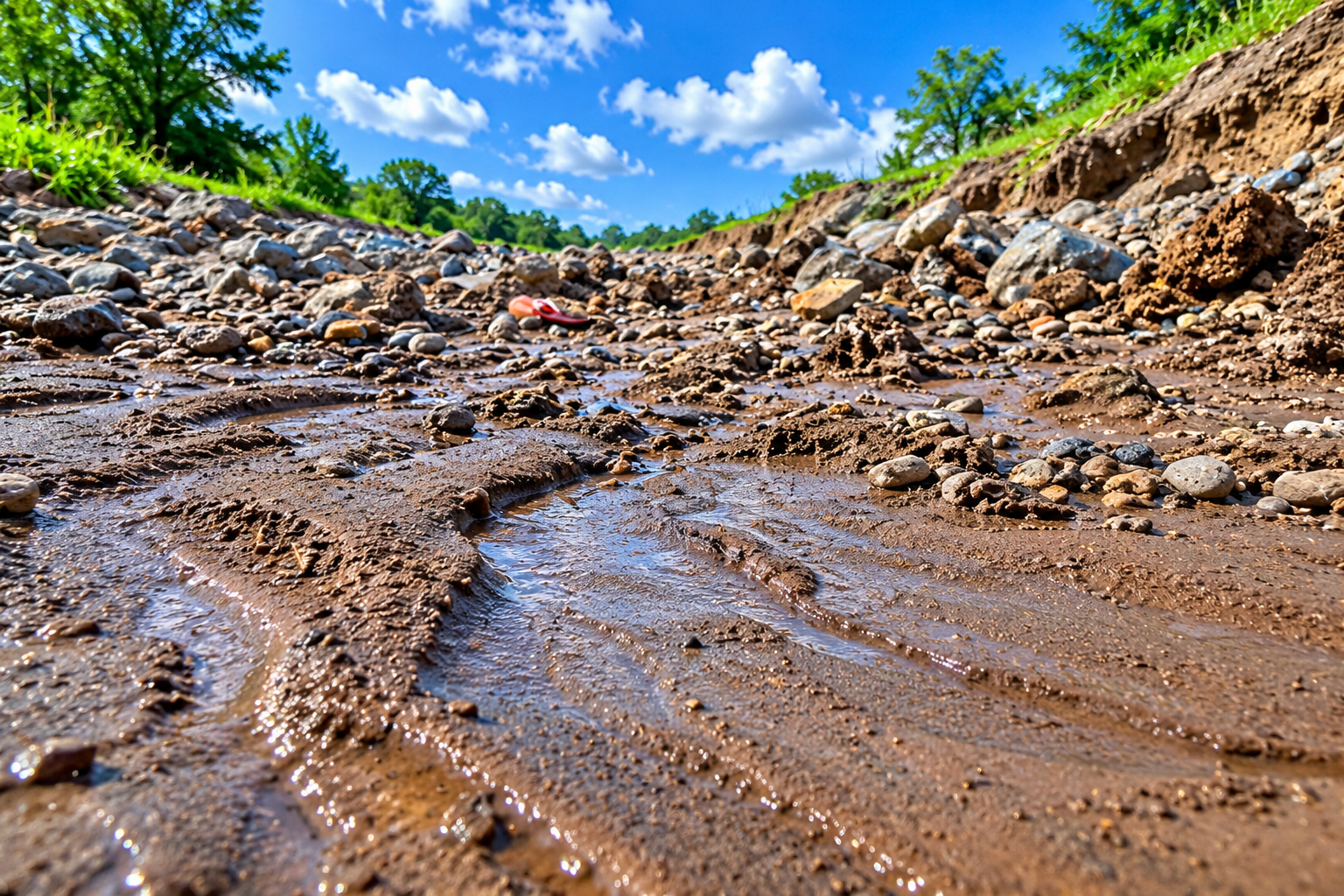
Soil erosion in Mindanao is raising concerns about the long-term future of the region’s agricultural lands, with decades of topsoil loss threatening farm productivity and food security. A 2007 study by the University of the Philippines-Mindanao warned that the island could lose much of its topsoil within just over 50 years if the reported rate of erosion continued. Nearly two decades later, the warning remains relevant as farmers and communities face the growing challenge of protecting the land that supports food production.
When the report was released in 2007, it sounded like a distant possibility. Today, that timeline is no longer far away. If the projections remain accurate, much of Mindanao’s precious topsoil could disappear within the lifetime of today’s younger generation.
According to the study, Mindanao is losing topsoil at a rate of approximately two centimeters each year. For an island that serves as one of the country’s agricultural heartlands, the implications are enormous. Topsoil is the foundation of food production, and without it, farming becomes increasingly difficult and less productive.
The Scope of the Problem
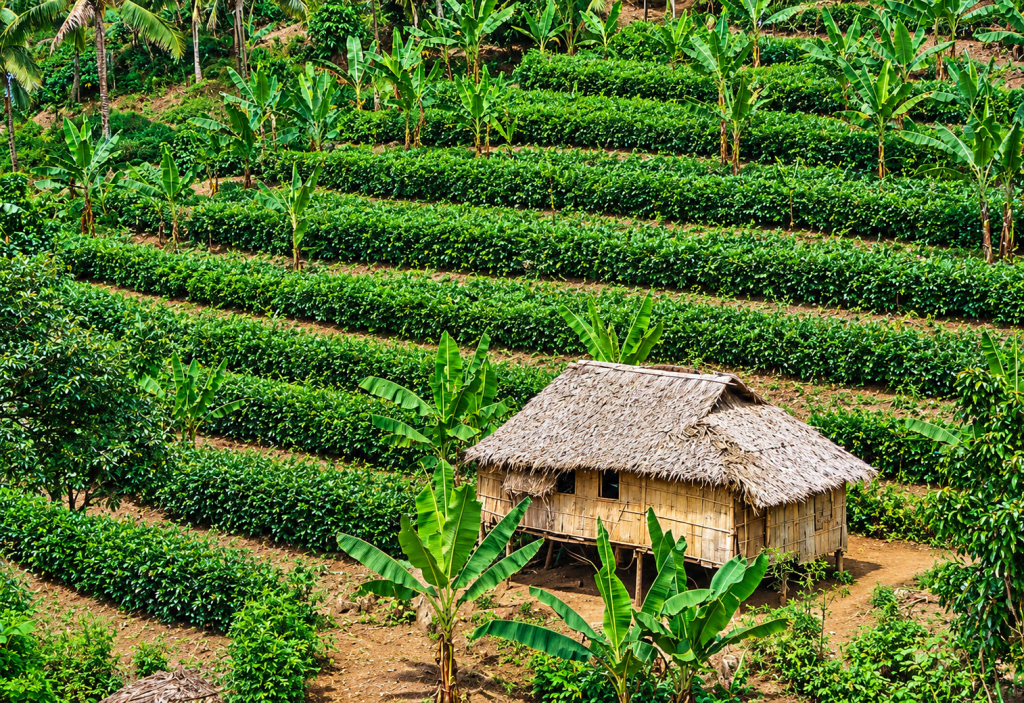
Soil erosion is not unique to Mindanao. It affects many parts of the Philippines. Senator Loren Legarda recently pointed out that about 13 million hectares, or 45% of the country’s arable land, are already moderately to severely eroded.
Yet Mindanao remains one of the regions hardest hit.
As early as 1988, the Department of Environment and Natural Resources identified 22 provinces nationwide with alarming soil erosion rates. Eleven of those provinces were in Mindanao: Zamboanga del Sur, Zamboanga del Norte, Lanao del Norte, Lanao del Sur, Misamis Oriental, Bukidnon, North Cotabato, South Cotabato, Davao del Sur, Davao Oriental, and Davao del Norte. Each had more than 50% soil erosion.
The situation is aggravated by the country’s geography. Roughly one-third of the Philippines’ 30 million hectares of land area consists of sloping terrain. These landscapes, while suitable for certain crops, are highly vulnerable to soil loss when not properly managed.
As the Philippine Council for Agriculture, Aquatic and Natural Resources Research and Development (PCAARRD) observed, sloping lands become especially susceptible to erosion depending on vegetation cover and land use. Frequent heavy rains, landslides, and severe weather events further intensify the problem.
The Enemy We Barely Notice
Unlike floods, typhoons, or earthquakes, soil erosion rarely captures headlines. It happens quietly, gradually, and often unnoticed. The Washington, D.C.-based Worldwatch Institute aptly describes it as a “silent crisis.”
No one understood this better than the Rev. Harold Ray Watson, former American director of the Mindanao Baptist Rural Life Center (MBRLC) in Bansalan, Davao del Sur. “Soil erosion is an enemy of any nation, far worse than any outside enemy coming into a country and conquering it because it’s an enemy you cannot see vividly.”
Watson, a recipient of the prestigious Ramon Magsaysay Award for international understanding in 1985, warned that erosion is a “slow creeping enemy” that steadily takes possession of the land.
His words remain relevant today. While debates continue over the severity of climate change, there is little debate among scientists regarding soil erosion. It is real, measurable, and already affecting agricultural productivity.
Why Topsoil Matters
Many people think of soil simply as dirt beneath their feet. In reality, it is one of humanity’s most valuable natural resources.
An American geologist once compared soil to the rind of an orange. “Soil is related to the earth much as the rind is related to an orange,” he said. “It is the link between the rock core of the earth and the living things on its surface.”
The most valuable portion is the topsoil, the uppermost layer rich in organic matter and nutrients needed for plant growth.
What makes the situation alarming is how slowly topsoil forms. Scientists estimate that it takes between 200 and 1,000 years to develop just 2.5 centimeters of fertile topsoil. Yet a single intense rainstorm can wash away the same amount from an unprotected hillside in only a few hours.
As Jethro P. Adang, current MBRLC director, explained: “Topsoil is necessary for life to continue, since it is needed for plants to be able to grow.”
Adang compared topsoil to the foundation block of a building: “Pull it away, and the building will fall. So too with topsoil: Take away topsoil and you can take away life.”
Farming Practices and the Erosion Problem
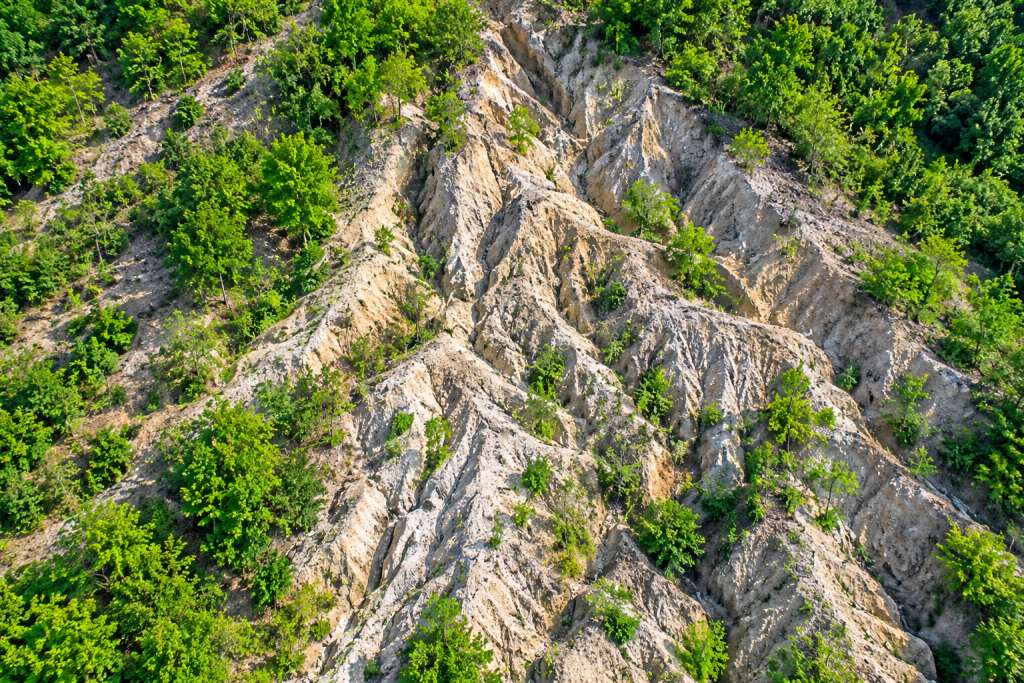
Experts point to one major factor driving erosion in Mindanao: the inappropriate cultivation of sloping lands.
The UP study found that traditional farming methods on hillsides significantly contribute to soil loss. Farmers often plow up and down slopes, creating channels that allow rainwater to carry away valuable topsoil.
Gil Magsino, a weed scientist from the University of the Philippines Los Baños, believes sloping lands can still be farmed productively. However, he emphasized that conventional methods should be abandoned in favor of soil-conserving practices.
“Contour farming and similar methods must be employed,” he pointed out.
Contour farming follows the natural contours of the land, slowing water movement and preventing soil from being washed downhill.
Without such practices, the consequences extend beyond reduced crop yields. Eroded soil clogs rivers, contributes to flooding, damages infrastructure, and degrades ecosystems.
A Homegrown Solution: SALT
Fortunately, Mindanao is not without answers. Since the 1980s, the Mindanao Baptist Rural Life Center has promoted Sloping Agricultural Land Technology (SALT), an innovative farming system specifically designed for sloping areas.
The concept is simple yet effective. Instead of allowing water to rush downhill unchecked, farmers establish hedgerows along contour lines using nitrogen-fixing trees and shrubs such as kakawate, ipil-ipil, Flemingia macrophylla, Desmodium rensonii, and Indigofera anil.
These hedgerows act as living barriers that trap soil, slow runoff, and improve fertility. “The principle of SALT is the same as that used by the Ifugao tribes in Mountain Province,” Adang explained. “All we are doing is suggesting different nitrogen-fixing trees and shrubs instead of rocks.”
The cut leaves and branches from the hedgerows are returned to the soil as organic fertilizer. Farmers then grow a combination of permanent, semi-permanent, and annual crops between the rows, creating a diversified and sustainable farming system.
Proven Results on the Ground
The effectiveness of SALT is not merely theoretical. Studies conducted at the MBRLC farm showed that soil loss in SALT-managed areas averaged only 3.4 metric tons per hectare annually.
This is well below the generally accepted soil loss limit of 10 to 12 metric tons per hectare per year for tropical countries.
The comparison with conventional farming is dramatic. Farms that did not utilize SALT lost approximately 194.3 metric tons of soil per hectare every year.
That means non-SALT farms were losing soil at a rate more than 57 times higher.
Research has likewise demonstrated the link between erosion and declining productivity. According to studies cited by Adang, losing only a few centimeters of topsoil can reduce productivity by as much as 40% in fertile soils and up to 60% in poorer soils.
Protecting the Future Beneath the Feet
The story of soil erosion in Mindanao is not merely about dirt being washed away by rain. It is about food security, environmental sustainability, and the future of agriculture.
Every grain of topsoil lost today represents centuries of natural formation erased in a matter of moments.
Watson perhaps summarized the issue best when he said: “Land is not being remade. It takes thousands of years to build one inch of topsoil but only one good heavy rain to remove one inch from unprotected soil on the slopes of mountains.”
Mindanao’s fertile lands have long fed millions of Filipinos. Preserving them will require greater adoption of conservation farming, stronger environmental stewardship, and a deeper appreciation of the resource that lies beneath man’s feet.
The battle against soil erosion may be silent, but the consequences of ignoring it will be loud and lasting for generations to come.

 Facebook
 Twitter