
Sweet potato nutrition has gained global attention as scientists and nutrition experts recognize the crop’s remarkable health benefits. Although often considered a humble or “poor man’s” food, the sweet potato is actually one of the most nutritious and important crops in the world, providing essential vitamins, minerals, and energy for millions of people.
In spite of its name, sweet potato is not related to potato; it belongs to the morning-glory family. Unlike the potato – which is tuber, or thickened stem – Ipomoea batatas (its scientific name) is a storage root. Despite a physical similarity, yams are not related either.
Sweet potato is called a poor man’s crop. In most instances, it is also used in a discriminatory manner: a loser is someone who is nangangamote (Filipino term for lagging behind).
Unknowingly, sweet potatoes are one of the world’s most important food crops. It ranks sixth after rice, wheat, potato, corn and cassava. In developing countries, however, it is the fifth most important food crop. More than 105 million metric tons are produced globally each year; 95% of which are grown in developing countries, according to the International Potato Center (CIP).
So much so that this thinking about sweet potato as a crop for poor people is starting to change. In fact, it is a life saver. The Japanese used it when typhoons demolished their rice fields. It kept millions from starvation in famine-plagued China in the early 1960s and came to the rescue in Uganda in the 1990s when a virus ravaged cassava crops.
Among Filipinos, camote (as it is commonly known among Filipinos) is a dependable food source to tide them over such calamities as droughts, floods, and typhoons.
“Camote is better than rice, corn, cassava, peanut and other crops,” a farmer said who described it an “all weather crop.” “It could pretty much survive without fertilizer and even under bad weather conditions,” he added. “During typhoons, camote is the only crop that can survive.”
Though its origin lies in Latin America, Asia is now the largest sweet potato-producing region in the world, with figures showing over 90 million tons produced annually. In the Philippines, about 547,000 metric tons are produced each year.
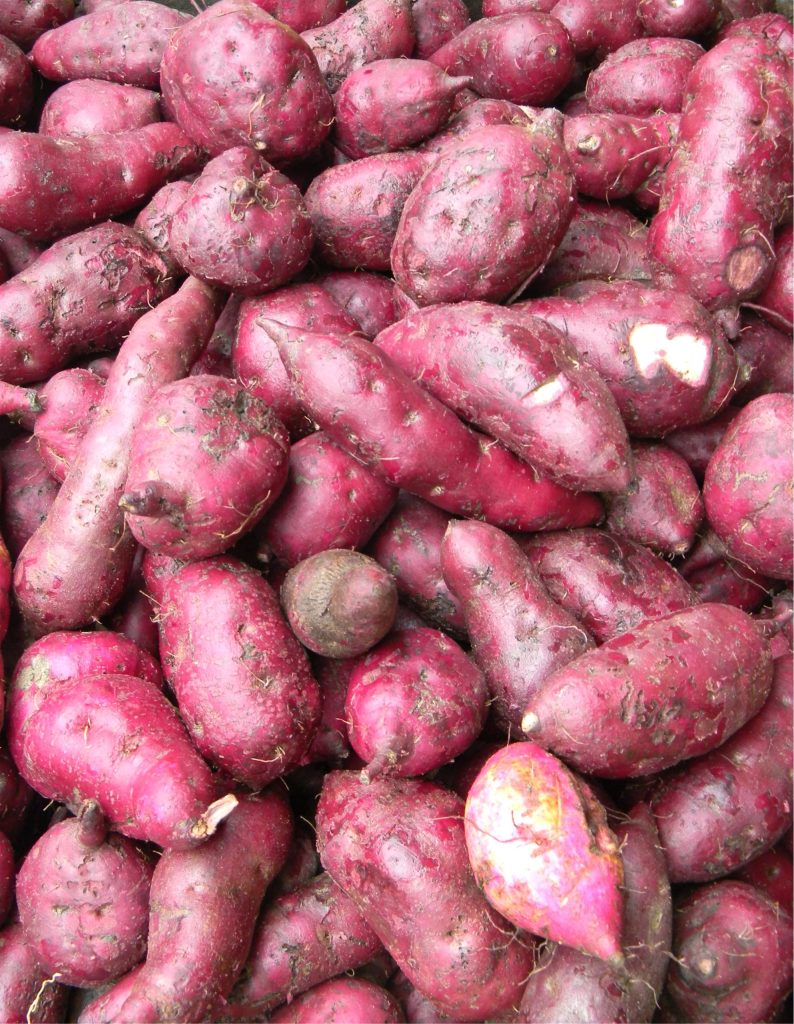
But what most Filipinos don’t know is that camote is one of the most nutritious crops. The Center for Science in the Public Interest, a consumer advocacy group that focuses on nutrition and health, food safety, and alcohol policy, ranked “baked sweet potato number one in nutrition of all vegetables.”
Sweet potatoes come in a variety of sizes and colors – including orange, white, and purple – and they are rich in vitamins, minerals, antioxidants and fiber. In addition, they provide a number of health benefits.
The North Atlantic Human Nutrition Research Center on Aging considered camote as one of the world’s healthiest foods. The reason: it has the highest amounts of vitamin A among the root vegetables category. It is almost fat-free (0.39 grams).
According to the United State Department of Agriculture, for one medium size camote, you get 2.15 grams of protein, 31.56 grams of net carbs, 3.8 grams of dietary fiber, 28.6 milligrams of calcium, 16.9 milligrams of sodium, 265.2 milligrams of potassium, and 29.51 milligrams of vitamin C.
American nutritionists found that camote has “almost twice the recommended daily allowance of vitamin A, 42 percent of the recommendation for vitamin C, and four times the recommended daily allowance for beta carotene.”
A cup of cooked camote (about 200 grams) is better than broccoli and cabbage in vitamins A and C, iron, and calcium content. Because these nutrients are anti-inflammatory, they help reduce the severity of asthma, osteoarthritis, and rheumatoid arthritis.
Among root crops, camote has the highest vitamin A content. Eating the yellow- or orange flesh color (directly linked to beta-carotene content) can lead to healthy skin and healthy surface linings of the eyes and the respiratory, urinary, and intestinal tracts. Vitamin A also fights infections very effectively and protects the walls of the arteries and veins against hardening.
Despite the name “sweet,” it may be a beneficial food for diabetics, as preliminary studies showed that camote has the lowest glycemic index among root crops. Research shows that sweet potato stabilizes blood glucose levels and enhances the response to insulin.
“It also digests slowly, causing a gradual rise in blood sugar (by converting complex carbohydrates into glucose),” writes Arlene May G. Corpus, a therapeutic dietitian at Manila Adventist Medical Center.
Corpus adds that camote is also good for those who want to lose weight. “That feeling of fullness helps control food intake,” she points out.
Sweet potato also contains various antioxidants, which may help protect against certain types of cancer. “Anthocyanins – a group of antioxidants found in purple sweet potatoes – have been found to slow the growth of certain types of cancer cells in test-tube studies, including those of the bladder, colon, stomach, and breast,” wrote healthline.com’s Erica Julson.
Another good thing about eating purple camote: it may improve brain function. “Animal studies have found that the anthocyanins in purple tomatoes can protect the brain by reducing inflammation and preventing free radical damage,” Julson wrote.
No studies have been done to test these effects in humans yet, but in general, diets rich in fruits, vegetables and antioxidants are associated with a 13% lower risk of mental decline and dementia.
The roots are not the only edible part of camote but also the leaves and tops. Nutritionists claim the leaves and tops contain high amounts of antioxidants, vitamins, minerals, and dietary fiber.
In his monthly column, “Straight from the Farm,” Dr. Rafael D. Guerrero III, wrote: “In a study conducted by Chung-Yen Chen and associates of Tufts University in the United States, it was found that the purple leaves of sweet potato contained six grams of total phenolics and 21.5 grams of beta carotene per 100 grams.
“In another study by nutritionist Richard Baybutt of Kansas State University, it was reported that smokers exposed to benzoapyrene, a cancer-producing chemical in cigarettes, were deficient in vitamin A that contributed to lung inflammation and emphysema. Thus, the consumption of foods high in vitamin like camote is recommended to correct such deficiency.”
Sweet potatoes originated from tropical America. It was brought to the Philippines by the early Spanish conquestadores. Today, camote is grown all over the country; however, it is grown mostly in Eastern Visayas, the Bicol region and Caraga.
Camote are often a staple among impoverished families in provinces, as they are easier to cultivate and cost less than rice. The tubers are boiled or baked in coals and may be dipped in sugar or syrup.
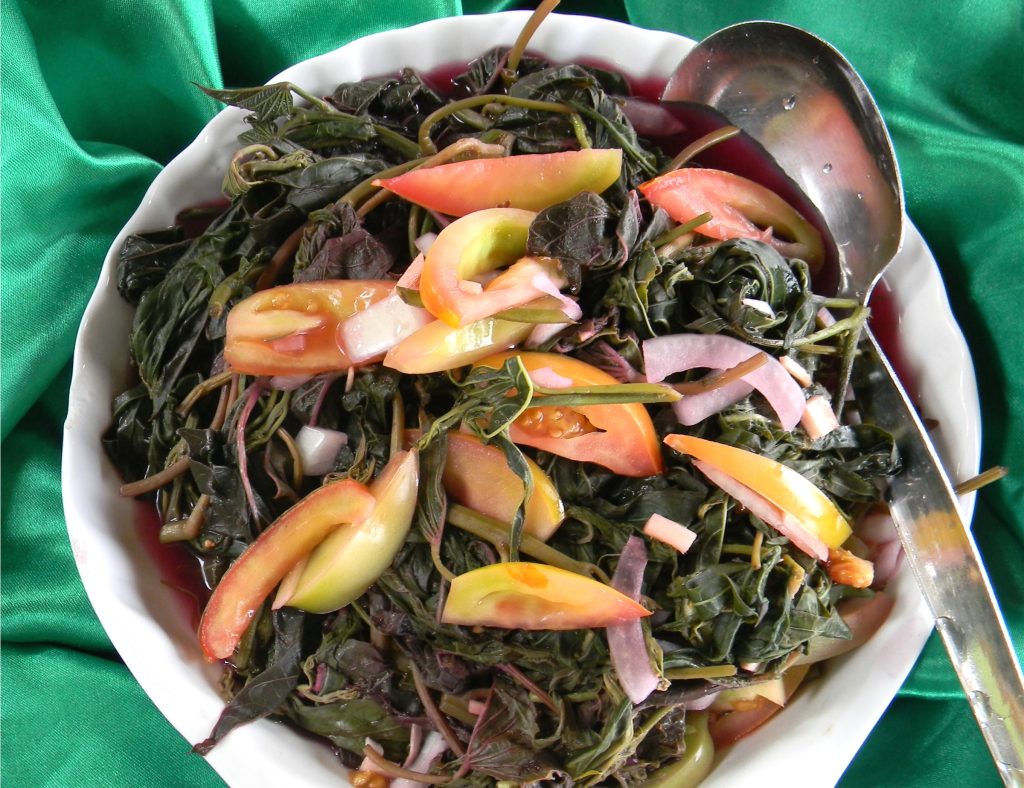
Young leaves and shoots (locally known as talbos ng kamote) are eaten fresh in salads with shrimp paste (bagoong alamang) or fish sauce (patis). They can be cooked in vinegar and soy sauce and served with fried fish (a dish known as adobong talbos ng kamote), or with recipes such as sinigang.
It’s high time for Filipinos to eat more camote than rice. After all, camote is more nutritious than rice, which has been associated with the rise of diabetes in the country.
Now, some words of warning. “Sweet potato contains measurable amounts of oxalates that can crystallize in body fluids and cause health problems,” writes Corpus. “If you have existing and untreated kidney or gallbladder problems, you may want to avoid eating sweet potatoes.”


 Facebook
 Twitter