
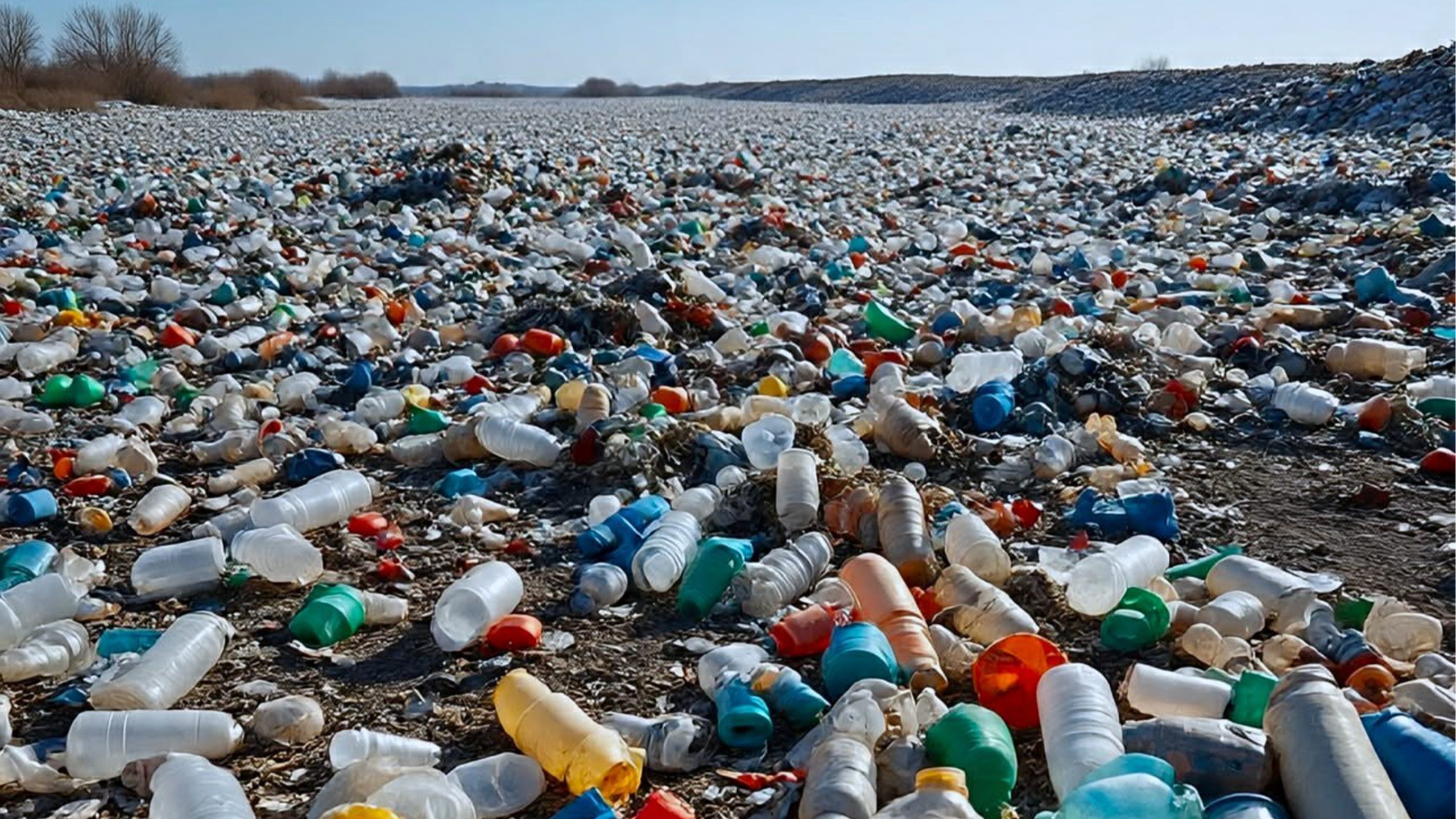
Plastic pollution continues to worsen worldwide as the production and use of plastic bottles create serious environmental damage.
If you drink one liter of water contained in a plastic bottle, how much water have you actually used?
About 6-7 gallons of water, according to the Environmental Management Bureau (EMB) of the Department of Environment and Natural Resources (DENR). That’s the amount of water “used in the production and transportation of one-liter bottle.”
That’s just for starters. More than 800,000 metric tons of pollutants are released into the air during the production of plastic water bottles, EMB states. In addition, only one out of every 6 plastic bottles are properly segregated.
“Plastic bottles may give us convenience and quench our thirst but the real damage that it causes to our environment is something” that people should take into consideration, the EMB urges.
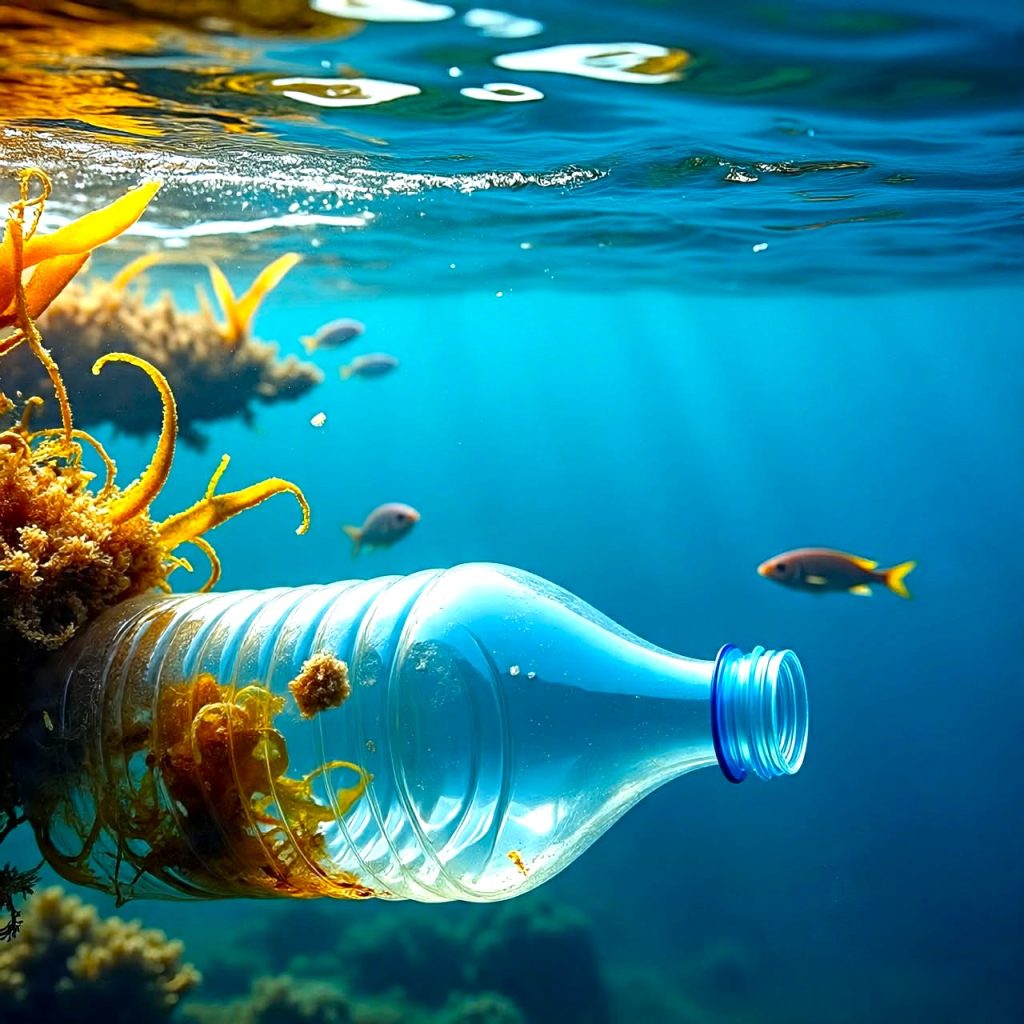
Plastic production worldwide has increased from 2 million tons in 1950 to 380 million tons in 2015, according to Science Advances. Of the 7.8 billion tons of plastic produced between 1950 and 2015, about half has been produced in the last 13 years. The increase in plastic production is rising faster than the increase in world population.
If that is not alarming enough, the IHS Market reported during the 2019 Global Plastics Summit that plastic production is expected to grow on average 3.5% to 4% per year through at least 2035.
“With recycling programs largely underfunded and ineffective,” James Bruggers wrote for InsideClimate News, “there’s potential for billions more tons of plastic waste to be headed to landfills or out into the environment.”
The new recycling technology is a decade or more away, argued Dewey Johnson, IHS Market vice president. “The solution isn’t going to happen overnight,” he said. “The solution is going to happen over decades.”
The industry, Johnson cautioned, will need to work to “maintain trust along the ride.” Don’t delay, he said, because “this continuing increase in the plastics market increases the scale of the size of the solution.”
In the meantime, plastics “is in our air, our water, our food, our excrement,” observed Nina Butler, the chief executive officer of More Recycling, a research and consulting company that works with the plastics industry on recycling. “It’s very, very pervasive.”
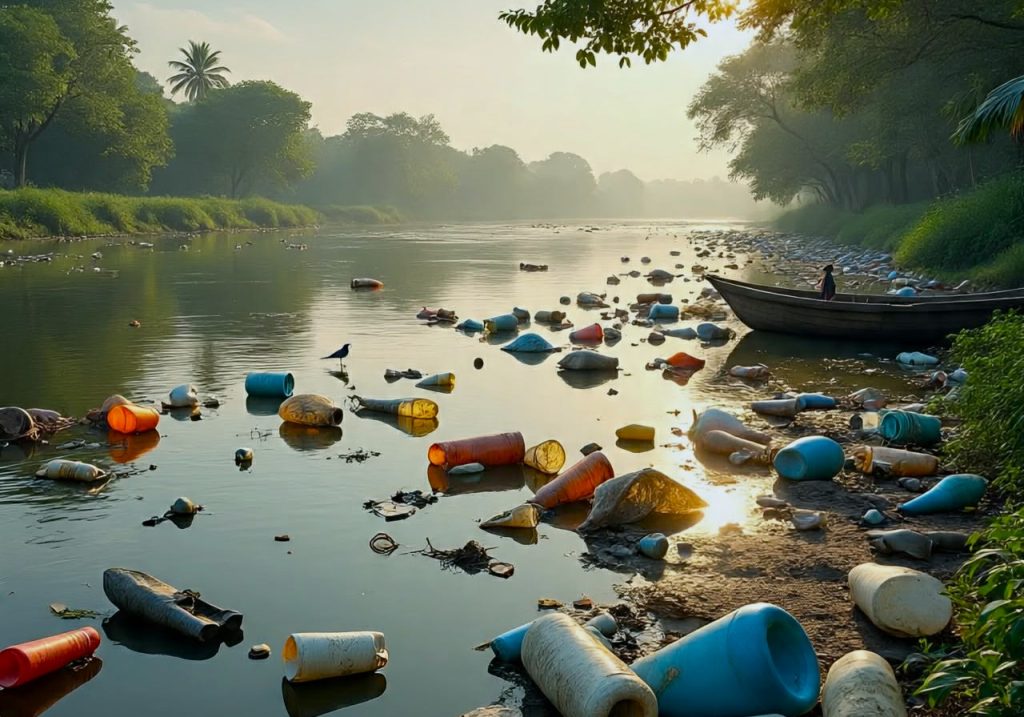
Most of these plastics become garbage which may not go directly into landfills. In fact, most of them end up in the oceans which, most people think, no level of human assault could damage them as they are vast and resilient.
A World Bank report estimates that humans produce 2.01 billion metric tons of trash per year. By 2050, that figure will rise by 70% to 3.4 billion metric tons. Of this trash, only 13.5% is recycled, while only 5.5% is composted. Thus, 81% of this trash is discarded in landfills or incinerated.
“If we continue at our current pace, we will need new planets as landfills,” explained Tricontinental: Institute for Social Research.
Most of those discarded in landfills, as stated earlier, find their way into the oceans. According to the Ocean Conservancy, 8 million tons of plastics enter the ocean each year on top of the 150 million tons of plastics that already circulate in the ocean.
The Philippines is one of the top five contributors of plastic waste in the world’s oceans, said Environment Secretary Roy A. Cimatu, citing a United Nations report. “We produce 2.7 metric tons of plastic waste every year,” Cimatu said in a press statement that EDGE Davao obtained. “Following this trajectory of production and mismanagement, UN reports predicted that by 2050, there will be more plastic in the oceans than there are fish.”
“Our insatiable dependence on plastic has led us to a man-made environmental crisis which is currently still growing in size. Our oceans and beaches are increasingly awash with waste plastic, while plastic dumping and landfill is at an all-time high,” Global Initiatives pointed out.
In the Philippines, about 35,580 tons of garbage is generated every day, according to a paper, “Status of Solid Waste Management in the Philippines,” written by Alicia Castillo and Suehiro Otoma. “On the average, each person in the country produces about 0.5 kilogram and 0.3 kilogram of garbage every day in the urban and rural areas, respectively,” the two authors wrote.
In Metro Manila alone, about 8,636 tons of garbage is generated every day – that is, 0.7 kilogram per person per day “due to its modernized lifestyle.” Bulk of the garbage is in the form of plastics.
The World Wide Fund for Nature (WWF)-Philippines traced the huge garbage problem to poverty. “People still buy many products in small amounts – cheaper, but resulting in much more waste,” the attached agency of an international non-government organization observed.
The WWF-Philippines has conducted several coastal clean-ups to address marine debris in some parts of the country. “As the Philippines is one of the so-called ‘sachet economies,’ most of the debris gathered during clean-ups are plastic, including single-use sachets for shampoo, toothpaste, creams, laundry soap, and even food,” said Dan Ramirez, the organization’s communications and media manager, in an article featured in its website.
Because they are easy to sell – which is why even in remote communities, you see ribbons of sachets hanging from neighborhood stores – large multinational manufacturing companies continue to market them. The Global Alliance for Incinerator Alternatives (GAIA) reports about 163 million sachets are sold everyday in the country.
In a news dispatch, British Prime Minister Theresa May dubbed the single-use plastic items as one of “the greatest environmental challenges facing the world.” Environment Secretary Roy Cimatu agrees. “Plastic, particularly those for single-use packaging, has greatly contributed to the degradation of the environment,” he points out.
Associated Press quoted Sherri Mason, chair of the geology and environmental sciences department at the State University of New York at Fredonia, as saying: “We have to confront this material and our use of it, because so much of it is single-use disposable plastic and this is a material that doesn’t go away. It doesn’t return to the planet the way other materials do.”
Among the plastics released into the oceans, however, the most prevalent are the plastic bags. “Since they were introduced in the 1970s, plastic bags have infiltrated our lives,” wrote Caroline Williams in New Scientist.
The typical plastic bag that weighs just a few grams and is a few millimeters thick might seem thoroughly innocuous were it not for the sheer volume of global production: 500 billion to one trillion a year.
Because they are usually buoyant, plastic bags are widely distributed by ocean currents and wind. A recent study conservatively estimated that 5.25 trillion plastic particles weighing a total of 268,940 tons are currently floating in the world’s oceans. This debris results in an estimated US$13 billion a year in losses from damage to marine ecosystems.
The WWF claimed nearly 200 different marine species die due to ingestion and choking from plastic bags. The Philippines became the toast of international media when it was found that the cause of death of a whale was ingesting 40 kilograms of plastics.
“Plastic was just bursting out of its stomach,” Darrell Blatchley, who conducted the post-mortem of the whale, told National Geographic. “We pulled out the first bag, then the second. By the time we hit 16 sacks – on top of the plastic bags, and the snack bags, and big tangles of nylon ropes, you’re like seriously?”
He could not believe what he saw. “The plastic in some areas was so compact it was almost becoming calcified, almost like a solid brick,” he was quoted as saying by The New York Times. “It had been there for so long it had started to compact.”
“Discarded plastic bands encircle mammals, fish, and birds and tighten as their bodies grow,” reminded the Washington, D.C.-based World Resources Institute. “Turtles, whales, and other marine mammals have died after eating plastic sheeting.”
In the United States, plastic gears, six-pack yokes, sandwich bags and Styrofoam cups are so abundant in the ocean that they kill up to one million seabirds and 100,000 marine mammals each year.
The WWF says the plastics you use for one day can outlast you. The lifespan of plastic bags, for instance, is 20 years while that of coffee cup is 30 years. The plastic straw may take 200 years before it disappears into oblivion.
The lifespan of other plastics, according to WWF study, are as follows: plastic rings, 400 years; plastic bottles, 450 years; plastic cups, 450 years; coffee pods, 500 years; disposable diapers, 500 years; and plastic toothbrush, 500 years.
Meanwhile, microplastic (resulting from the breakdown of larger pieces by sunlight and waves) and microbeads (used in body washes and facial cleansers) have been called the ocean’s smog. “They absorb toxins in the water, enter the food chain and ultimately wind up in humans,” wrote journalist Spenser Rapone.
It simply means that plastics also affect human health. Studies have found that toxic chemicals leach out of plastic and are found in the blood and tissue of nearly all human beings. Two broad classes of plastic-related are of critical concern for human health: bisphenol-A and additives used in the synthesis of plastics, which are known as phthalates. This was found out in a study conducted by the Arizona State University Biodesign Institute.
Exposure to these toxic chemicals is linked to cancers, birth defects, impaired immunity, endocrine disruption and other ailments, the study said.
Is there ever a possible solution to the plastic problem? A concerted effort from various sectors is necessary “to solve the gargantuan problem of plastic waste,” suggested Dr. Rhodora V. Azanza, academician and president of the National Academy of Science and Technology (NAST) of the Department of Science and Technology (DOST) during the plastic waste forum last May 24, 2019.
But the challenge, according to Dr. Filemon A. Uriarte, Jr., of NAST’s Engineering Studies and Technology Division, lies mostly on segregation, collecting and cleaning of plastics – not on its use.
The solution, he pointed out, is to prevent the consumption of plastics, paper, or glass containers in the first place. After waste reduction, repurpose, and treatment, “disposal should be the last option,” he suggested.
The people themselves may be part of the problem but they are also part of the solution. This was the gist of Dr. Antonio J. Alcantara, environment and natural resources officer of Los Baños, Laguna when he shared the town’s success in curbing the commercial use of plastic containers.
Among the creative initiatives done were the “bring your own bayong” scheme and the use of plastics into useful products like hollow blocks, roofing materials and table tops. “No amount of high technology and financial capacity can solve the plastic waste problem without disciplined people,” Alcantara stressed.
Johnson called plastic “a miracle product” that has “enabled the improved standard of living we enjoy” today. He contended that plastics are used in health care and in cars to make them lighter and more durable to save fuel and lives, and in other everyday products.
But he urged the industry to respond to the waste issue in a timely manner. “The time to act is today,” Bruggers quoted Johnson as saying. “Not some day.”

 Facebook
 Twitter