
Natural cooling techniques Philippines are being explored by scientists as a practical solution to rising electricity demand during the country’s hot season. Experts from the National Academy of Science and Technology Philippines (NAST PHL) are pushing for wider adoption of passive cooling methods to reduce reliance on energy-intensive systems.
A Filipino scientist from the National Academy of Science and Technology Philippines (NAST PHL) is pushing for a study on the use of natural cooling techniques in the Philippines, which can be beneficial amid the rising global energy and fuel crisis.
The expert is referring to the study on Passive Cooling Strategies for Sustainable Development, which was successfully piloted in Cambodia, where 45 percent of electricity consumed is for cooling.
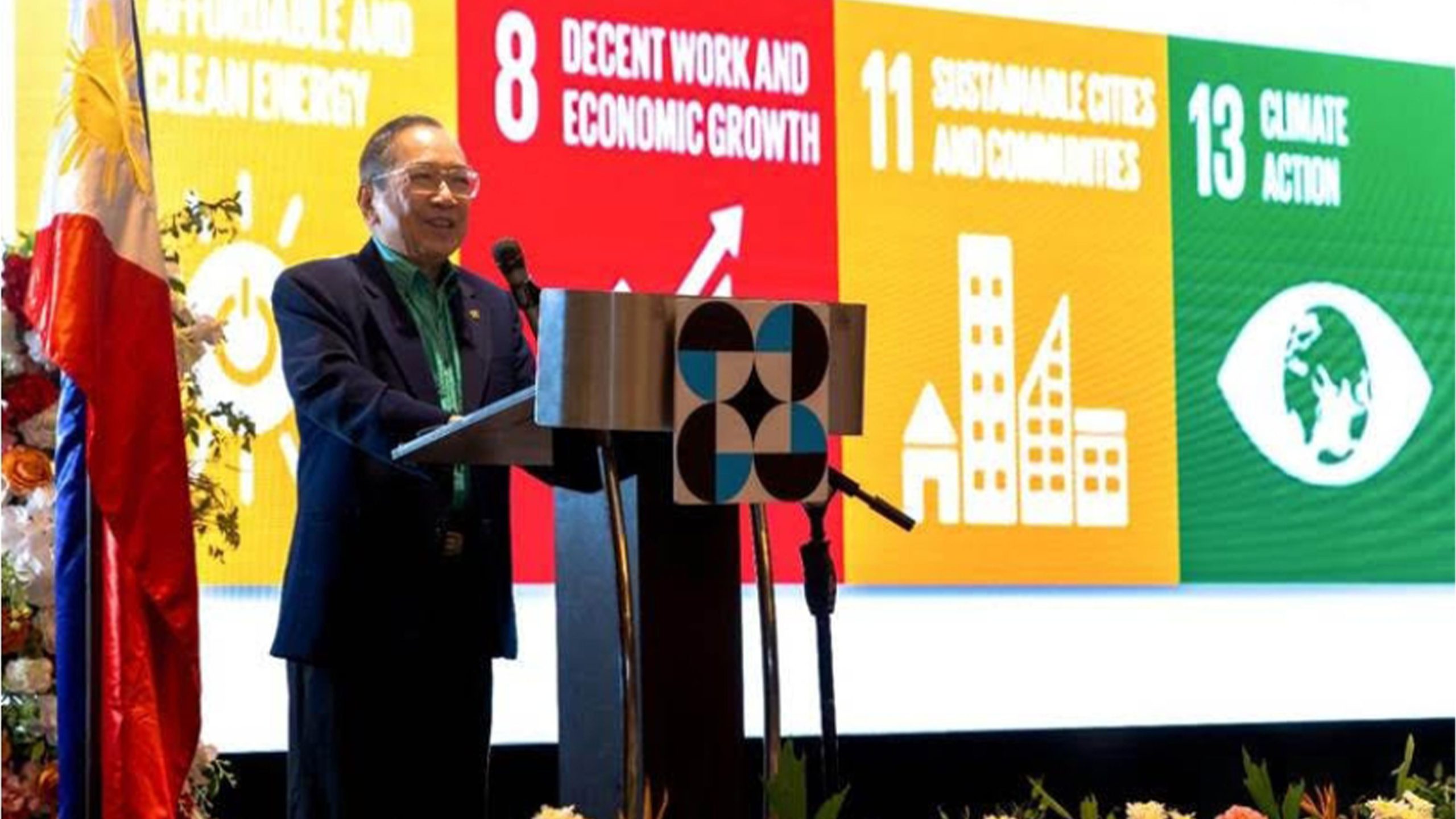
In the recently concluded Luzon Regional Scientific Meeting on April 7, Academician Dr. Filemon A. Uriarte, Jr., said he wanted to present the results of the study to spark interest among stakeholders and to replicate the project in the country, which is also experiencing an increase in energy demand, especially during the warm and dry seasons.
Dr. Uriarte said the rising demand for cooling has significant implications for energy demand and greenhouse gas emissions in Cambodia, making it the first country selected by the UN to test the project.
“We just completed, very recently, a technical review of an almost a million-dollar project that is being implemented by the United Nations ESCAP on passive cooling strategies for sustainable development in Cambodia. And one of our recommendations to the United Nations ESCAP is to duplicate or replicate this kind of project in Southeast Asia, including the Philippines, because we noted that the area of passive cooling has not been actually fully developed as far as the Philippines is concerned,” Dr. Uriarte said.
In addition, Dr. Uriarte explained that passive cooling strategies encompass techniques and design principles that minimize heat gain in buildings without relying on mechanical equipment, without operational energy consumption, and thereby reducing or eliminating the need for mechanical systems like air conditioning.
By using natural processes such as convection, radiation, and conduction, these strategies effectively manage heat transfer from the building envelope.
According to some sources across the web, a building envelope is the physical separator between the interior and exterior of a building, comprising systems that manage heat, air, and moisture. Key components include structural elements like walls, roof, foundation; openings like windows and doors; and control layers such as insulation, air/vapor barriers, and waterproofing.
“So, there are many possible strategies in order to maximize the effect of passive cooling systems. For instance, you can design your outdoor vegetation so that you can redirect the flow of air around those trees. You can either divert it or concentrate it in a certain direction. That would be a site-oriented passing cooling strategy,” Dr. Uriarte said.
Using a demonstration building in a subdivision in Cambodia, Dr. Uriarte said the experts used low emissivity in the paints, cool coatings on concrete roofs, metal roofs, on elevations, solar film on glazing, and outdoor roller blinds to test the effectiveness of the passive cooling technique, how much energy is saved, and how much greenhouse gases are reduced.
According to Dr. Uriarte, one of the significant results of the study showed that a widespread adoption of passive cooling can help meet targets to cut cooling-related emissions by at least 17 percent.
Additionally, the integration of passive cooling is expected to reduce overall electricity consumption for cooling by 20 percent by 2030-2040 compared to a business-as-usual scenario. The project is also projected to deliver a cumulative emissions reduction of nearly 3 million tons of carbon dioxide (CO2) or (3 MtCo2e) by 2035. This amount of CO2 emission is equivalent to over 12 to 15 billion kilometers driven by an average passenger car, roughly the annual emissions of about 700,000 gasoline-powered passenger vehicles, based on standard emission factors.
“When we evaluated the project, we said it was successfully implemented. It is effective in as far as the objectives were concerned on reducing energy consumption, and that we recommended to the United Nations that this project be replicated in other areas such as the Philippines and other Southeast Asian countries, including also countries in Southeast Asia,” Dr. Uriarte said.
Dr. Uriarte is a former secretary of the Department of Science and Technology (DOST) and the former Director and Principal Officer of the United Nations Economic and Social Commission for Asia and the Pacific (ESCAP).
The Luzon RSM marked the first leg of the 2026 series of scientific meetings organized by the (NAST PHL), in partnership with the DOST-National Capital Region.
“This regional scientific meeting provides a platform where regional perspectives and local experiences help shape the national science and technology agenda. The insights generated here in Luzon will contribute significantly to broader national-level discussions at the Annual Scientific Meeting,” DOST Secretary Renato U. Solidum Jr. said.
With the theme “UN SDGs: Science, Technology, and Innovation for Sustainable Development,” the event had brought together leading scientists, researchers, policymakers, industry representatives, and other stakeholders to assess Luzon’s progress toward achieving the United Nations Sustainable Development Goals (SDGs).
The Regional Scientific Meeting of the NAST PHL is one of the initiatives of the Department of Science and Technology (DOST) aimed at providing science-based, innovative, and inclusive solutions across four strategic pillars: human well-being, wealth creation, wealth protection, and sustainability. These pillars embody the mantra OneDOST4U: Solutions and Opportunities for All.

 Facebook
 Twitter