
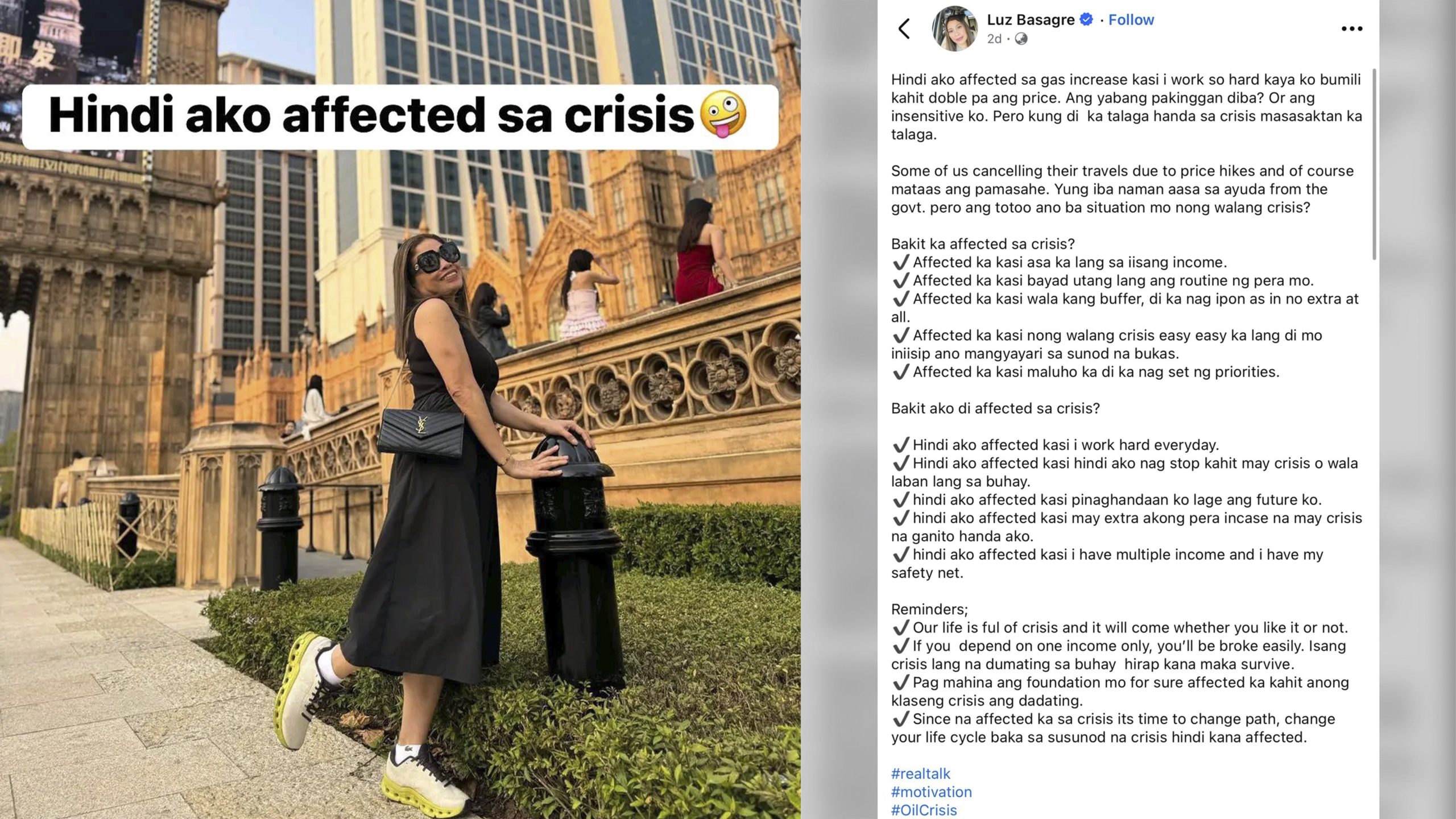
Luz Basagre apology backlash gained traction online after the content creator issued a public apology over her viral “not affected” post, which drew criticism from netizens and sparked wider discussions on empathy during times of crisis.
MANILA — A viral social media post by content creator Luz Basagre has ignited online discussions about empathy and responsibility, after her statement saying she was “not affected” by an ongoing crisis drew widespread criticism and prompted a public apology.
Basagre’s original post, which included the phrase “hindi ako affected,” quickly circulated across platforms, with many users questioning its tone amid a period when many Filipinos were experiencing hardship. While the post appeared to reflect a personal perspective, its timing and wording led to strong reactions, highlighting how quickly messages can be interpreted in emotionally charged contexts.

As the backlash grew, Basagre issued a follow-up statement acknowledging that her message had caused offense. “Sorry sa mga nasaktan kasi they feel na napaka insensitive and no empathy ng post ko,” she wrote, adding that her intention was not to dismiss the struggles of others. She explained that the post was meant to encourage preparedness for different types of crises but admitted that her message may not have been clearly communicated.
The controversy unfolded within hours, reflecting the rapid pace at which online discourse can escalate. Screenshots of the original post were widely shared, with users dissecting both the wording and the perceived lack of context. Some netizens pointed out that public figures, including online personalities, are often expected to exercise caution when addressing sensitive topics, particularly during times of widespread concern.
In her statement, Basagre also emphasized that the experience served as a learning moment. “Andami na hurt, sorry sa inyo,” she said, while noting that audiences may interpret content differently depending on their personal circumstances. She added that she holds no resentment toward critics but encouraged people to consider the broader context before making judgments.
Online reactions to the apology have been mixed. While some users accepted her explanation and commended her for taking accountability, others maintained that the initial post reflected a deeper issue of tone-deaf messaging. Observers noted that the incident underscores the challenges faced by content creators navigating public platforms where messages are often consumed without nuance.
The situation has also reignited conversations about digital responsibility. With social media serving as a primary space for public expression, even brief statements can carry significant weight. Experts and commentators have long emphasized that communication during crises requires sensitivity, as audiences are more likely to respond strongly to perceived indifference.
In recent years, similar incidents involving public figures have demonstrated how quickly online sentiment can shift, often leading to calls for clarification or apology. The Basagre controversy adds to a growing list of cases where intent and interpretation diverge, raising questions about how individuals can balance authenticity with awareness of broader social realities.
As discussions continue, the episode highlights a key dynamic in today’s digital environment: the power of a single phrase to shape public perception. For many observers, the issue goes beyond one post, reflecting a broader expectation that those with influence remain mindful of how their words resonate—especially during moments when audiences are seeking understanding and solidarity.
The incident also reflects a broader shift in how Filipino audiences engage with online personalities. With social media serving as a primary source of information and expression, audiences are increasingly holding influencers accountable for their statements, especially during sensitive situations. Analysts note that this evolving dynamic is reshaping digital communication norms, where clarity, timing, and tone are just as important as the message itself in maintaining public trust.

 Facebook
 Twitter