
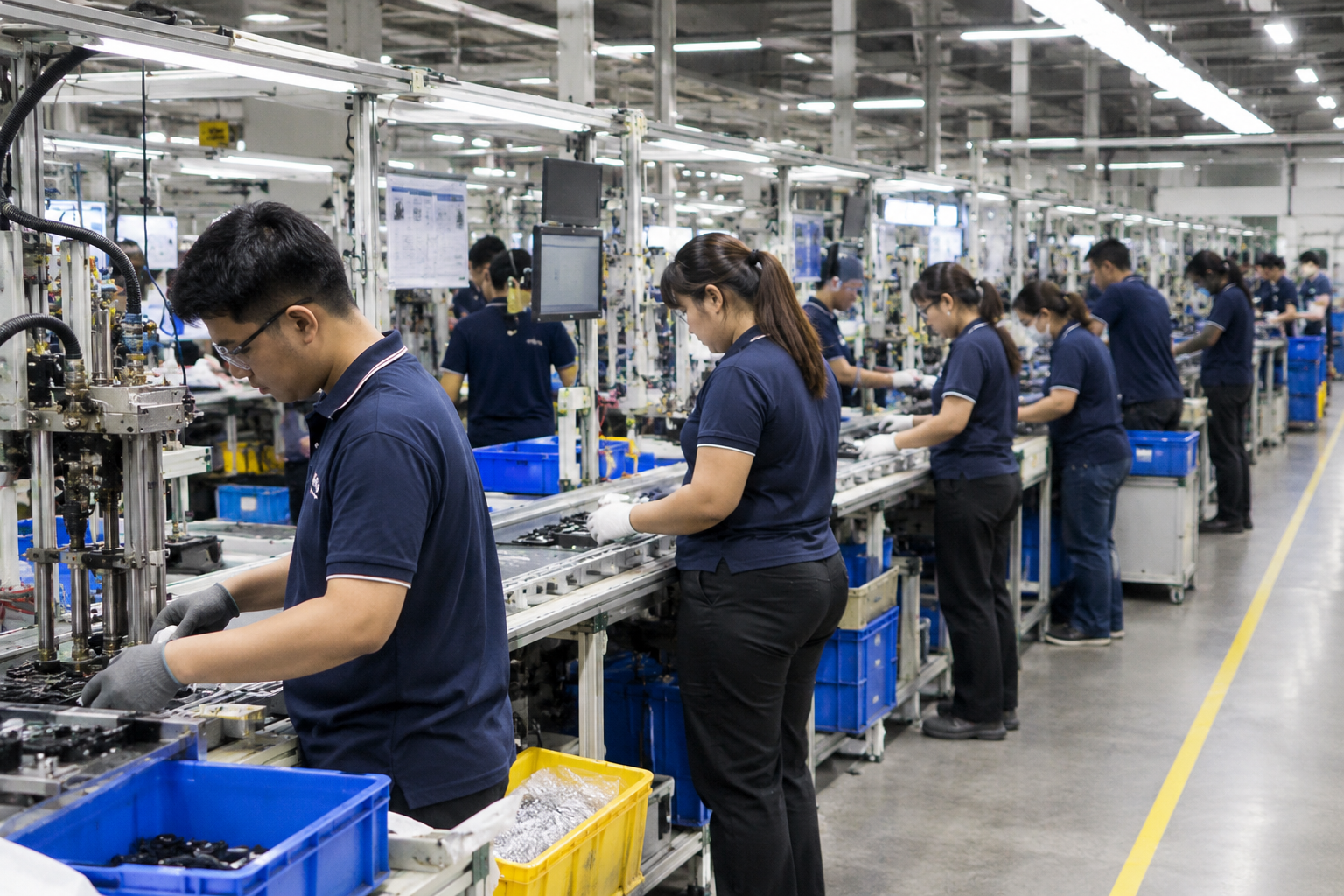
MANILA, Philippines – Philippine manufacturing activity contracted for a second consecutive month in October, as weaker domestic and international demand continued to weigh on factory production, new orders, and employment. The latest survey results point to persistent challenges for local manufacturers as businesses remain cautious about purchasing materials and expanding operations.
The latest S&P Global Philippines Manufacturing Purchasing Managers’ Index (PMI) fell to 49.1 in October, down from 49.6 in September. A PMI reading below 50 indicates contraction, while a reading above that level signals expansion.
The latest result marks the third time Philippine manufacturing activity has contracted this year, highlighting continuing challenges for local manufacturers amid uncertain economic conditions.
Weak Demand Continues to Affect Factory Production
According to the latest manufacturing survey, declining demand remained one of the biggest challenges facing Philippine factories.
New orders fell at a faster rate in October, while factory output also continued to decline, although at a slower pace than in the previous month.
Manufacturers reported weaker demand from both domestic and international customers. New export orders also decreased, suggesting that businesses were facing challenges beyond the local market.
The survey further showed that purchasing activity experienced its sharpest decline in 11 months as manufacturers became more cautious about buying raw materials and maintaining inventories.
Some businesses also reported difficulties obtaining materials, contributing to slightly longer supply chain delays.
El Niño and Hot Weather Add Pressure on Manufacturers
Aside from weaker customer demand, unusually hot weather conditions also affected manufacturing operations.
Some companies linked the decline in business activity to El Niño-related heat, which has raised concerns about agricultural production, energy consumption, and operating expenses.
The state weather bureau has warned that El Niño conditions could continue until March or potentially June 2027.
Prolonged hot weather could create additional challenges for businesses that depend on agricultural raw materials, reliable water supplies, and stable operating conditions.
The wider effects could also reach food processing, logistics, and other industries that rely on consistent production and supply chains.
Employment and Purchasing Activity Remain Weak
The October survey also indicated that Philippine manufacturers reduced employment for a second consecutive month.
Some companies reportedly experienced lower staffing levels as businesses remained cautious about their production requirements and future demand.
The decline in purchasing activity also suggests that manufacturers are avoiding unnecessary spending while waiting for stronger customer orders.
Meanwhile, inventories of finished goods increased slightly for the first time in four months, indicating that some businesses may be preparing for an expected improvement in production and sales.
Business Confidence Reaches a Two-Year High
Despite the continued contraction, the latest survey showed a more encouraging development in business confidence.
Manufacturers expressed stronger expectations for the coming 12 months, with optimism reaching its highest level in nearly two years.
Companies are hoping that new projects, additional customers, and improving market conditions will support production growth in the months ahead.
However, stronger business confidence has not yet translated into increased orders or hiring.
S&P Global Market Intelligence Principal Economist Siân Jones noted that manufacturers remained cautious because stronger optimism had yet to produce a meaningful recovery in demand.
She also pointed to the Bangko Sentral ng Pilipinas’ latest 50-basis-point interest rate increase, which brought its policy rate to 5.50%.
Higher borrowing costs could place additional pressure on businesses considering investments, expansion, and new production activities.
What the Manufacturing Slowdown Means for the Philippine Economy
The continued decline in manufacturing activity raises concerns about the broader Philippine economy.
Manufacturing plays an important role in employment, industrial production, exports, and the country’s supply chain. When factories experience weaker demand, the effects can extend to suppliers, transportation companies, distributors, and workers.
Smaller businesses that provide raw materials and services to manufacturing companies may also experience reduced orders and slower business activity.
The next few months will be important in determining whether manufacturers can turn their improving expectations into actual production growth.
The S&P Global Philippines Manufacturing PMI is based on responses from approximately 400 manufacturing companies across different industries and workforce sizes.
The Philippine Statistics Authority is scheduled to release official manufacturing figures for October on December 4, 2026.
For now, the latest survey suggests that Philippine manufacturers remain cautious as they navigate weaker demand, rising economic uncertainties, and challenging operating conditions.

 Facebook
 Twitter