
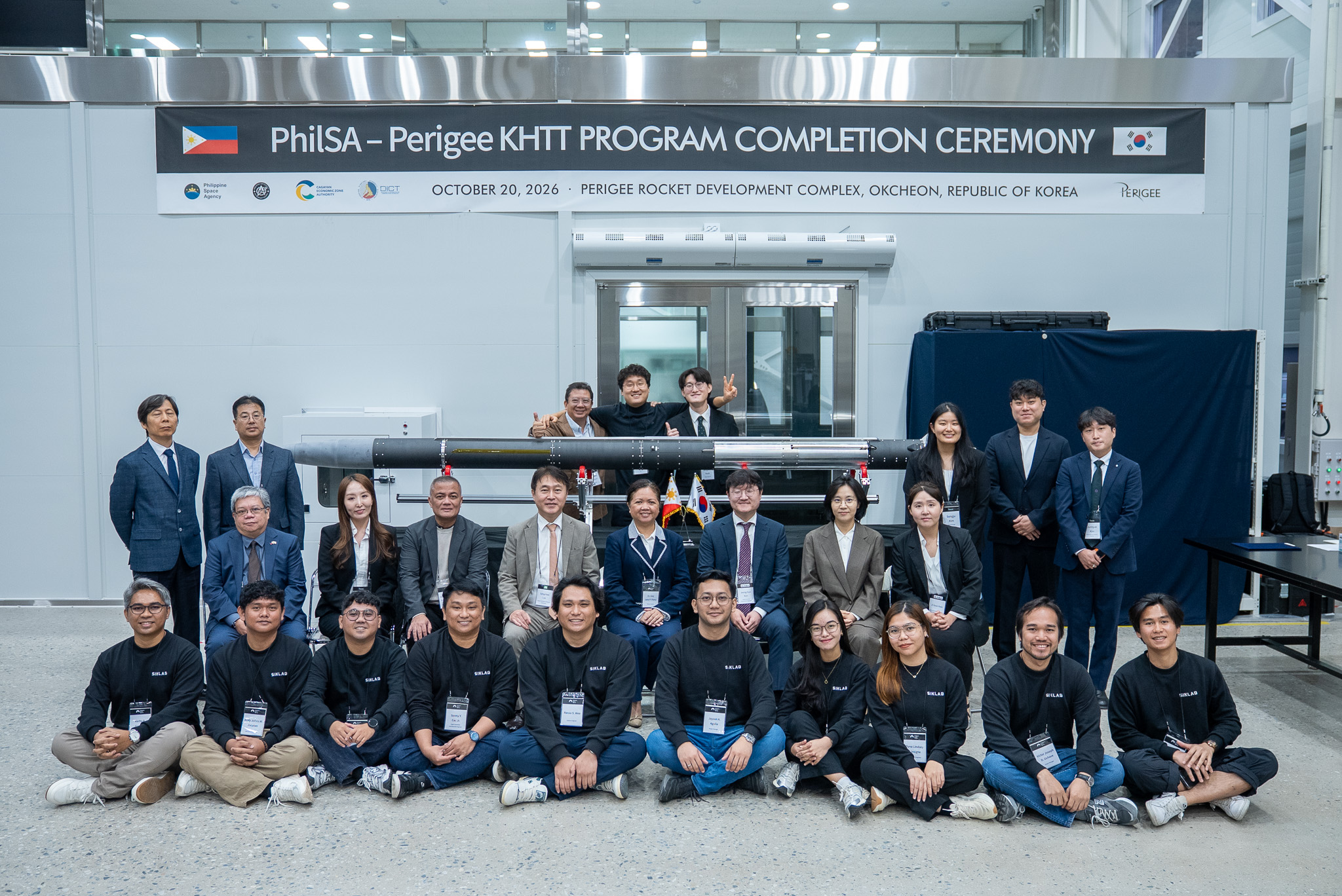
MANILA, Philippines — PhilSA rocket training in South Korea has been completed, marking a milestone in the country’s efforts to develop local aerospace expertise ahead of a planned liquid-fueled rocket demonstration launch in Cagayan in 2027. The program gave Filipino engineers practical experience in rocket development as the Philippines continues to strengthen its space technology capabilities.
PhilSA announced the completion of the training program on November 4, 2026, marking another step in the country’s efforts to develop its own rocket engineering expertise and launch capabilities.
The program was conducted in partnership with South Korean aerospace company Perigee Aerospace, which has been working with PhilSA to transfer technical knowledge and provide practical training in rocket systems.
Filipino Engineers Gain Hands-On Rocket Experience
The training involved 10 PhilSA engineers who participated in technical activities in South Korea between August and October 2026.
Under the agency’s SIKLAB: Building Industrial Space Launch Systems Project, the Filipino team received practical experience in rocket assembly, systems integration, testing, and launch preparations.
The program used Perigee Aerospace’s Blue Whale 0.1 (BW0.1), a liquid-propellant sounding rocket designed for research, testing, and technology development.
Unlike rockets intended to place satellites into orbit, sounding rockets generally conduct shorter suborbital flights to test instruments and gather scientific data.
The latest training builds on an earlier phase conducted in 2025, when Filipino engineers received foundational instruction in rocket technology and practical experience in assembling rocket components.
Philippines Targets Rocket Launch in Cagayan in 2027
The Philippines plans to conduct the demonstration launch in Lal-lo, Cagayan, with the Cagayan North International Airport providing infrastructure support.
According to PhilSA’s earlier project announcement, the rocket is expected to carry a locally developed payload weighing approximately two kilograms to an altitude of at least five kilometers.
The payload is designed to test technology capable of detecting and measuring radio signals from ground-based sources, including cellular communication towers.
Data collected through such technology could eventually support efforts to identify areas with weak mobile network coverage.
However, the planned mission remains a technology demonstration rather than an operational satellite launch.
Before the launch, the rocket must undergo additional testing, while participating agencies continue preparations involving infrastructure, safety procedures, and coordination with local communities.
Why Rocket Development Matters to the Philippines
Developing domestic rocket capabilities could help the Philippines strengthen its participation in the international space industry.
Currently, countries without established orbital launch capabilities depend on foreign launch providers to place satellites into space.
Although the planned 2027 demonstration will not establish an independent orbital launch capability, it could provide valuable experience in rocket operations, technical testing, safety management, and regulatory coordination.
These skills are important for future aerospace projects and may help create opportunities for Filipino engineers, researchers, and technology companies.
The initiative could also support the country’s longer-term ambitions in satellite development, telecommunications, environmental monitoring, and scientific research.
South Korea Partnership Supports Philippine Space Program
PhilSA’s cooperation with Perigee Aerospace began in 2022 and has expanded through technical training and agreements involving rocket development.
In March 2026, PhilSA and several Philippine government and private-sector partners signed an agreement with Perigee to help establish a framework for rocket development training and experimental launches in the country.
The initiative involves the Cagayan Economic Zone Authority, Department of Information and Communications Technology, and other participating organizations.
Beyond preparing for a single demonstration, the collaboration aims to develop local expertise and support a sustainable aerospace industry.
The planned 2027 launch will provide an opportunity to evaluate the Philippines’ growing technical and operational readiness for future rocket activities.
For Filipino engineers, completing the training represents another milestone in the country’s efforts to build homegrown space technology capabilities.
Sources: Philippine Space Agency (PhilSA), November 4, 2026 announcement; PhilSA project updates dated September 26 and March 6, 2026.

 Facebook
 Twitter