
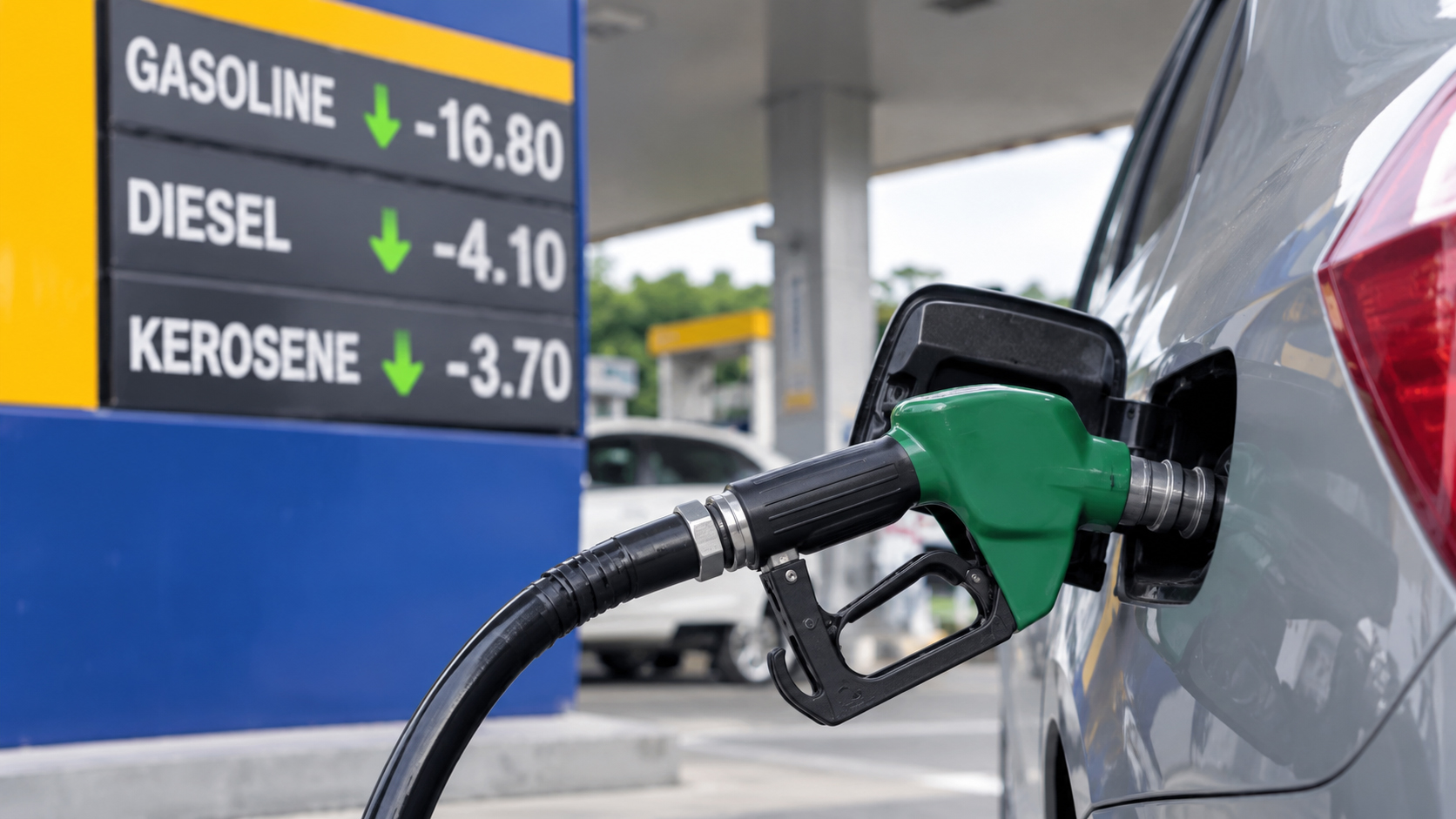
The fuel price rollback Philippines motorists welcomed on November 10, 2026, brought gasoline prices down by as much as ₱16.80 per liter, providing relief to drivers and businesses facing high transportation costs. The significant reduction followed a decline in international oil prices as concerns over geopolitical tensions in the Middle East eased.
The Department of Energy (DOE) announced the major price adjustment covering November 10 to 16, 2026. Gasoline prices decreased by ₱16.80 per liter, while diesel went down by ₱4.10 and kerosene by ₱3.70 per liter. The adjustments covered different gasoline grades, including RON 91, RON 95, and RON 97.
What Caused the Major Gasoline Price Rollback?
One of the main factors behind the fuel price rollback was the easing of concerns surrounding the conflict between the United States and Iran. Earlier tensions had raised fears that military escalation could disrupt petroleum supplies from the Middle East.
The possibility of disruptions was particularly concerning because the region plays an important role in global oil production and transportation. Uncertainty over future shipments had contributed to higher international oil prices as traders considered the potential impact of supply interruptions.
However, expectations of reduced military escalation and possible diplomatic developments helped improve market sentiment. As concerns over supply disruptions eased, international crude oil prices declined, creating conditions for lower fuel prices in the Philippines.
Why the Strait of Hormuz Matters to Philippine Fuel Prices
The Strait of Hormuz is one of the world’s most important oil shipping routes. Located between Iran and Oman, it serves as a major passage for petroleum shipments from the Middle East to international markets.
Any disruption to shipping through this strategic waterway could affect global oil supplies and increase transportation costs.
For the Philippines, developments in the Strait of Hormuz matter because the country depends heavily on imported petroleum products. Higher international oil prices can eventually translate into more expensive gasoline and diesel at local fuel stations.
Conversely, improved shipping conditions and reduced geopolitical risks can help bring down international petroleum prices.
How Much Can Filipino Motorists Save?
The November 10 fuel price adjustment offers considerable savings, particularly for motorists who regularly fill their gasoline tanks.
For example, a vehicle with a 40-liter gasoline tank could save approximately ₱672 compared with the previous price level, assuming the full ₱16.80 reduction is reflected at the pump.
Diesel vehicle owners can also benefit from the ₱4.10-per-liter reduction. A vehicle consuming 50 liters of diesel would have a potential savings of ₱205 based on the announced adjustment.
These reductions may also help businesses that depend on transportation and fuel consumption. However, the actual impact on operating expenses will vary depending on fuel usage and the prices charged by individual stations.
Will Another Fuel Price Rollback Happen?
Despite the significant reduction, another rollback is not guaranteed.
International oil prices remain sensitive to geopolitical developments, particularly tensions involving major oil-producing countries and shipping routes.
In a November 11 report, Reuters said international crude prices had started recovering after reaching their lowest closing levels in approximately two months. Renewed concerns over shipping security in the Strait of Hormuz contributed to the rebound.
This development suggests that the recent decline in fuel prices could be temporary if international market conditions change.
The next Philippine fuel price adjustment will depend on movements in international petroleum prices, import costs, and other factors affecting local oil pricing.
Philippines Maintains More Than 50 Days of Petroleum Supply
Meanwhile, the DOE reported that the Philippines had approximately 50.33 days of petroleum supply as of November 6, 2026.
Gasoline inventories were estimated to cover 51.64 days of consumption, while diesel supplies could last approximately 53.95 days. Kerosene stocks were estimated at 143.07 days.
These figures provide an indication of the country’s available petroleum inventory amid uncertainty in international oil markets.
The government continues to monitor developments that could affect the country’s energy supply and domestic fuel prices.
What Motorists Should Expect
For now, the November 10 fuel price rollback provides temporary relief to Filipino motorists and businesses facing transportation and operating expenses.
However, consumers should not assume that fuel prices will continue declining. Changes in international crude oil prices and developments in the Middle East could influence the next weekly adjustment.
Motorists are encouraged to monitor official announcements from the Department of Energy and compare prices among local fuel stations to make informed decisions about their fuel expenses.

 Facebook
 Twitter