
Water is life, so goes a saying. But since there seems to be plenty, no one seems to pay attention to it.
Water hog the headlines only when there is a crisis (especially during long drought season and freshwater is being rationed) or when there is too much (in the case of flooding).
Agricultural magazines can also be partly blamed for this neglect as they focus more on stories on production, successful farmers, latest innovations and techniques in farming, and livestock diseases.
To think, water plays an important role in agriculture. “The early civilizations of Asia, Africa and Latin America organized cooperative efforts to develop river valleys for irrigated agriculture,” the Food and Agriculture Organization (FAO) of the United Nations reports. “Through irrigation technology, societies controlled and manipulated natural water supplies to improve crop production. The result was often reliable and ample food supplies which led to the creation of stable agricultural villages, the division of labor and economic surpluses.”

Today, agriculture still accounts for the majority of human water use. The Washington, D.C.-based World Bank says agriculture accounts for, on average 70% of all water withdrawals globally – the figure is even higher if its share of “consumptive water use” due to the evapotranspiration requirements of crops is included.
The remaining 30% is for domestic (which include drinking water supplies, private homes, commercial establishments, public services and municipal supplies) and industrial uses.
“Competition for water resources is expected to increase in the future, with particular pressure on agriculture,” the World Bank declares. The competition is due to population growth, urbanization, industrialization, and climate change.
“Population is expected to increase to over 10 billion by 2050, and whether urban or rural, this population will need food and fiber for its basic needs,” the World Bank points out. “Combined with increased consumption of calories and more complex foods, which accompanies income growth in much of the developing world, it is estimated that agricultural production will need to expand by 70% by 2050.”
But if the problem of water crisis is not soon addressed, the world faces food shortage. “Many well-informed individuals see a future of water shortages, but few have connected the dots to see that a future of water shortages will also be a future of food shortages,” warned Lester R. Brown, president of Earth Policy Institute.

The UN food agency agrees. “Today, agriculture is often unable to compete economically for scarce water,” the FAO states. “Cities and industries can afford to pay more for water and earn a higher economic rate of return from a unit of water than does agriculture.”
For the first time in many countries, agriculture is being obliged to give up water for higher-value uses in cities and industries.
“Water shortages lag only climate change and population growth as a threat to the human future,” said Brown in an exclusive interview by this author. “The challenge is not to get enough water to drink, but to get enough water to produce our food. We drink, in one form or another, perhaps 4 liters of water per day. But the food we consume each day requires 2,000 liters of water to produce, or 500 times as much.”
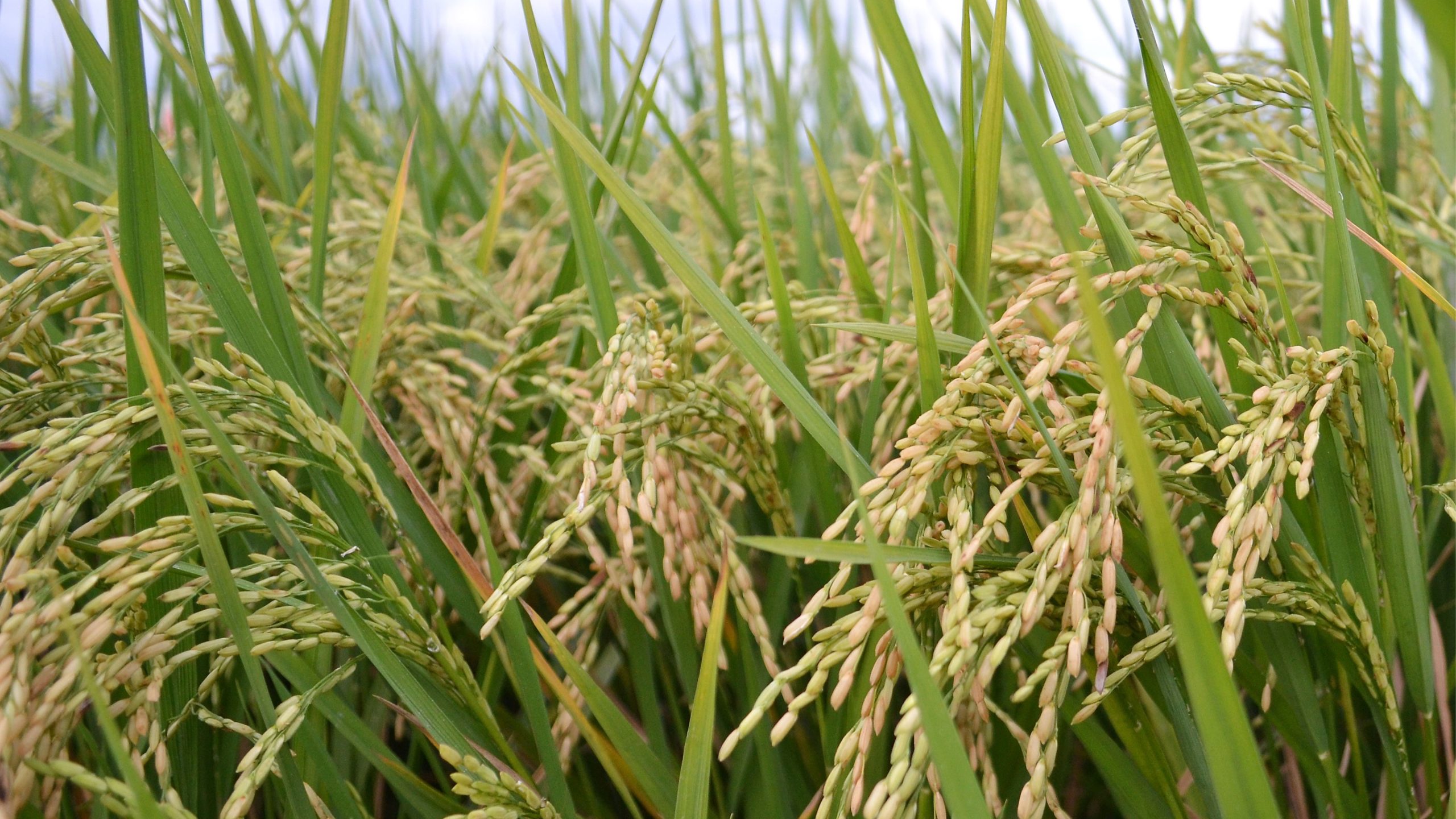
Rice, the country’s staple food, is a case in point. “Water has contributed most to the growth in rice production for the past 30 years,” said the Laguna-based International Rice Research Institute (IRRI). Irrigation-farmed rice draws heavily on the resource.
In his book, Water: The International Crisis, Robin Clark reports that an average farmer needs 5,000 liters of water to produce one kilogram of rice. “Rice growing is a heavy consumer of water,” agrees the IRRI report, “Water: A Looming Crisis.”
The IRRI report projected that most Asian countries will have severe water problems by 2025. This is bad news for Filipinos who consider rice as their “deepest comfort food.” Each day, about 31,450 metric tons of rice are being consumed by Filipinos, according to Secretary Emmanuel F. Piñol of the Department of Agriculture.
“The link between water and food is strong,” Brown reminded.
This is particularly true when it comes to crop production. “It is largely because of the physiologic process of plant transpiration,” explained David Molden, Charlotte de Fraiture, and Frank Rijsberman in their paper, “Water Scarcity: The Food Factor.” “Huge amounts of water are evaporating constantly from pores on the surface of a plant’s leaves. This evaporation is part of the process of photosynthesis, in which a plant manufactures its own energy from sunlight.
“Evaporation also helps cool the plant and carries nutrients to all its parts,” the authors continued. “In addition to transpiration, some liquid water is turned to vapor through evaporation from wet soils or leaves.”
It takes water to grow crops. Global food: Waste not, want not, published by the Institution of Mechanical Engineers (IME), showed that a farmer who plants cabbage has to water his crop with 237 liters to come up with 1 kilogram of the leafy vegetable. To produce a kilogram of tomato, about 214 liters of water is needed.
A kilogram of apple, the IME publication said, needs 822 liters of water while one kilogram of banana needs less: 790 liters of water. Potatoes have even less: 287 liters of water for every kilogram.
Around the world, more than 40% of wheat, rye, oats and corn production is fed to animals, along with 250 million tons of soybeans and other oilseeds. “Feeding grain to livestock improves their fertility and growth, but it sets up a de facto competition for food between animals and people,” the institute says.
Some people believe crop production consumes a lot of water. But so is producing food from livestock, which includes dairy cows and heifers, beef cattle and calves, sheep and lambs, goats, hogs and pigs, horses, and poultry.
Beef, the meat used in most fast food outlets, is by far the most water-intensive of all meats. “The more than 15,000 liters of water used per kilogram is far more than is required by a number of staple foods, such as eggs (3,300 liters per kilogram), milk (1,000 liters), or potatoes (255 liters),” the Worldwatch Institute says.
The US Department of Commerce 1992 Census of Agriculture’s Farm and Ranch Irrigation Survey, published in 1994, reported that one pound of pork needs at least 1,630 gallons of water to produce but in contrast one pound of beef requires 5,214 gallons of water.
“Producing beef is much more resource-intensive than producing pork or chicken, requiring roughly three to five times as much land to generate the same amount of protein,” the institute points out.
The livestock industry has been identified as a “pressing global crisis,” to quote the words of David Yeung, founder of Green Monday. “I think when we talk about urgent, the most pressing global crisis when it comes to sustainability, (the) livestock industry is most probably the most overlooked industry that people do not know about,” he was quoted as saying by CNBC.
More pressing problem: Global meat consumption and consumption have increased rapidly in recent decades, with harmful effects on the environment and public health as well as on the economy, according to research done by the Worldwatch’s Nourishing the Planet project.
“Worldwide meat production has tripled over the last four decades and increased 20% in just the last 10 years,” it said. “Meanwhile, industrial countries are consuming growing amounts of meat, nearly double the quantity than in developing countries.”
Aside from livestock, another area in food production that uses a lot of water is aquaculture, the raising of fish in lakes, rivers and other bodies of water. “Philippines’ fisheries are moving from marine capture to aquaculture,” said Benjamin Tabios, assistant director for administrative services in the Bureau of Fisheries and Aquatic Resources. “We are trying to reduce the impact of fishing on the environment.”
Aquaculture, once known as “the foster child of agriculture,” has now come of age; it has been identified as a possible solution to the dwindling fish catch in the open seas.
Fish farming is more advantageous than raising livestock. “For every kilogram of dry feed, we get one kilogram of fish meat,” said Dr. Uwe Lohmeyer of the Deutsche Gesselschaft fur Technische Zusammernarbeit (GTZ), a German Technical Cooperation. “This is a far more favorable rate than in the case of say, pigs: to produce the same quantity of pork, a farmer – given the same quality of inputs – has to provide three kilograms of feed.”
Unlike livestock raising, raising fish is rather intricate. “Aquaculture is much more complex than farming of traditional terrestrial species, particularly because it is conducted in water, not just with water,” explained Michael New, founder of Aquaculture Without Frontiers.
Studies have shown that it requires 50 liters of water to raise one kilogram of fish. “In comparison to the amount of water required to raise other forms of animals, aquaculture has a vital role to play in our global water crisis as an industry that can produce a healthy form of protein with minimal water usage,” said the website, aquaafrica.co.za.
Now, going back to crop production. Irrigated agriculture, the FAO says in its report, is expected to produce much more in the future while using less water than it uses today. About some 2.4 billion people depend on irrigated agriculture for jobs, food and income. “Over the next 30 years, an estimated 80% of the additional food supplies required to feed the world will depend on irrigation,” it says.
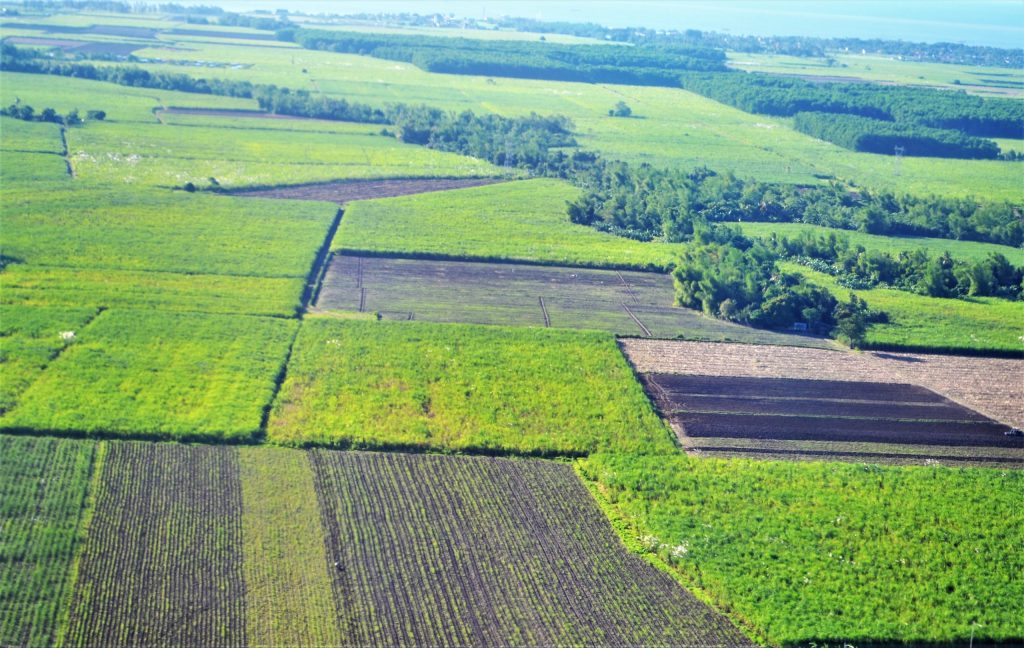
The Philippines is an agricultural country. More than one third of the country’s total population depend on farming and fishing for a living, said a Far Eastern Agriculture (FEA) report. As such, irrigation is a necessity for these people.
“Agriculture is the primary user of water in the Philippines, accounting for more than 80% of water usage,” wrote Senator Francis N. Tolentino in his Manila Bulletin column.
Unknowingly, the country has about 10.3 million hectares of agricultural lands, according to the data from the National Irrigation Administration (NIA). “Out of this, around 3.1 million hectares are considered irrigable, with up to three percent slope and primarily devoted to rice and corn,” the FEA report said. But a World Bank study showed the country has about 6.1 million hectares classified as irrigable.
Secretary Dr. William D. Dar of the Department of Agriculture urges the private sector to get engaged in a “build and transfer” scheme to accelerate the development of national irrigation systems. “Irrigation development, however, should also cover high-value commercial crops and not just rice,” he points out.
He also recommends that massive investments be provided for rainwater harvesting “not only for economic purposes but also for flood mitigation.” Another suggestion: “more solar-powered irrigation systems should also be built all over the country.”
The country needs to tackle the forthcoming problem of water now before it’s too late. As FAO puts it: “This water dilemma – to produce more in a sustainable way with less water – points to the need for demand management mechanisms to reallocate existing supplies, encourage more efficient use and promote more equitable access. Policy-makers need to establish a structure of incentives, regulations, permits, restrictions, and penalties that will help guide, influence and coordinate how people use water while encouraging innovations in water-saving technologies.”
“World demand for water doubles every 21 years, but the volume available is the same as it was in the Roman times,” observes Sir Crispin Tickell, former British ambassador to the United Nations and one of the organizers of the 1992 Earth Summit in Rio de Janeiro. “Something has got to give.”


 Facebook
 Twitter