
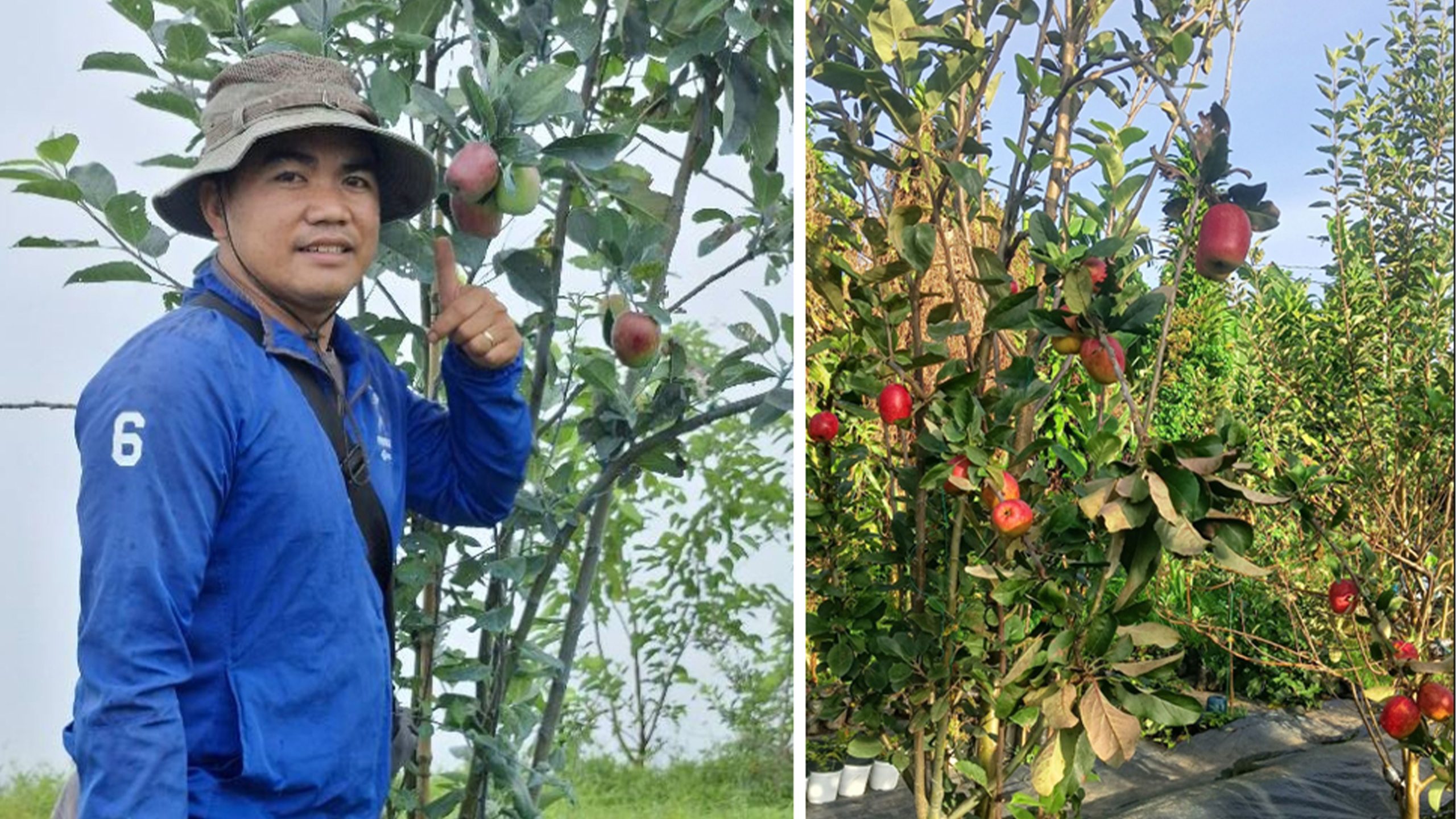
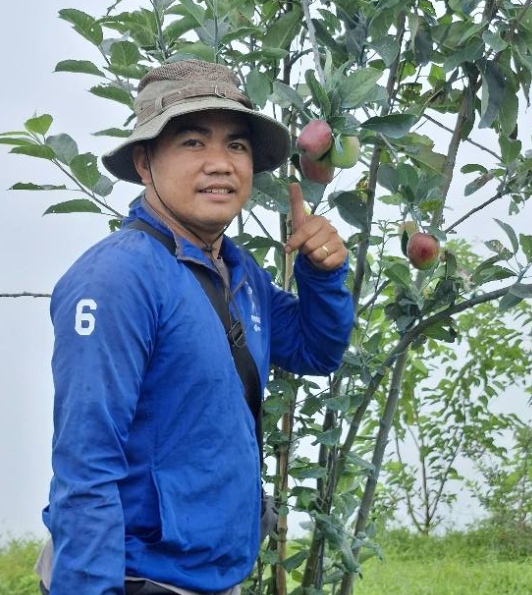
Growing apples in the Philippines began with curiosity and a simple question about why apple trees were absent in tropical regions.
Curiosity, the strong desire to know or learn something, may have killed a cat yet it also paved the way for the growing of apples in tropical countries like the Philippines.
When he was still a kid, Benzone Kennedy F. Sepe found himself perplexed by the lack of apple trees in his province in Davao del Sur. Each Christmas, his family enjoyed a variety of fruits, including mangoes and apples, on their table. However, despite being familiar with mango trees and other indigenous fruits, he had yet to encounter an apple tree.
Benzone did not inquire about this matter with his parents. He discovered the truth during his high school years when a teacher explained the reason to him. He learned that the apple, scientifically known as Malus domestica, is primarily a fruit that thrives in cooler climates, having originated in Central Asia, specifically in the mountainous regions of Kazakhstan.
As such, cultivation of apples was common in the colder parts of the world, including countries such as China, Japan, South Korea, New Zealand, the United States, and several European nations like Poland, Italy, and France.
That has been going on for centuries. But in his research, he found out that apples are now grown under other climates – even in tropical countries. He learned that apples are being cultivated in African countries like Kenya, Rwanda, Uganda and Zambia. They are also being grown in India and Indonesia.
His curiosity grew bigger each year. He really wanted to see an apple tree. His friends told him that it’s possible for his dream to become a reality if he went to the United States or China, where most of the apples sold in the Philippines come from.
Benzone was already a college student taking up Bachelor of Science in Agriculture major in Horticulture when he experimented with growing the fruit in sitio Marawer of barangay Kapatagan, Digos City. The place is a little bit cooler as it is situated near Mount Apo, the country’s highest peak.
“I started planting apples out of sheer curiosity when I bought Fuji apples from the mall,” he said.
He successfully extracted three seeds, which he subsequently planted in a seashell. To his astonishment, they began to grow. Once the apple seedlings reached a height of five inches, he moved them to seedling bags. After a period of six months, he planted the young apple seedlings into the soil. Regrettably, only one plant survived.
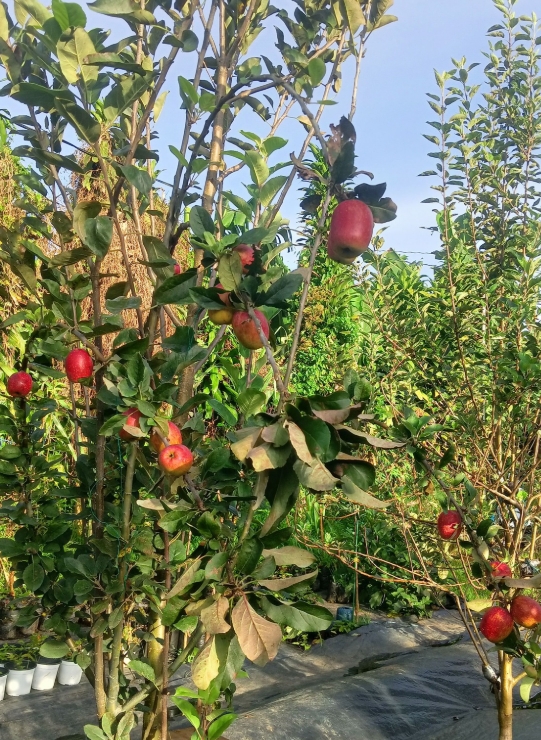
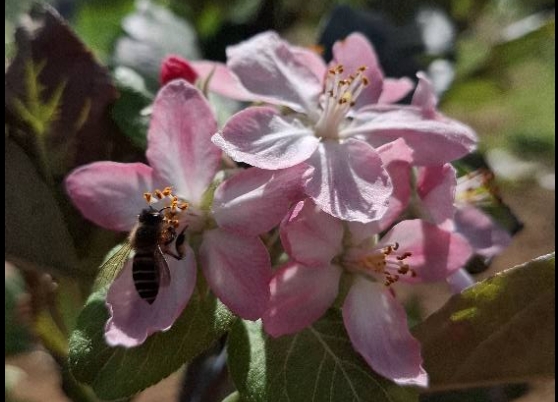
In early 2018, he noticed flowers emerging from the tree. Three weeks later, he was thrilled to observe that the flowers had transformed into fruit buds. From this solitary tree, he managed to harvest 32 ripe apples.
“There was no difference between the apple I harvested from my farm and the apple I bought from the public market because the juiciness and crunchiness is still there,” said Benzone.
Benzone brought some of the apples to Davao del Sur State College (DSSC) for “Brix” testing, which assesses the sugar content and is a crucial component of agricultural product quality analysis. The findings indicated that the apples he cultivated exhibited significantly higher sweetness, achieving a score of 17.5 degrees Brix, in contrast to the 13 degrees recorded for commercial apples.
He emphasized that the quality of apples intended for export must adhere to a minimum standard of 12 degrees.
During the interview, Benzone admitted that his interest in planting apples was actually fired up when he visited South Korea for a two-month educational trip on farming. In one of the trips, he read an agricultural magazine where farmers are growing tropical fruits, despite the cold climate. With the right technique and technology, Korean farmers grow mangoes successfully.
“If they were able to grow our fruits, why not grow their fruits in our country,” he thought.
When he returned to the Philippines, he visited the apple tree he planted in the backyard. With the idea he got during his foreign visit, he started growing apples. “I did some research through the internet and read articles about propagating apples,” he said.
In one of his readings, he found out that apples necessitate a cold period of 7 to 12 degrees, referred to as dormancy. For the apple tree to yield fruit, it requires a minimum of 800 hours at temperatures below 45 degrees Fahrenheit.
“However, given that apples are a remarkably adaptable crop, I believe they have acclimatized to the colder climate of Kapatagan,” Benzone said. “Moreover, in certain regions of Africa, especially Kenya, they are successfully cultivating apples and even exporting the fruits.”
He also found out that apples were previously grown in the highlands of Benguet, but the result was not as good as those in Kapatagan.
From one apple tree, the Kapatagan Apple Orchard – as it is now known – has about 330 apple trees. “I started planting apples on our residential lot with an area of 640 square meters,” he said. Currently, there are at least 30 apple trees thriving in the homeyard. The remaining 300 trees are situated in front of their church and on a half-hectare plot of land that he leases.
Benzone aspires to expand his planting efforts as a means of contributing to the reforestation of Kapatagan, an area that has suffered deforestation due to banana plantations and vegetable farming.
He is also selling apple seedlings and other high-valued fruit trees grown in his orchard. He said he raises most of his apple plants from seeds, which he marcotted, bud-grafted and grafted. When planted, he said seedlings grafted with a branch from a full-grown tree start bearing fruits in two to three years.
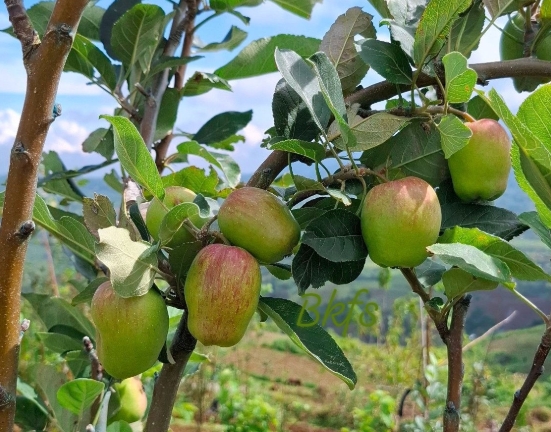
“If you are interested in growing apples from seeds, you have to plant as many as you can,” he stressed, adding that apple seeds have a very low germination rate aside from being attacked by fungus.
An apple grown from seeds is considered a new variety, according to him. That’s why he called the variety he grows as “Benzone Apple,” after his own name. He said he keeps on planting apples from seeds because of the unpredictable fruits they produce.
Aside from Fuji, he also plants other varieties of apples: Golden Dorsett, Starking, Granny Smith, Gala, Redlove Odysso, and Russet to name a few.
In the meantime, the apples he harvests from his farm are only for family consumption. “I am looking forward to producing apples that we can supply in the local market and the entire Philippines,” he said.
In 2022, Benzone became the first recipient of The Outstanding Young Farmer during the Young Agri-Laureate Awards (YALA) for his exceptional contribution to the field of agricultural production. He was cited as “the first young Filipino farmer who has produced apples in the Philippines.”
“Your journey and work have the potential to motivate a lot of Filipino youth,” the YALA organizers explained. “We are grateful for your inspiring work, and for leading the charge in contributing to change the narrative of agriculture for the better.”
Growing apples in tropical countries like the Philippines needs patience and innovation. In temperate countries, it takes five to seven months for the plants to bear fruits. But in Kapatagan, he waits only four months to start harvesting the fruits.
“It’s possible to harvest three times in a year and a half (because of our warm weather),” Benzone said. “In temperate countries, they can harvest once a year only because of the winter season.”
It’s not the weather that bothers him most but the pests that attack his apple trees. To control them, he applies integrated pest management (IPM), which includes making homemade natural pesticides and foliar sprays.
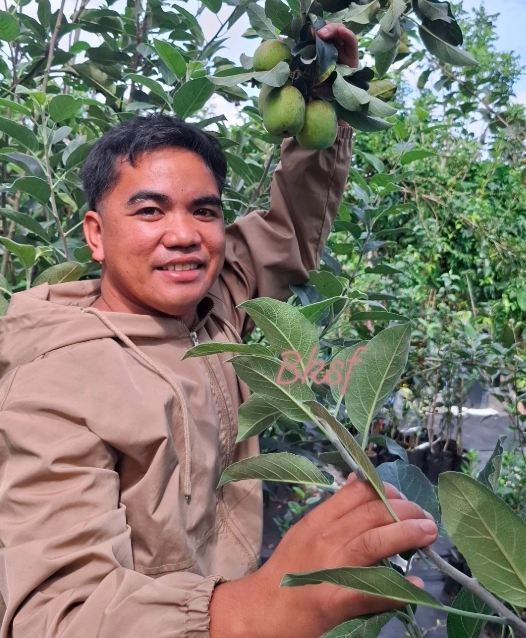
Despite the fact that he was able to grow apples in Kapatagan, he does not rest on his current success. “I still need more knowledge about growing apples,” he admitted. “There are other things I need to know.”
The Agricultural Training Institute of the Department of Agriculture has already accredited the Kapatagan Apple Orchard, Rare Fruit Farm and Nurseries as a learning site for apple growing, the very first of its kind in the country. Visitors who are interested in apple farming or just curious can come; entrance fee is P20 per person.
A lot of visitors who visit his place have also bought some apple seedlings. One of those was Senator Cynthia Villar. There were also those who ordered via messenger. The biggest order he had – about 55 seedlings – was from Cavite.
As the farm is located in the rolling foothills of Mount Apo, where the climate is cool and suitable for producing exotic fruits, Sepe also plants atemoya, blackberry, blueberry, cherimoya, cherry, fig, grapes, guava, guyabano, Hass avocado, jaboticaba, jackfruit, kiwi, lime, mango, mulberry, olive, orange, peach, pear, persimmon, plum, pomegranate, raspberry, and strawberry. He likewise grows vegetables and ornamentals.
Benzone believes in companion planting or the planting of two crops in the same space. He plants rose leaf raspberries together with the apples since the former attract bees, which help pollinate the apple trees.
He works alone on his farm. But in some instances, he hires part-time workers if ever he needs some help. “I urge younger generations to work on things that are helpful to mankind,” he said. “I encourage them to engage in agriculture to see and unlock its potential.”
Although his childhood dream was to see an apple tree, he never thought of becoming a farmer just like his parents. “Farming is not my first love,” he admitted. “I really wanted to become a lawyer but because of financial problems, I wasn’t able to do so.”
But with the success he is reaping now from farming, he believes he is destined to be a farmer. “I believe that farming is cool and that there is a future in agriculture,” he pointed out.


 Facebook
 Twitter