
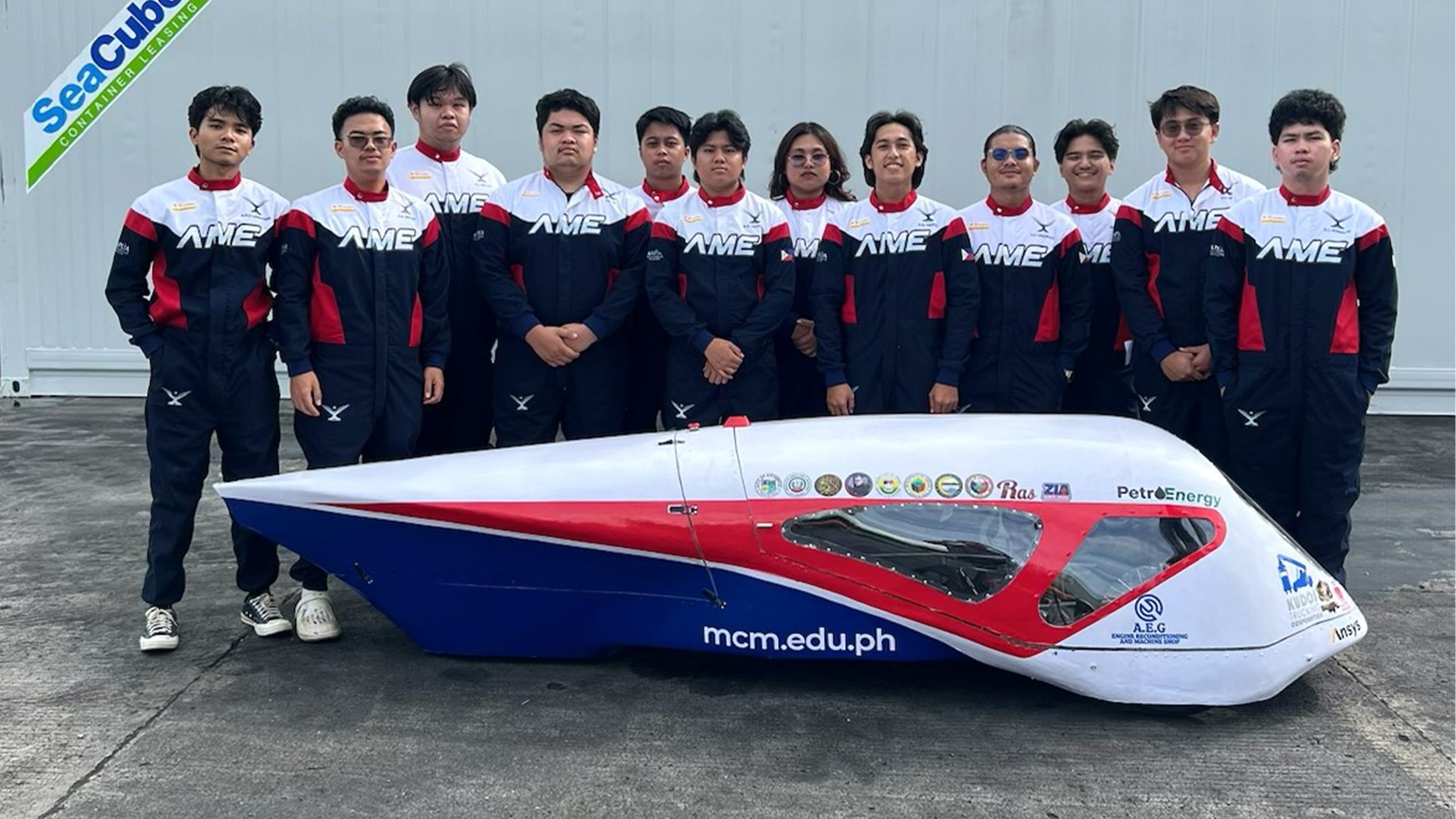
Mapua Mindanao Shell Eco Marathon team is preparing to compete in Qatar 2026, representing Filipino engineering excellence and innovation in energy-efficient vehicle design.
Have you ever heard of the Shell Eco-marathon (SEM)? When I was approached to write about this competition, as a group of students fromthe Mapúa Malayan Colleges Mindanao was preparing to participate, I was taken aback.
I promptly began extensive research on the subject. From the official website, I discovered that SEM is recognized as one of the foremost energy-efficiency engineering programs for students worldwide. Its objective is to challenge the limits of technical possibilities and to motivate young individuals to become the leading scientists and engineers who will develop future energy solutions.
The program offers a platform for high school and university teams to investigate every facet of design and technology, utilizing their Science, Technology, Engineering, and Mathematics (STEM) skills to construct their own ultra-energy-efficient vehicles, which they then race on the track in competition.
That sounds exciting. I had the opportunity to talk with the team from Mapúa Mindanao who will join the SEM Asia-Pacific and Middle East 2026 on January 21-25 in Qatar.
The Mapúa Mindanao team is composed of; Amjad Biruar, 21, the team manager; Rhenz Angelo Obrique, 25, technical manager; Herbert Basti Pinton, 22, the team’s driver; Fred Lynson Yu, 21, head mechanic; Varent Virpel Valdesco, 21, mechanic; and A.R. David Labrador, 22, design lead.
Other members are Aulden Ronald Nietes, 22, fabrication lead; Keiji Jantzen Ng, 22, non-technical/administrative manager; and Mary Grace Betita, 21, non-technical/administrative support. The team’s fabrication support include Kurt Gerard Saballa, 22; Inno Angelo Calla, 23; and Ejekiel Josh Perialde, 21. All are fourth year mechanical engineering students.
According to Obrique, the team’s name is AME Merlin. AME stands for Ad Maximam Efficientiam, which is Latin for “to maximum efficiency,” while Merlin represents the school’s wizard-themed branding, and the merlin falcon, a symbol of swiftness.
“This is something new for our school,” Keiji said. “We are the first batch to join this competition. Our goal is to improve the fuel efficiency to achieve clean energy.”
Participants compete in two primary categories: Prototype (emphasizing innovative, lightweight vehicle designs that aim for optimal efficiency) and urban concept (focused on practical, roadworthy energy-efficient vehicles).
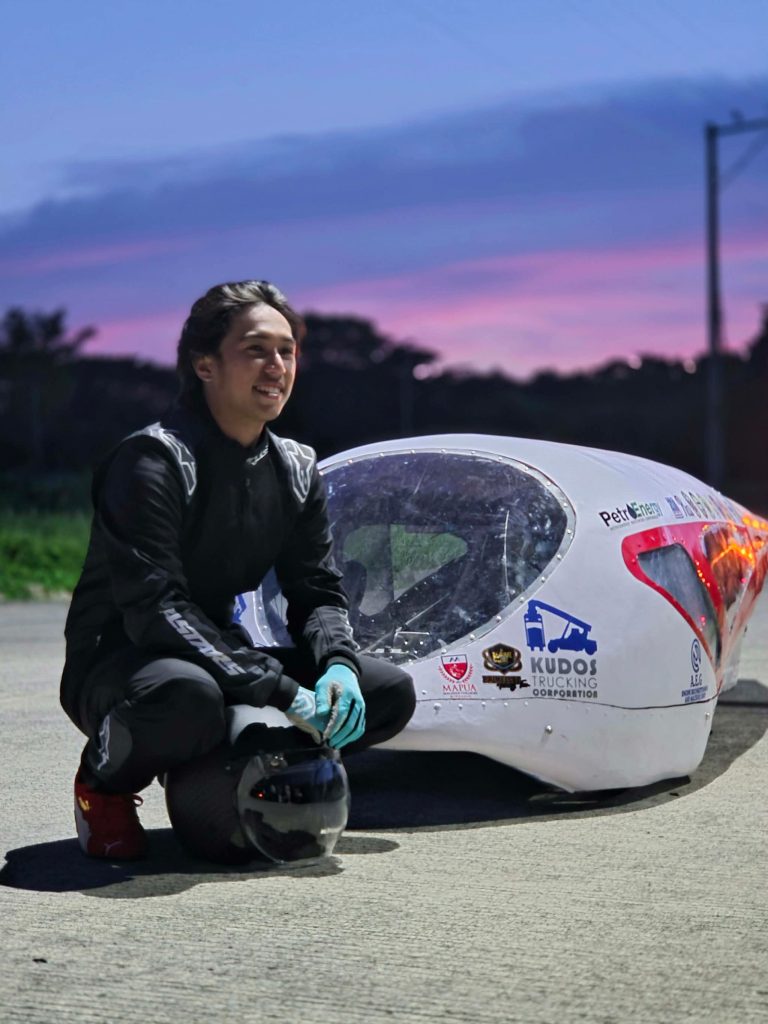
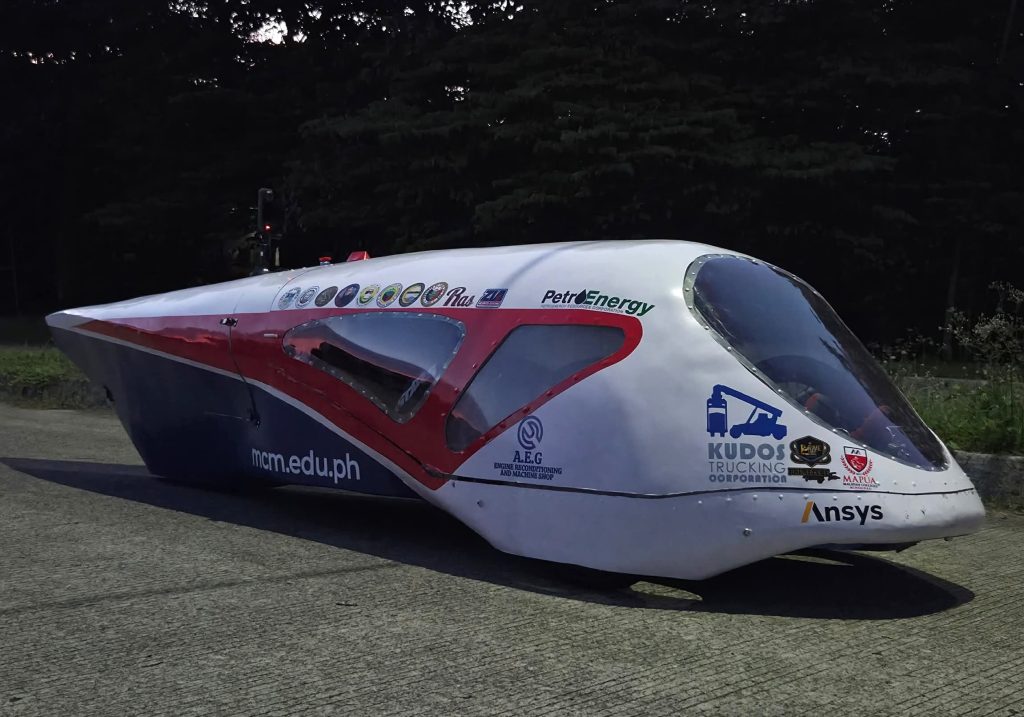
According to Varent, the Mapúa Mindanao team is set to compete in the prototype category. Their entry is titled Internal Combustion Engine (ICE).
“ICE is a widely used engine type that transforms the energy from fuel into mechanical motion, commonly referred to as combustion, within a chamber. This process generates high-pressure gases that propel components such as pistons, which in turn rotate a crankshaft to power vehicles including cars, motorcycles, trucks, ships, planes, agricultural machinery, trains, and generators that operate on fuels like gasoline, diesel, or natural gas.”
The vehicle that the team will use in the competition is powered by gasoline. “The gasoline will be sourced specifically from Shell’s product line,” stated Jad.
“The idea of creating a super-efficient vehicle arises from integrating various innovations into a cohesive project, which includes aerodynamic body designs that reduce drag and sophisticated engine enhancements that significantly lower fuel consumption,” David elaborated.
Jad further noted, “This project acts as a connection between enthusiasm and intention. It enables us, students with a passion for automotive, to utilize our abilities in tackling real-world issues.
“The significance of this project,” he continued, “is in its capacity to transform us as students. Through this experience, we have acquired numerous insights that we can implement when we join the industry. In particular, we have gained understanding in principles related to cleaner and more sustainable transportation. In addition, it plays a crucial role in supplying valuable data that can foster innovation and, ideally, assist humanity in achieving global climate objectives.”
Aulden added, “Environmental protection was a significant factor in the design and construction of our prototype. The competition, open for the students, seeks to challenge technological limits and motivate future engineers to create sustainable energy solutions.
“From the initial idea to the final assembly, we emphasized sustainability, efficiency, and responsible resource utilization. The vehicle was engineered to be lightweight and aerodynamic to decrease energy consumption and minimize environmental impact.
“The selection of materials was meticulously planned to guarantee strength and safety while reducing weight, material waste, and fabrication losses.”
According to Jad, the competition judges on efficiency in kilometers per liter (km/L). “As of now, we do not yet have our exact data because the measuring instrument will be provided during the competition.
“To give an idea, winning vehicles usually achieve around 700 to 1,000 km/L. In comparison, a normal daily car in the Philippines typically averages around 10 to 15 km/L.”
The development of the ICE vehicle is primarily financed by Kudos Trucking Corporation (KTC) along with additional sponsors. KTC, being the principal sponsor, has led to the vehicle being named Kudos One, in honor of KTC, its foremost supporter.
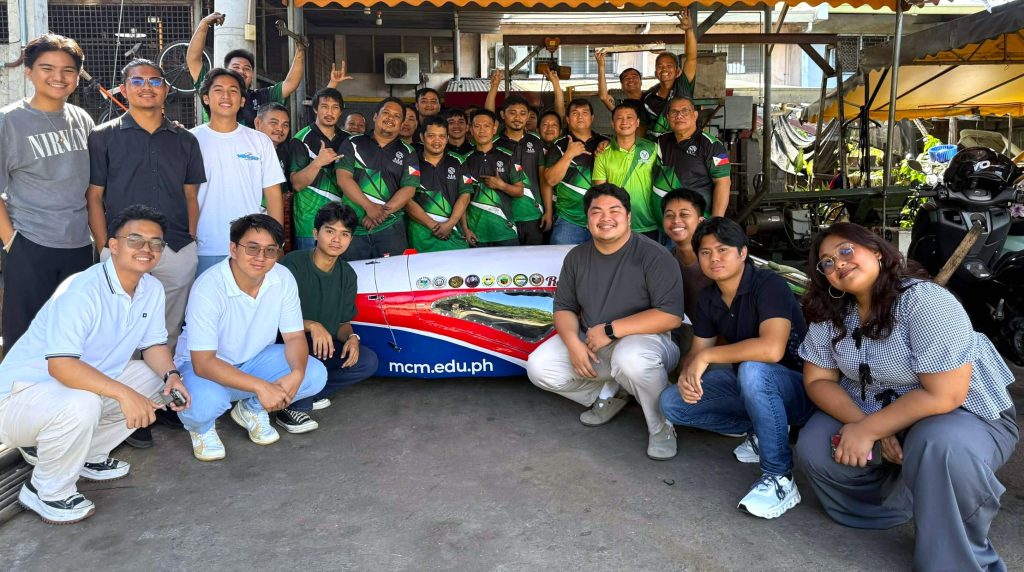
The construction, however, was predominantly carried out by the team located in Davao City. “We received assistance from AEG Engine Recondition & Machine Shop, which is also situated in the city,” stated Basti. “Their proficiency was instrumental in providing precision machining and specialized fabrication techniques, while the remaining tasks, including design, assembly, and testing, were managed by our team. This arrangement enabled us to uphold quality control while effectively managing costs.”
The team is eagerly anticipating the competition in Qatar. “When we discovered that another Mapúa school in Manila was already involved, it instantly attracted us to the concept,” said Jad. “Since that moment, it has become a goal for us, as we were already a group of friends who are enthusiasts of Formula racing and automobiles in general.
“The team possesses a shared enthusiasm for automobiles, while the MMCM’s emphasis is on sustainability. This alignment is the reason why the institution is also enthusiastic about our participation in SEM. With the institution’s dedication to promoting a culture of sustainability, it encourages us to view engineering as a means to effect change, nurturing a cleaner and more sustainable world.”
Photos by Tan Tan Pinton


 Facebook
 Twitter