
Water hyacinth biogas is gaining attention as a sustainable renewable energy source. Known scientifically as Eichhornia crassipes, this fast-growing aquatic plant can produce large amounts of biomass, making it ideal for biogas production.
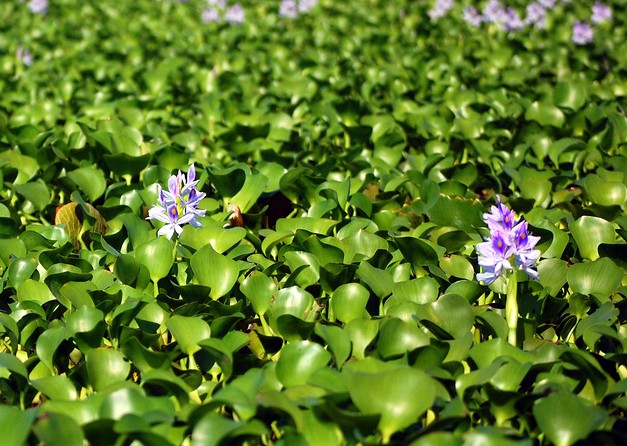
Experts call it water hyacinth but to most Filipinos it is known as “water lily.” Known in the science world as Eichornia crassipes), it is considered the most productive plant on earth as it yields more than 200 tons of dry matter per hectare per year under normal conditions. On water containing high concentrations of sewage, it yields up to 657 tons of dry matter per hectare.
“The plant is far more productive than the crops that have been carefully cultivated by man under near-ideal conditions of fertilization, irrigation, and pest control,” wrote John Bunton in an article which appeared in Far Eastern Agriculture.
Water hyacinth was introduced into many parts of the world, including the Philippines, as an ornamental garden pond plant due to its beauty. But today, it is considered a pest as 10 plants could produce well over 650,000 offspring within eight months.
In Dianchi Lake in Kunming City, the provincial capital of China’s Yunnan Province, water hyacinth is considered a nuisance plant. Thanks to the lake polluted water. “The plant grows particularly fast in polluted water,” Dr. Zanwin Wang, associate professor at the School of Development Studies in Yunnan University, told Marid Agribusiness in an interview.
That is just one of its ecological impacts. Water hyacinth also reduces biological diversity, impacts native submersed plants, alters immersed plant communities by pushing away and crushing them, and also alter animal communities by blocking access to the water and/or eliminating plants the animals depend on for shelter and nesting.
The physical problems brought about by water hyacinth are now a common knowledge. Water hyacinth mats clog waterways, making boating, fishing and almost all other water activities impossible. Many large hydropower schemes are suffering from the effects of water hyacinth.
Currently, there are several popular control mechanisms for preventing the spread of or eradicating water hyacinth: biological, chemical and physical control. Each has its benefits and drawbacks. Chemical control is the least favored due the unknown long-term effects on the environment and the communities with which it comes into contact.
Physical control, using mechanical mowers, dredgers or manual extraction methods, is used widely but is costly and cannot deal with very large infestations. If it is disposed of as landfill, water hyacinth can generate methane and carbon dioxide. These gases will eventually enter the atmosphere which can cause climate change.
But there is a better way to control effectively water hyacinth in a feasible manner. It can be done through biogas.
To find out whether biogas is really feasible, the Economy and Environment Program for Southeast Asia (EEPSEA) supported a study that assessed a proposed biogas project designed to use the water hyacinth. The study wanted to find out whether biogas is cost-effective to control the noxious weed, help clean up water pollution, and generate a source of renewable energy.
“Compared with the current water hyacinth control method, the use of water hyacinth to produce biogas has two major advantages,” said Dr. Wang, who headed the study. For one, the biomass of water hyacinth is used rather than disposed of as a waste. For another, the emission of landfill gas is avoided.
The proposed biogas plant, which will cost around 13.52 million Yuan (around $2.1 million) to construct and operate, will have an annual output of around 245,438 liters of biogas with an estimated value of 602,941 Yuan (around $96,668).
The plant is expected to produce organic fertilizer with an estimated value of 210,000 Yuan ($33,668) a year. The total value of marketable products (that is, biogas and organic fertilizer) will account for 36.2 percent of the total direct benefits produced by the plant.
Its operation will also produce water quality improvements worth 1,332.58 Yuan ($213.56) a year. All these benefits will account for 59.3% of its total direct benefits.
“The inclusion of the economic value of its contribution to environmental improvement, the production of biogas using water hyacinth is economically feasible,” Wang pointed out.
In particular, the government can spend less on the control of water hyacinth’s expansion as water hyacinth is used as a raw material of biogas.
Due to its improved environmental and economic performance in controlling the expansion of water hyacinth, the use of water hyacinth in biogas production “can be a potential option to respond to policies on water pollution control, renewable energy development, and carbon emission reduction,” the study pointed out.
But there are still other uses of water hyacinth that should be explored. For instance, water hyacinth can be used to aid the process of water purification either for drinking water or for liquid effluent from sewage systems. In a drinking water treatment plant, water hyacinths have been used as part of the pre-treatment purification step.
In sewage systems, the root structures of water hyacinth (and other aquatic plants) provide a suitable environment for aerobic bacteria to function. Aerobic bacteria feed on nutrients and produce inorganic compounds which in turn provide food for the plants.
Using the water hyacinth as animal fodder is a traditional practice in many areas of Asia, including China, Bangladesh, Indonesia, India, Malaysia, the Philippines, and Thailand. In Malaysia, fresh water hyacinth is cooked with rice bran and fishmeal and mixed with copra meal as feed for pigs and ducks. However, it is suited to all animals as water hyacinth has high water and mineral content.
Another agricultural use of water hyacinth is by turning them into green manure or as compost. As a green manure, it can be either ploughed into the ground or used as mulch. The plant is ideal for composting. After removing the plant from the water it can be left to dry for a few days before being mixed with ash, soil and some animal manure.


 Facebook
 Twitter