
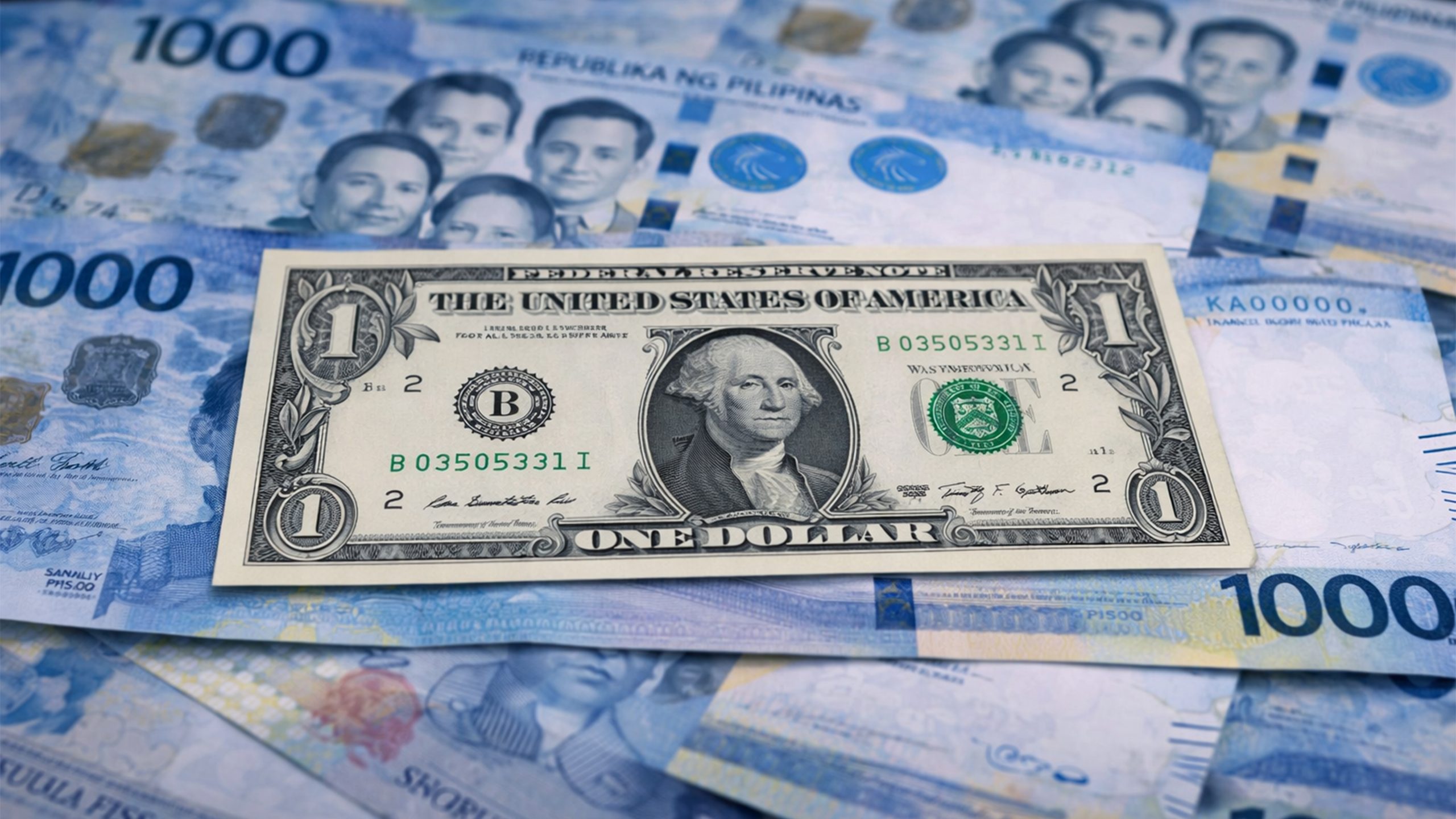
MANILA — Philippine peso breaches P60 against the US dollar, highlighting growing pressure on the local currency as global financial conditions and strong dollar demand continue to influence exchange rate movements.
During intraday trading, the peso weakened to around the P60 level, reflecting sustained pressure driven by external and domestic factors. Market data showed the local currency opening below the threshold before slipping further, indicating persistent volatility in the foreign exchange market.
Analysts point to the strength of the US dollar as a key factor behind the depreciation. The US Federal Reserve’s monetary policy stance, which favors higher interest rates to manage inflation, has made dollar-denominated assets more attractive to global investors. As a result, capital has flowed toward the US, placing downward pressure on currencies like the Philippine peso.
In addition, the Philippines’ reliance on imports has contributed to increased demand for dollars. The country imports a significant portion of its fuel, raw materials, and consumer goods, requiring businesses to purchase more dollars for international transactions. This structural demand adds strain on the peso, especially during periods of elevated global prices.
Government officials have acknowledged the development, noting that currency movements are largely influenced by global trends. While authorities have mechanisms in place to address excessive volatility, they generally allow the exchange rate to adjust based on market conditions.
Earlier statements from President Ferdinand Marcos Jr. indicated concern over the peso reaching the P60 level, emphasizing the importance of maintaining economic stability. The Bangko Sentral ng Pilipinas (BSP) has also been closely monitoring the situation, with reports suggesting that it may step in when necessary to smooth fluctuations in the currency market.
Economists say the impact of a weaker peso is mixed. On one hand, it could benefit exporters and overseas Filipino workers (OFWs), as dollar earnings translate to higher peso value. On the other hand, it raises the cost of imported goods, which may contribute to inflation, particularly in fuel and food prices.
The depreciation also has implications for businesses that rely heavily on imported materials, as higher costs may affect pricing and profit margins. Consumers could feel the effects through increased prices of goods and services, especially if the trend persists.
Despite the peso breaching the P60 mark, some analysts believe the movement reflects broader global conditions rather than solely domestic weaknesses. Currency fluctuations are common in times of economic uncertainty, particularly when major economies adjust their financial policies.
Looking ahead, the trajectory of the peso will likely depend on several factors, including global oil prices, inflation trends, and future decisions by the US Federal Reserve. Any shift in investor sentiment or easing of external pressures could help stabilize the currency.
For now, both policymakers and market participants are expected to remain cautious as they navigate the evolving economic environment. The recent movement underscores the interconnected nature of global markets and the challenges faced by emerging economies in maintaining currency stability.

 Facebook
 Twitter